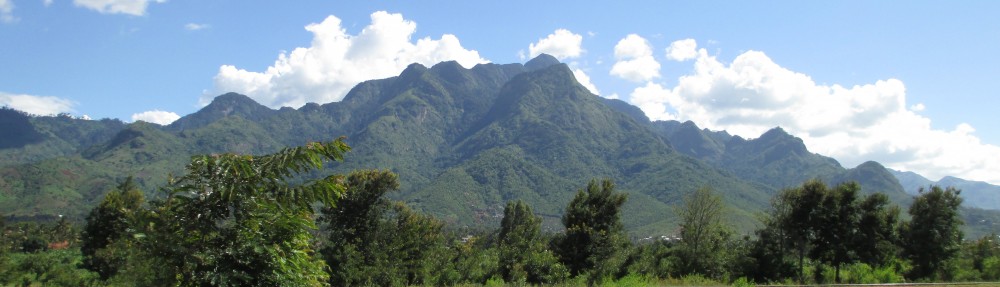
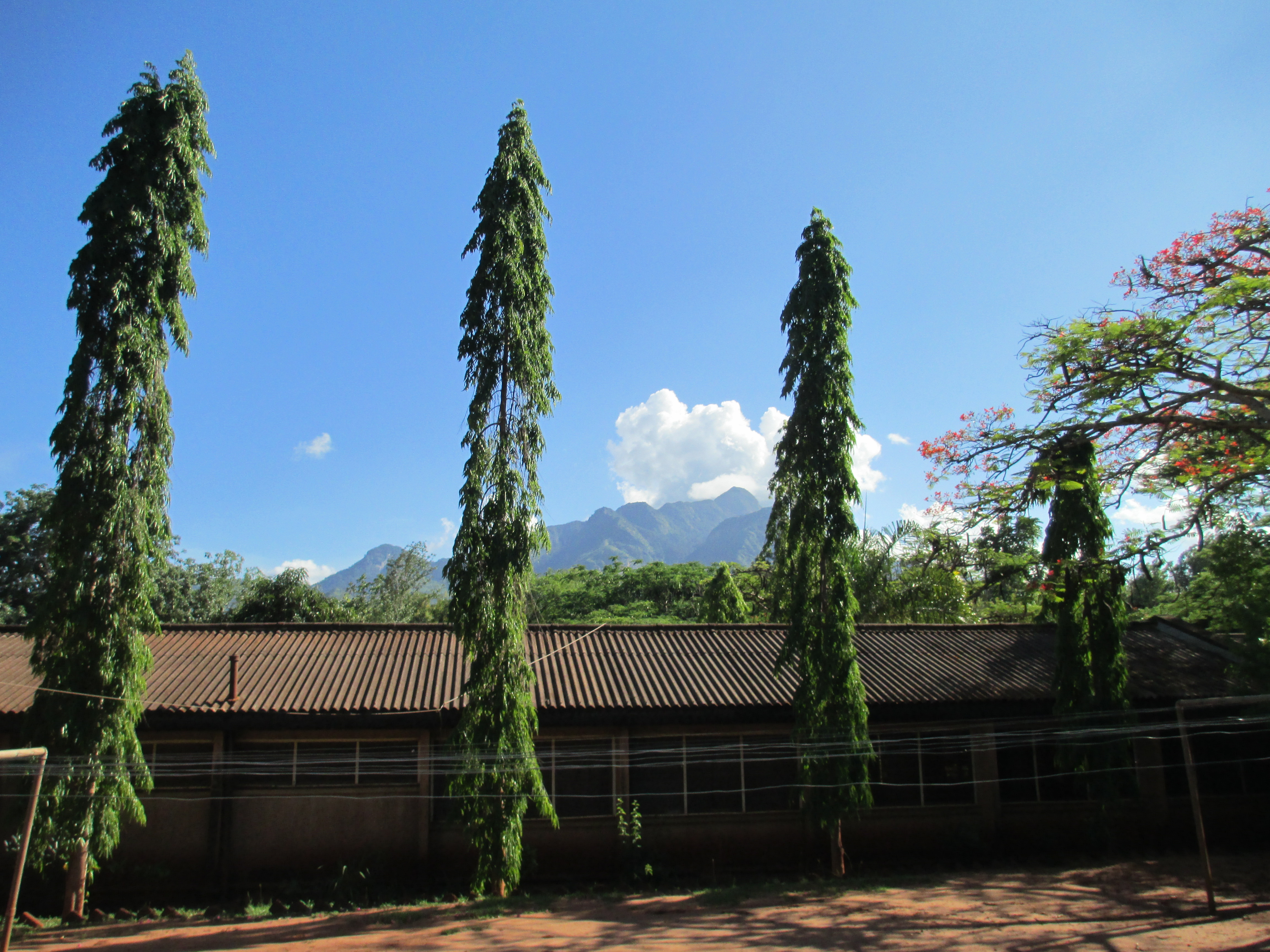
View out my front door
Well, I have been here at ELCT in Morogoro, Tanzania for almost two weeks now and language school has been challenging, interesting, intensely frustrating, and exhilarating. Missed classes due to illness have made progress a little slower than I would like, but what can I say? American bacteria don’t really prepare you very well for life in, for lack of a better term, developing countries. So far what I have learned here has reinforced what I felt during my brief lessons in the States- the structure of the language is not terribly complicated (we’ve already gone through four different tenses in just five days of classes) but without the common Latin root it is difficult for me to remember words. There is also a great deal of what they call “rhyming” language, but what I would describe as alliteration. The beginnings of words often change depending on the class of the noun or nouns in the sentence, so that there is a similar repeating sound throughout. For example, compare:
Napenda ndizi nzuri nyingi versus Napenda vitabu vizuri vingi
Both sentences use the adjectives –zuri and –ingi, but the beginning of the word differs based on the noun (ndizi= bananas or vitabu= books). This makes it easier in some ways to come up with the right sounds, but also becomes somewhat of a tongue twister when trying to put it into action. Lessons are one-on-one for a lot of individualized attention, but it also means that you have to constantly be “on.” It can be mentally exhausting. Fortunately, my teachers so far have been very patient when I get frustrated and startle them with a loud “GRRRRR” after the third time trying to get out a sentence.

Classrooms
By far the most frustrating part of language learning for me so far has been memorizing vocabulary, particularly verbs. This is due to one particularly annoying trait of the Swahili language…all verbs begin with Ku-. Kusema, kufika, kula, kulala, kupumzika, kufa, kufaa, kupenda, kupata, kuweka, kupa, kupiga, kuandika, kutoa, kutosha, kuchukua, kuongea, kufuga, kufugua, and on and on. In truth, this shouldn’t be that difficult. I should be able to simply drop the ku and look at the verb stem. But somehow it makes it so much more difficult to remember which definition goes with which verb. In Spanish, the only other foreign language I have learned, the beginning of the verb remains static, while the end is conjugated. Therefore, even if you miss the particular subject or tense, you at least know what action the sentence is discussing. When conjugating the verb in Swahili, the ku is dropped and a subject and tense prefix added on. Therefore, kupenda could become ninapenda, alipenda, tutapenda, etc. During conversations, these all sound like completely different words to me. When native speakers get going, and words are flying by quickly, I often just catch the beginnings of words and not the portion that differentiates one verb from another.
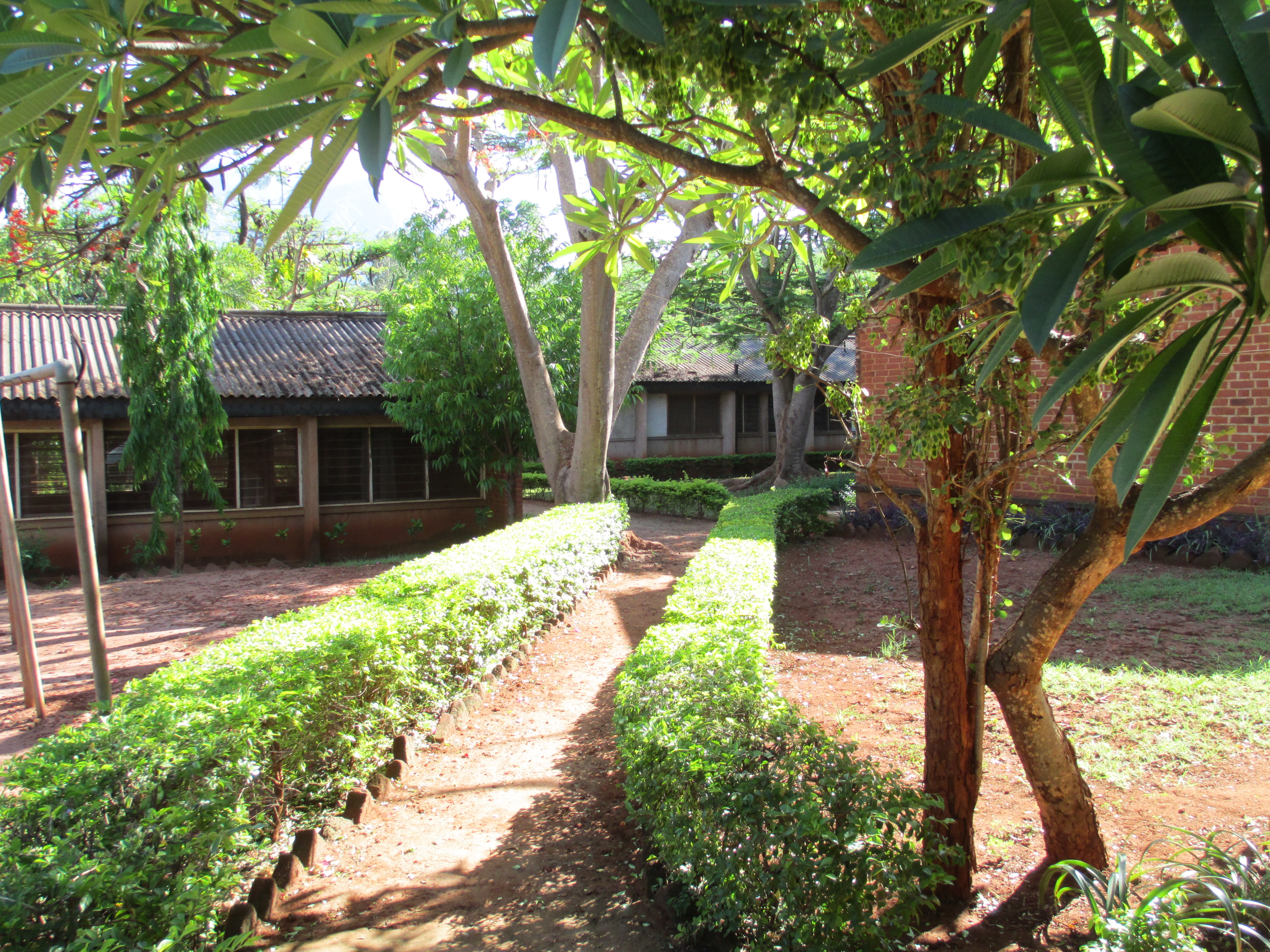
Campus grounds
However, I have been through language learning before and at least I know that this is all to be expected. I know that slowly, slowly, it will start to come together. At least that is what I hope for. In the meantime, I am enjoying my time here in the little oasis of language school where all of the teachers speak to us in very slow, very clear, very concise Swahili. Soon I must begin to venture out more into society, to give myself a bigger challenge. But it is nice to be able to take baby steps at first.
The language school is located on a large pleasant campus owned by the Lutheran Diocese. The campus includes Lutheran Junior Seminary (a secondary school) and its associated dormitories, a kindergarten, small clinic, church, the language school and its dormitories, and various houses for those working with one of these entities.
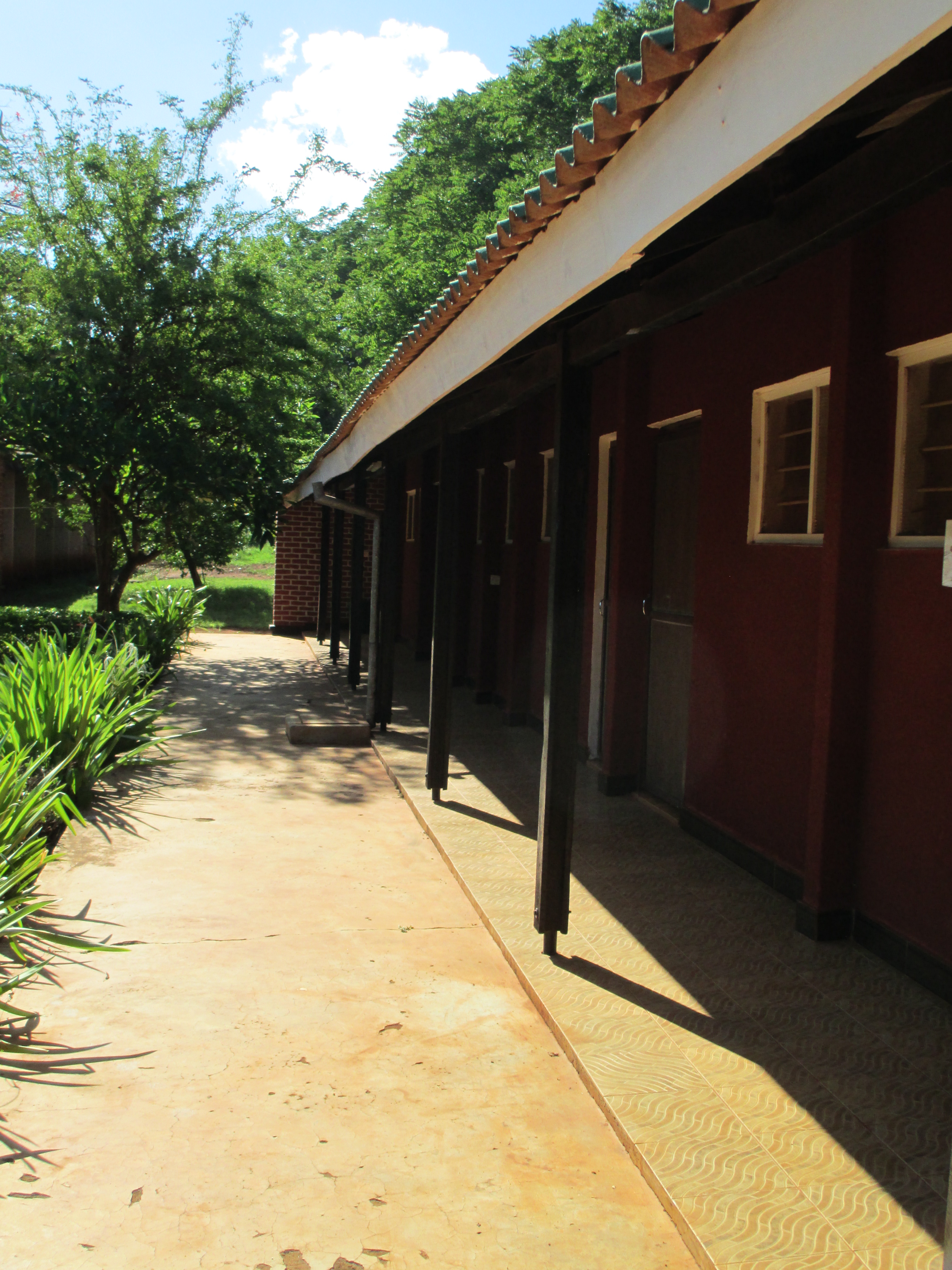
Dormitory
This means that there are many high school-aged students walking around in uniforms during the day or playing soccer each evening, and many hours of the evening and weekend are filled with the sound of choir practice or services going on at the church. At first I thought this was kind of lovely; after two weeks and the realization that the loud music and blaring microphones often go until well after 9 or 10pm, I am reevaluating that feeling. But since we are somewhat removed from town and I am currently the only student boarding at the language school, it is nice to feel that that are other people around.
We are located about ten minutes outside of the center of Morogoro by car, though it can take as long as 20-30 minutes to get there by dala-dala (mini-bus). Because of this, I haven’t spent much time in town as I don’t really get enough of a break during the day to make it there and back. Hopefully I will be able to explore on the weekends in coming weeks and get to know my way around.

A beautiful morning on campus
 Potholes and Pili Pili