
My first week in my new home has been progressing rather uneventfully. Due to frustrations with research permits and documentation, I have been making multiple trips to the hospital to speak with the doctor I will be working with there but have as yet been unable to actually begin any sort of research other than just observing things in the public areas of the hospital. I have to make another trip to Dar es Salaam at the end of this week to visit the permit offices again, and in the meantime I am simply adjusting to my new home. So this seemed as good a time as any to a) talk about food and cooking, and b) explain the pilipili reference in my blog title (six months in is still timely, right?).
When I first arrived in Tanzania, as I mentioned in my previous cooking entry, I was quite homesick for food back home. I could say “American food,” but truthfully it was more like “American food plus the various ethnic foods that we have appropriated.” I craved burgers, sandwiches, pizza, sushi, Mexican, Italian, Thai, Chinese, Indian, and most of all I craved spicy. Anything spicy. I am the type of person who puts Tabasco on my eggs and Siracha in nearly everything else. I like a good dose of wasabi with my sushi. Red pepper on my pizza. Cayenne blended into my burger. There is very little I think cannot be improved by the addition of a few serranos or jalepeños. I guess what I’m saying is, I like things hot. (And yes, Shefali, if you’re reading this, you have every right now to say, “I told you so.”)
So I was somewh at dismayed to find that Tanzanian food in general is not spicy. There are a few exceptions depending on the region and cook, but most of the meals I ate were not. They were very good, don’t get me wrong, but I missed that extra kick. Many places have what is called Chile Ketchup or Tomato Chile on the table, which I was warned by Tanzanians was pretty spicy but is actually exactly what it sounds like. Ketchup with just the mildest hint of chile in it. It serves its purpose, particularly on French fries, but it did not satisfy my spiciness craving. Fortunately, on the table at the language school, I discovered a small little bottle of pilipili. Pilipili is actually a generic name for a spicy pepper here (with pilipili hoho used to refer to your standard green bell pepper), but it also refers to the red or green sauces made from spicy peppers. You may have encountered or heard of similar sauces referred to as peri-peri or piri-piri from other countries, but Swahili speakers often mix up their R and L sounds when speaking (thus rafiki might become lafiki for example) and so here it is called pilipili. If you’re interested in the subject at all, there is actually a lot of really interesting information online about the history of its spread around the world. Many restaurants have it, I’ve found, you just have to ask for it.
Since then, I have become somewhat obsessed. I seem to be the only person who eats it. I never see another Tanzanian eating it (though they must, since it is carried in restaurants and stores here) and most of the expats I know do not share my love of spicy food. So I have resorted to buying my own bottles and carrying them with me. I realize this is sad and a little strange, but my love is that strong
Therefore, when I began to set up house here in Ifakara, two bottles of pilipili, red and green, were among my first purchases. If you are uninterested in hearing me wax poetic about my rather mundane first experiences cooking for myself here in Tanzania, this would be a good time to stop reading. If not, keep reading, but I make no promises that this will be interesting! Since this blog is also serving as something of a journal while I’m gone, I sometimes get to write about things that may only be of interest to me.
I thought I would share some of my first attempts at meals here in my new home. Most of the ingredients are pretty familiar (it makes you realize the ridiculous access with have to a worldwide selection of foods in the US) and the only real difficulty has been getting used to the single propane burner on the floor that serves as my stove. I also have no refrigerator (though I do have a small freezer that works when the power is on), so I have to buy most produce within a couple days of when I intend to use them. There are also a couple of very small (think half the size of a gas-station shop) stores in town that sell pasta, bread, a few spices (“Fish curry,” “Chicken curry,” “Beef curry” and “Curry” being the selection), coconut cream, beverages, and chips. I have to admit, although I don’t eat them often in the States, I couldn’t help but do a little internal dance of joy when I found two lone cans of Pringles in one of them. As far as tools go, I will have to wait until my trip to Dar to buy things, so I am currently left with a small very dull knife and plastic plate to cut things up. Meals are typically cooked in silver pots without handles (you can buy a gripper-type thing to go around it but my home does not seem to have one to go with its four pots), so you need to either try to do one-pot cooking or else cook one pot of food at a time for different dishes and then put a lid on to keep them hot.
Since I have n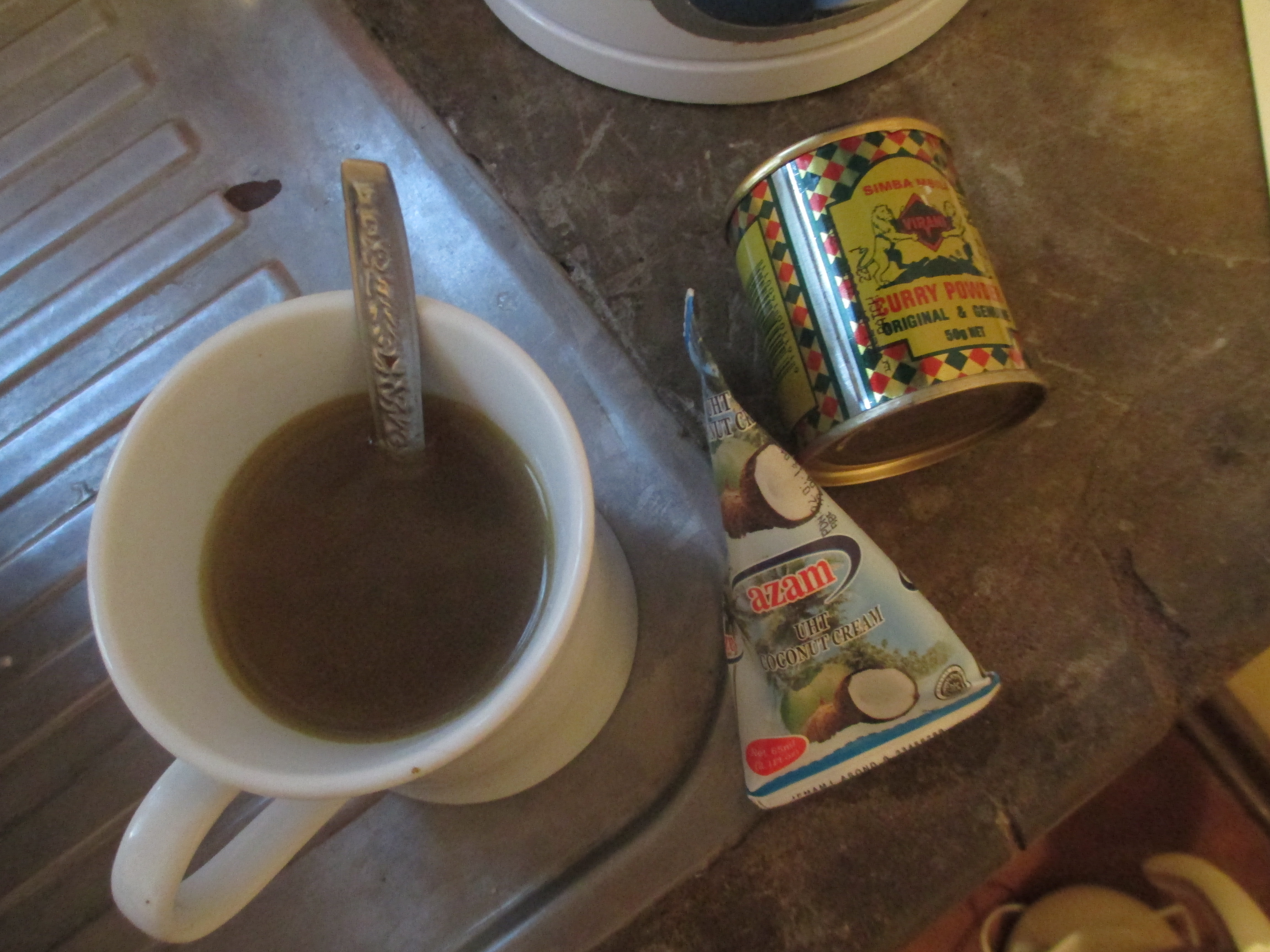 ot yet figured out where to buy meat (need to find a reliable butcher) and my little shop only sells hot dogs, I decided the first attempt would be a vegetable coconut curry. I was able to buy a variety of vegetables- carrots, peppers, potatoes, onions, garlic, etc.- at a little market near my house, and had bought coconut cream, chicken broth, and curry at the shop in town (eventually I want to experiment with making my own coconut cream si
 nce coconuts are easily available). For protein, I chopped up the incredibly pricey cashews I found at the shop as well). I quickly discovered that my new home has an ant problem, and so everything went into Tupperware as soon as it was opened/chopped because those suckers are on food faster than you can blink here. From there it was a somewhat straight forward stir fry process, except that I had to first toast the
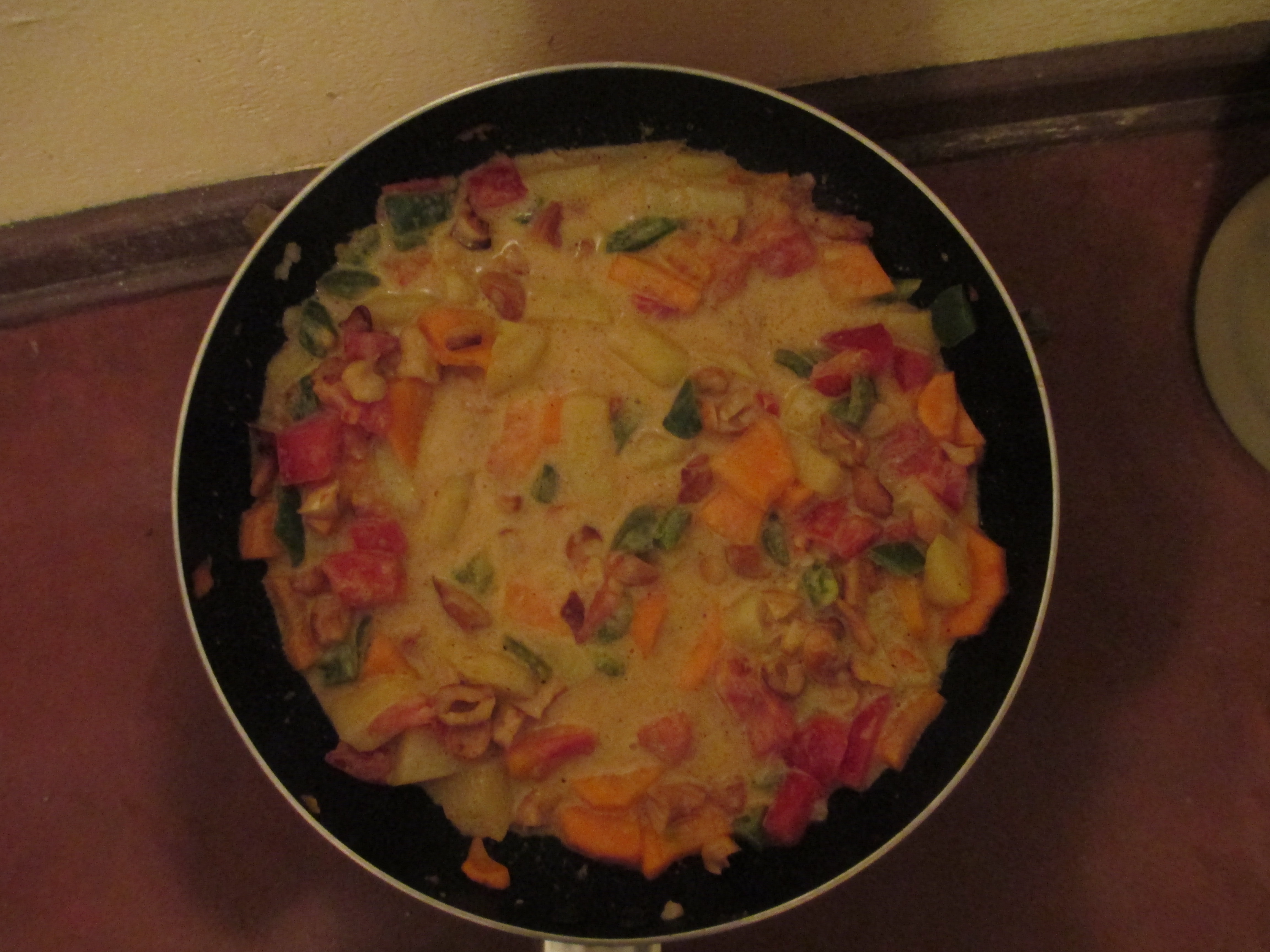 cashews, then remove the pan and cook the rice, then remove the pan and cook the vegetables and sauce. Total it took about two hours from start to finish, but it was delicious. In fact, it was so successful, that the next night I made the same exact dish except with an Asian-style sauce using soy sauce and ginger.
I wanted to shake things up 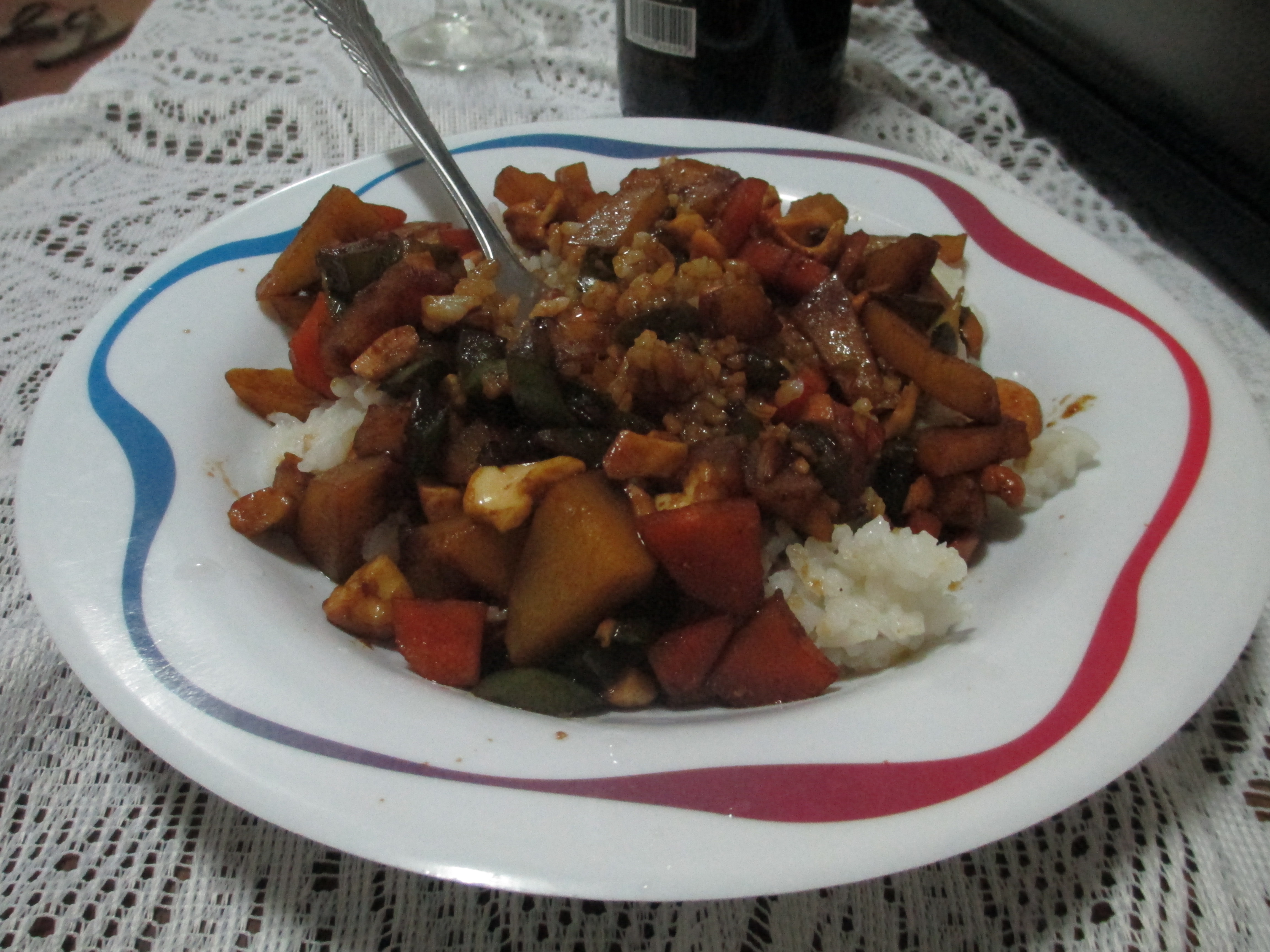 tonight but from what I’ve seen, what I have already bought is pretty much what is available near my house and I didn’t want to walk all the way to town to the market (about 20-25 minutes away) because I was busy trying to do some dissertation writing. I had asked for suggestions from friends on Facebook on what to cook given my limited ingredients. One of those I liked best was the idea to do a fritter or veggie burger using shredded vegetables and beans. I had vegetables left over from the stir fry and popped over to the nearby stalls to by red beans, which I let soak most of today.
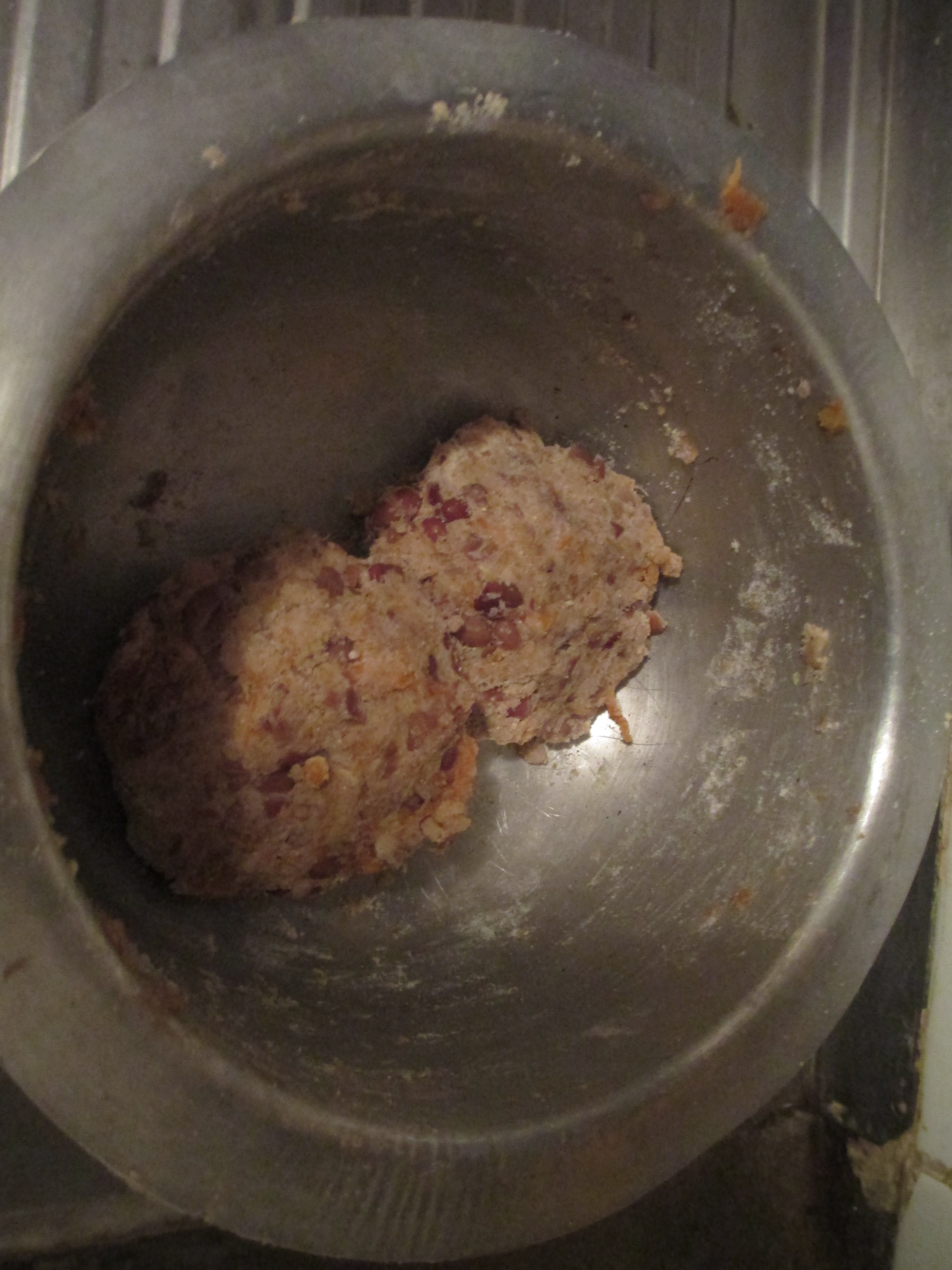 I don’t know why I have never made these in the States. It was so easy and (mostly) delicious. I shredded the carrots, potatoes, green peppers, garlic, and ginger I had leftover on the strangest little ineffective plastic shredder I have ever seen and which I had found in a bowl in the kitchen (note to self, add to Dar list). After cooking the beans, I simply mashed it all together, added a large amount of curry, and then formed them into balls to fry in a pan. I had been told to add a bit of flour to help it stay together, and I had some millet that i had bought to make uji (porridge) for breakfast, so I added that to the mixture. The reason I say they were “mostly” delicious though is
 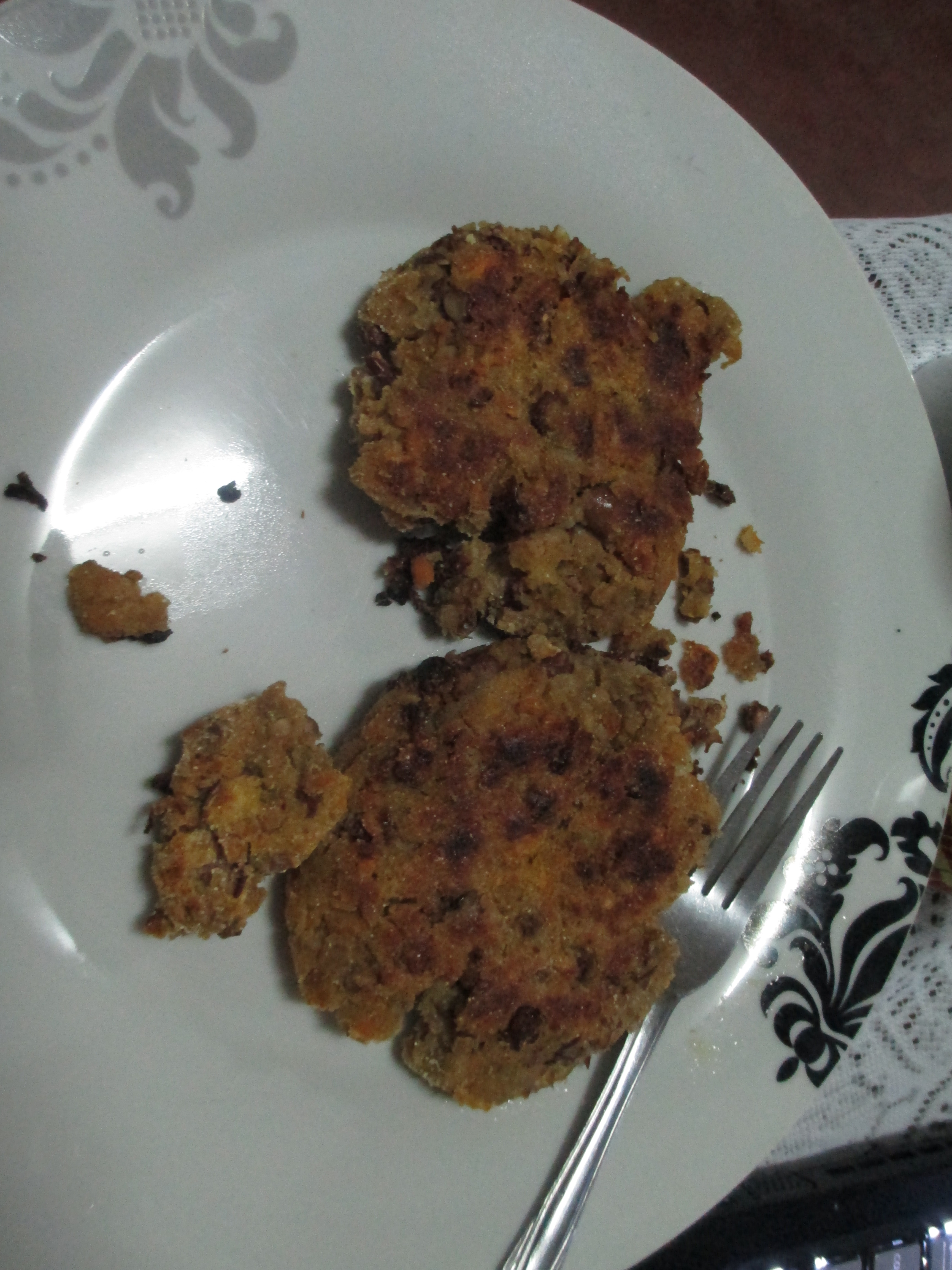 because millet has a bit of a bitter taste and the result was a floury bitter taste to the end product. Next time I will use chickpea flour or corn I think. But….TA DA! Pilipili cures everything! I just poured some of the magic sauce over the top of the patties and was happy again. After cutting up a few potatoes, I fried up some serviceable French fries and enjoyed the end result with a movie and a glass of Tanzanian wine.
“But Emily,” you’re saying to yourself now, “why not cook  Tanzanian food?” I’m glad you asked, friend. The truth is, I very much want to but I thought I would start with some easy dishes i knew first. But my last attempt this week was something called maandazi, a Tanzanian savory doughnut. They are delicious and I have to stop myself eating a million of them because my stomach unfortunately hates gluten. Still, I wanted to attempt it because they always smell so good when I walk by a place selling them. I also figured, how hard could they be? They’re just fried dough. I looked online to find a recipe, bought the ingredients and came home already tasting the maandazi that would fill my kitchen in an hour’s time.
 It turns out, they are difficult. Or I did something wrong. Or the recipe I downloaded was terrible. Possibly all three are true. First, I was missing several useful tools, such as a rolling pin and board. Second, I am pretty sure something like this should have yeast and this recipe called for no yeast. Third, I never deep fry anything at home, so I possibly did not do that step correctly. Whatever happened, I ended up with flat, rock-hard lumps of bitter dough rather than the dense, chewy, yummy rolls I wanted. Sigh. This was a little bit of an ego bruiser, because I was making baked goods with
 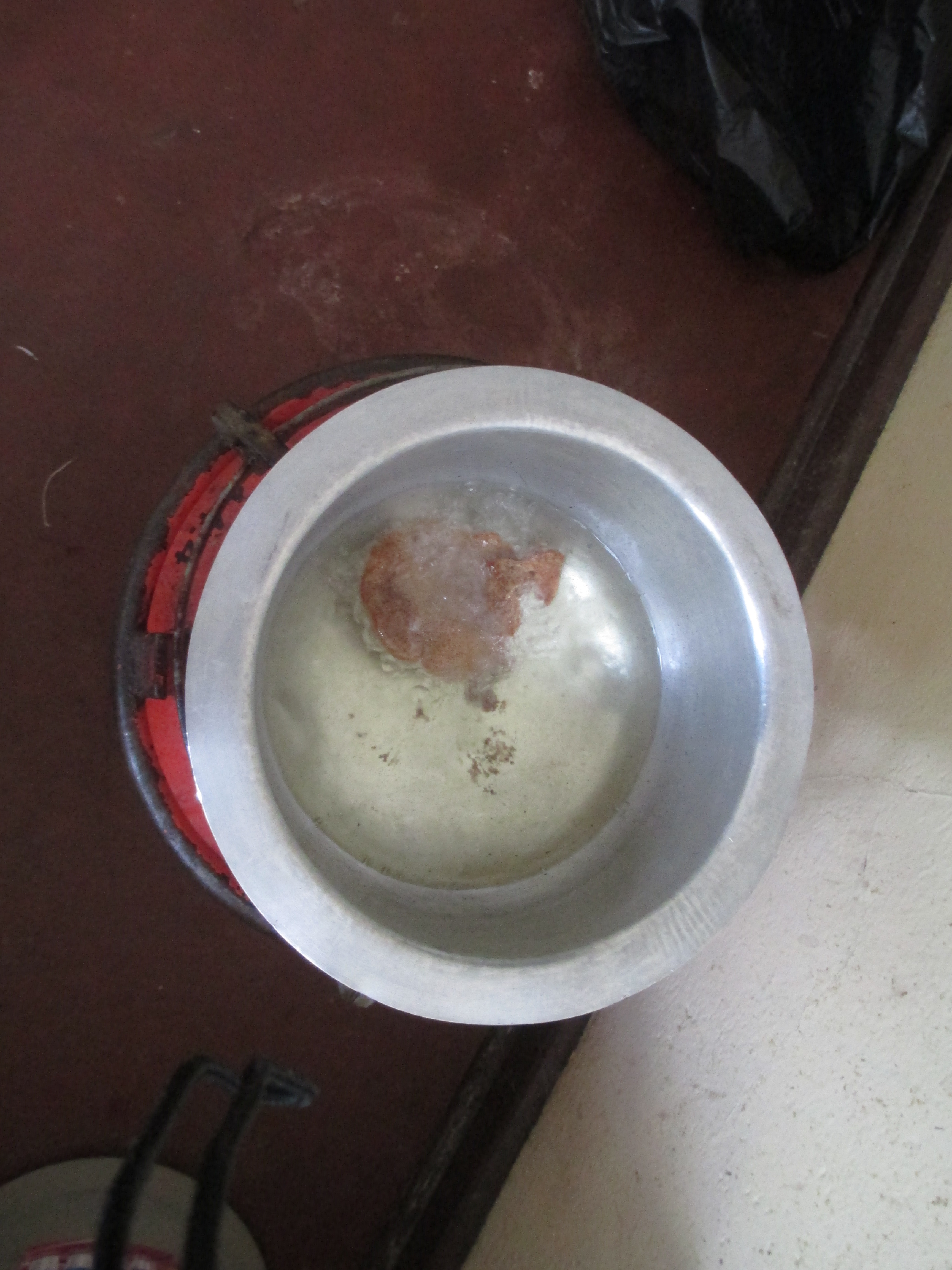 my dad when I was still too short to reach the counter without a stool. But, you can’t win them all. I will try again soon with a different recipe or make a Tanzanian friend here who wants to teach me. That is all for now. My cooking adventures I’m sure will continue, but I’ll wait until I learn more about Tanzanian dishes to post anything. I have my eye on several recipes I want to learn!
 Potholes and Pili Pili