Making (By Which I Mean Watching Someone Else Make) Ugali

One of my favorite things in the world is to spend a day cooking.  Nothing makes me happier than piling the ingredients for a bunch of recipes on the counter and whiling away the next few hours peeling, chopping, mixing, seasoning, and just generally acting like a mad culinary scientist cackling away in glee.  I’m certainly no gourmet; I probably wouldn’t even qualify as a “foodie.”  But I do love it and typically think of myself as a fairly proficient cook.  So ever since I was first served it, I have wanted to try my hand at cooking ugali.IMG_0116

Ugali, for the uninitiated, is a staple of Tanzanian cuisine.  Made of maize flour, the best way I can describe it is that it resembles what you might end up with if polenta had a stickier consistency and was made with finer milled grain.  It doesn’t have much of a taste- it is primarily a vehicle for moving food to your mouth.  When served, it looks like a large white blob of dough; the diner pulls off a piece, rolls it in his or her right hand to form a ball, makes an indention with the thumb, and then uses this to scoop up various other foodstuffs.  Most meals in Tanzania begin with either ugali or rice as a base, served with meat alone or one or more various stew-like sauces (containing some combination of beans, meat, and vegetables).  In fact, the Swahili word for food, chakula, typically actually refers to ugali or rice.  The rest are considered side dishes.

However, despite its ubiquitous nature among Tanzanians, it is rarely served to wazungu.  It is assumed that we won’t like it.  In most cases, unless you specifically ask for it, the default for dishes served to foreigners will be rice or French fries.  The first time I had it was two years ago, when I made a special request to Seki, the housekeeper at the guest house where I was staying.  She asked me several times if I was sure I wanted it, with an incredulous look on her face.  When I reassured her that I was in earnest, she complied, and then sat down at the table to watch me eat it.  Given its mild but pleasant flavor, I can only assume that it is the clumsy, fumbling spectacle of a first-time eater trying to time the rolling of the ugali for just the right moment between “perfect consistency for scooping food” and “crumbling mess disintegrating into the side dish” that makes Tanzanians think foreigners don’t enjoy eating it.

IMG_0110

Anne and Eliudi, waiting for water to boil

Since that first time, I’ve had the opportunity to eat ugali a few times and it has grown on me (not least because I’ve gotten slightly more coordinated with it).  So just as with all foods I like, a small itch has been growing to try making it myself.  Unfortunately, all of our meals are made for us by the kitchen staff here at the language school and they haven’t made ugali yet, so there has been no time to ask for instruction.  But this week, I finally had my chance.  Anne was going over to the house of one of the language school staff members, Eliudi, for dinner and asked if I wanted to join.  Of course I said yes.

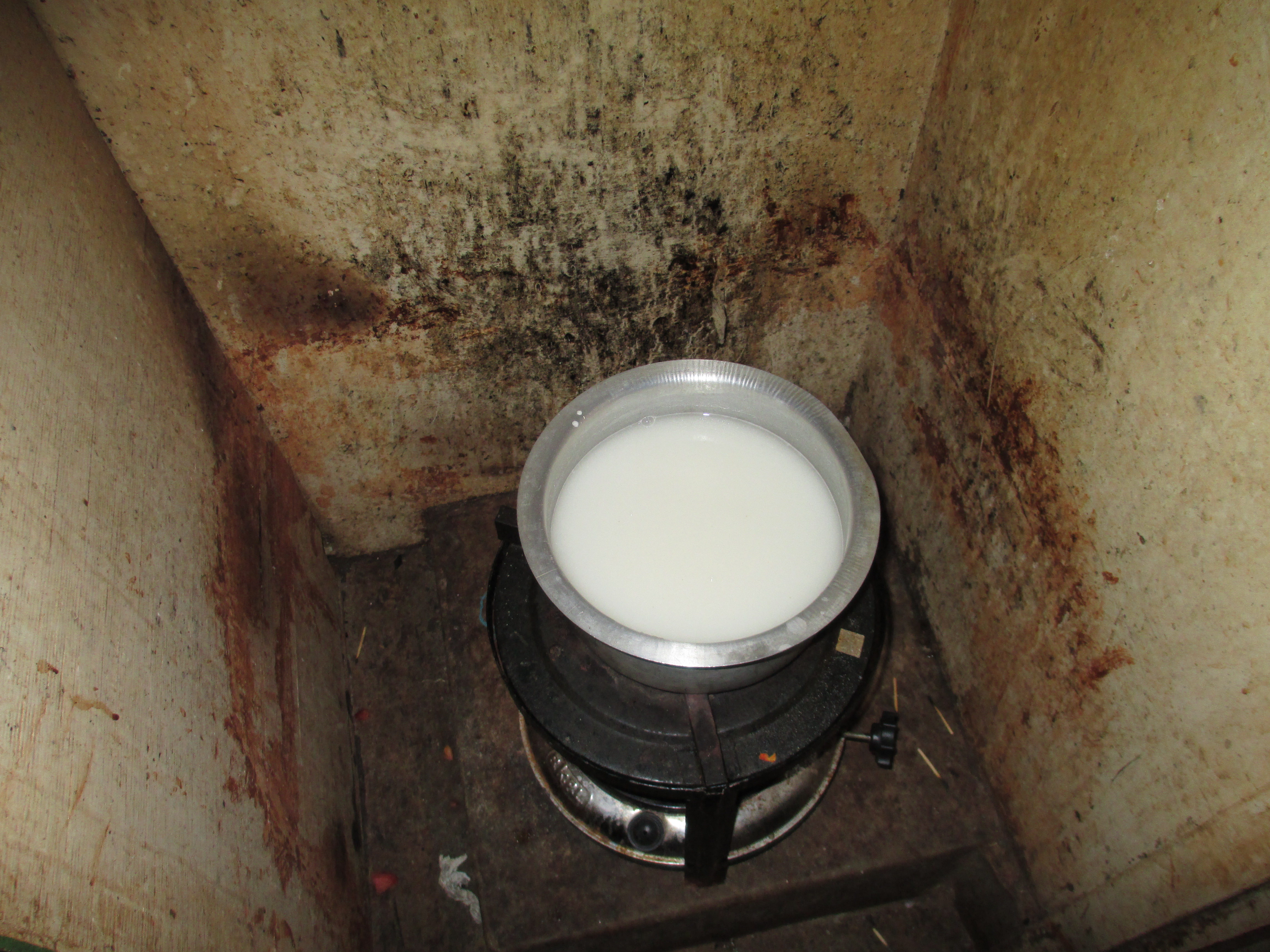
On the menu was salted fish served with a tomato sauce and ugali.  I was psyched.  I figured the process of making ugali couldn’t be that different from rice, oatmeal, couscous, quinoa, or any other grain + water concoction.  Turns out it’s not, but it does takes some serious muscle!  We cooked using a small charcoal stove in the corner of the kitchen.  Water boiling, Eliudi poured the flour into the pot.  At this point, I tried to figure out what the proportions of water to flour should be.  The conversation went something like this:

“How much flour do you add?”IMG_0105

“It depends on how many people you are cooking for.”

“So for the three of us, how much did you add?”

“Enough for how much water is in the pot.”

“How much water is in the pot?
“I didn’t measure.  I just poured it in.”

“So how do you know how much flour to add?”

“You just add what you need for the water.”IMG_0108

“So how do you know how much you need?”

“Just watch it.  If you need more, then you add more.”

Needless to say, I never did really figure out the flour to water ratio.  I understand this.  I don’t measure everything when I am cooking either, especially when I am cooking dishes I’ve made hundreds of times before.  But despite watching that pot closely, I couldn’t tell you what signals the pot was giving off to indicate another handful of grain was needed or when.

IMG_0107

Fish stew

IMG_0112

The cooks in action

Next came the stirring.  Oh man, the stirring.  Forget kettlebells, this will be the next hot workout in trendy gyms nationwide.  With a large wooden spoon, more like a paddle really, you have to almost whip the ugali into shape.  Eliudi let Anne and I each take a stab at it before laughing and stepping in.  It’s a little galling to fall short of making what is essentially thick polenta.   So Anne and I primarily played the role of spectator, chopping tomatoes and stirring the fish stew, while Eliudi handled the ugali.

It was all worth it in the end though.  We had a lovely dinner, together with my first taste of Tanzanian wine- a red from Dodoma, said to pair nicely with “game meat.”  After a little more trial and error, I know I will be able to create my very own fusion cuisine.  I’m thinking ugali would go well with a nice thick Guinness-infused meat and potato stew.  Now where to get the Guinness…

IMG_0117

Tah-Dah!

IMG_0122

Demonstrating the ugali-rolling technique

Learning Swahili, or “WHY DO ALL OF THE VERBS START WITH KU- ?!?!?”

IMG_0019

View out my front door

Well, I have been here at ELCT in Morogoro, Tanzania for almost two weeks now and language school has been challenging, interesting, intensely frustrating, and exhilarating.   Missed classes due to illness have made progress a little slower than I would like, but what can I say?  American bacteria don’t really prepare you very well for life in, for lack of a better term, developing countries.  So far what I have learned here has reinforced what I felt during my brief lessons in the States- the structure of the language is not terribly complicated (we’ve already gone through four different tenses in just five days of classes) but without the common Latin root it is difficult for me to remember words.  There is also a great deal of what they call “rhyming” language, but what I would describe as alliteration.  The beginnings of words often change depending on the class of the noun or nouns in the sentence, so that there is a similar repeating sound throughout.  For example, compare:

Napenda ndizi nzuri nyingi   versus  Napenda vitabu vizuri vingi

Both sentences use the adjectives –zuri and –ingi, but the beginning of the word differs based on the noun (ndizi= bananas or vitabu= books).  This makes it easier in some ways to come up with the right sounds, but also becomes somewhat of a tongue twister when trying to put it into action.  Lessons are one-on-one for a lot of individualized attention, but it also means that you have to constantly be “on.”  It can be mentally exhausting.   Fortunately, my teachers so far have been very patient when I get frustrated and startle them with a loud “GRRRRR” after the third time trying to get out a sentence.

February 020

Classrooms

By far the most frustrating part of language learning for me so far has been memorizing vocabulary, particularly verbs.  This is due to one particularly annoying trait of the Swahili language…all verbs begin with Ku-.  Kusema, kufika, kula, kulala, kupumzika, kufa, kufaa, kupenda, kupata, kuweka, kupa, kupiga, kuandika, kutoa, kutosha, kuchukua, kuongea, kufuga, kufugua, and on and on.  In truth, this shouldn’t be that difficult.  I should be able to simply drop the ku and look at the verb stem.  But somehow it makes it so much more difficult to remember which definition goes with which verb.  In Spanish, the only other foreign language I have learned, the beginning of the verb remains static, while the end is conjugated.  Therefore, even if you miss the particular subject or tense, you at least know what action the sentence is discussing.  When conjugating the verb in Swahili, the ku is dropped and a subject and tense prefix added on.  Therefore, kupenda could become ninapenda, alipenda, tutapenda, etc.  During conversations, these all sound like completely different words to me.  When native speakers get going, and words are flying by quickly, I often just catch the beginnings of words and not the portion that differentiates one verb from another.

IMG_0026

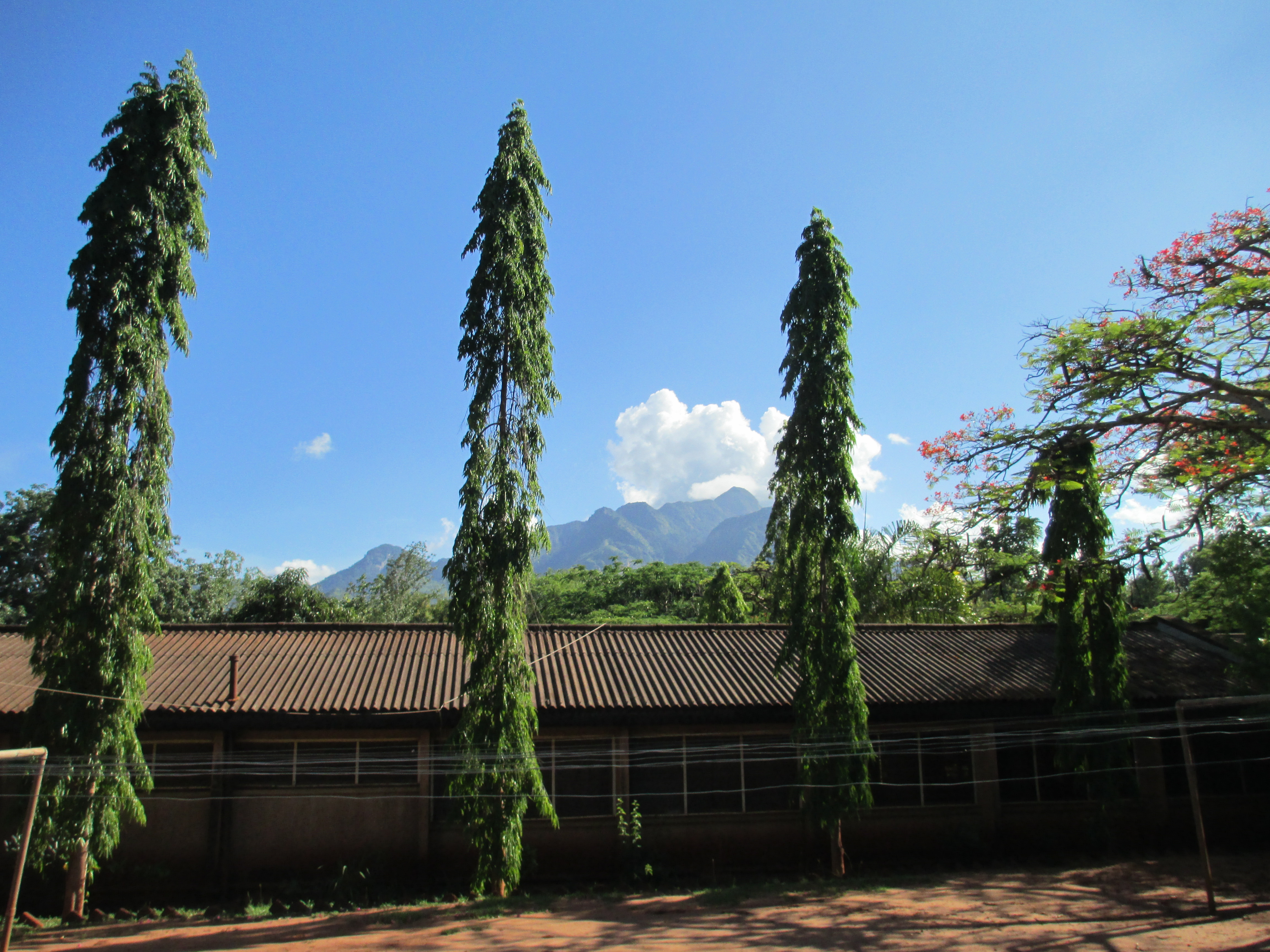
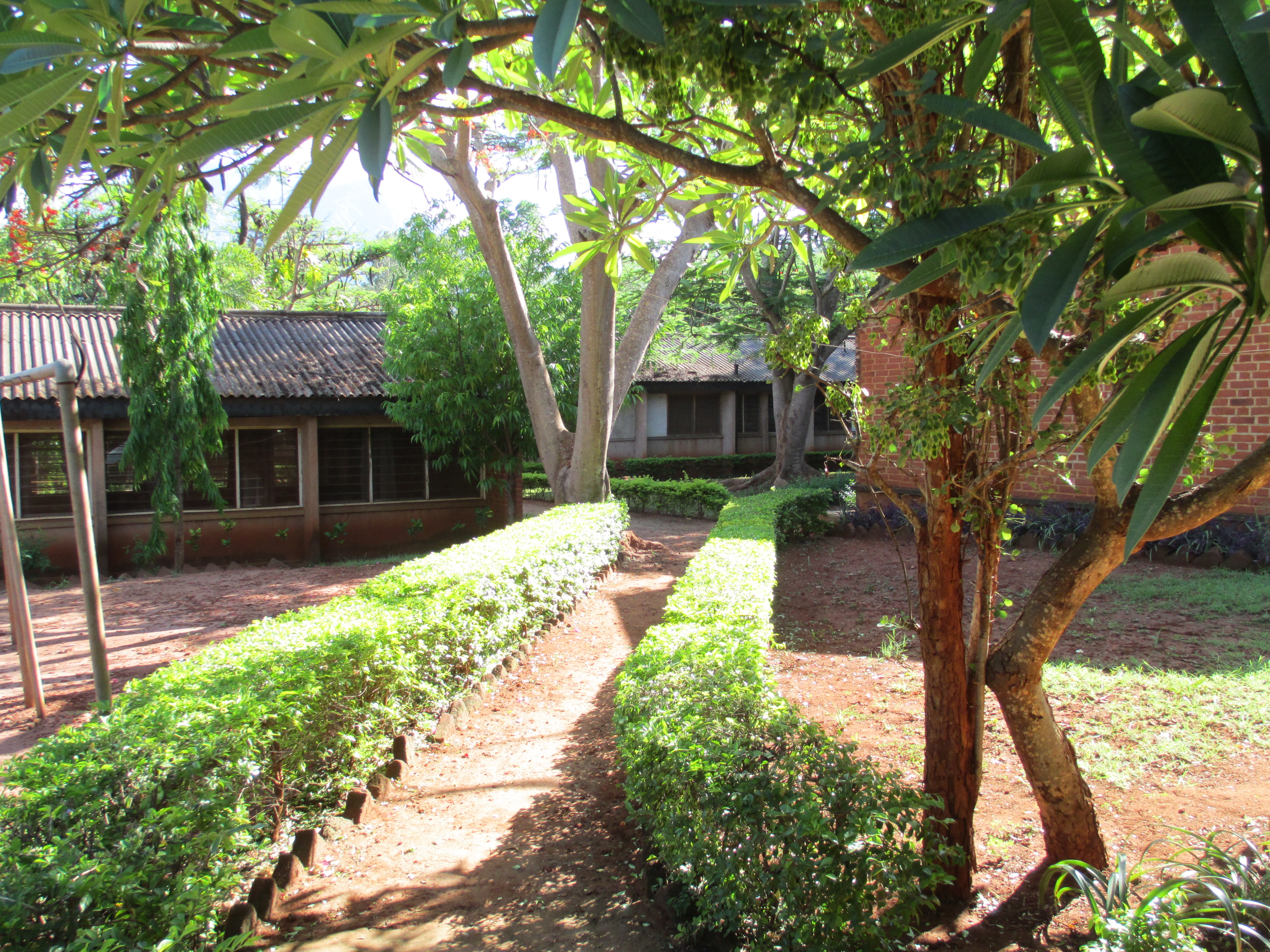
Campus grounds

However, I have been through language learning before and at least I know that this is all to be expected.  I know that slowly, slowly, it will start to come together.  At least that is what I hope for.  In the meantime, I am enjoying my time here in the little oasis of language school where all of the teachers speak to us in very slow, very clear, very concise Swahili.  Soon I must begin to venture out more into society, to give myself a bigger challenge.  But it is nice to be able to take baby steps at first.

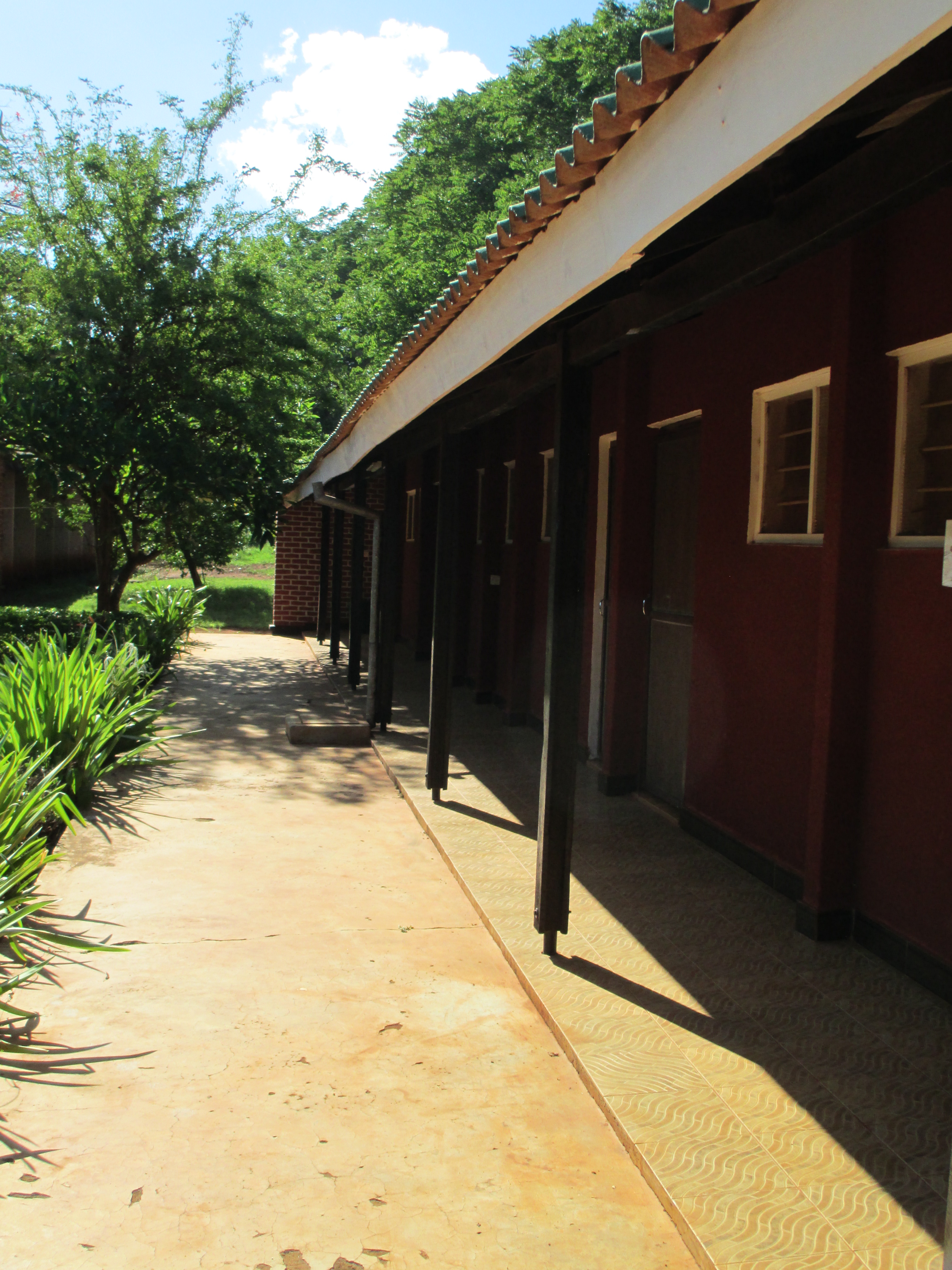
The language school is located on a large pleasant campus owned by the Lutheran Diocese.  The campus includes Lutheran Junior Seminary (a secondary school) and its associated dormitories, a kindergarten, small clinic, church, the language school and its dormitories, and various houses for those working with one of these entities.

IMG_0022

Dormitory

This means that there are many high school-aged students walking around in uniforms during the day or playing soccer each evening, and many hours of the evening and weekend are filled with the sound of choir practice or services going on at the church.  At first I thought this was kind of lovely; after two weeks and the realization that the loud music and blaring microphones often go until well after 9 or 10pm, I am reevaluating that feeling.  But since we are somewhat removed from town and I am currently the only student boarding at the language school, it is nice to feel that that are other people around.

We are located about ten minutes outside of the center of Morogoro by car, though it can take as long as 20-30 minutes to get there by dala-dala (mini-bus).  Because of this, I haven’t spent much time in town as I don’t really get enough of a break during the day to make it there and back.  Hopefully I will be able to explore on the weekends in coming weeks and get to know my way around.

February 003

A beautiful morning on campus

A Service, a Baptism, and a Wedding

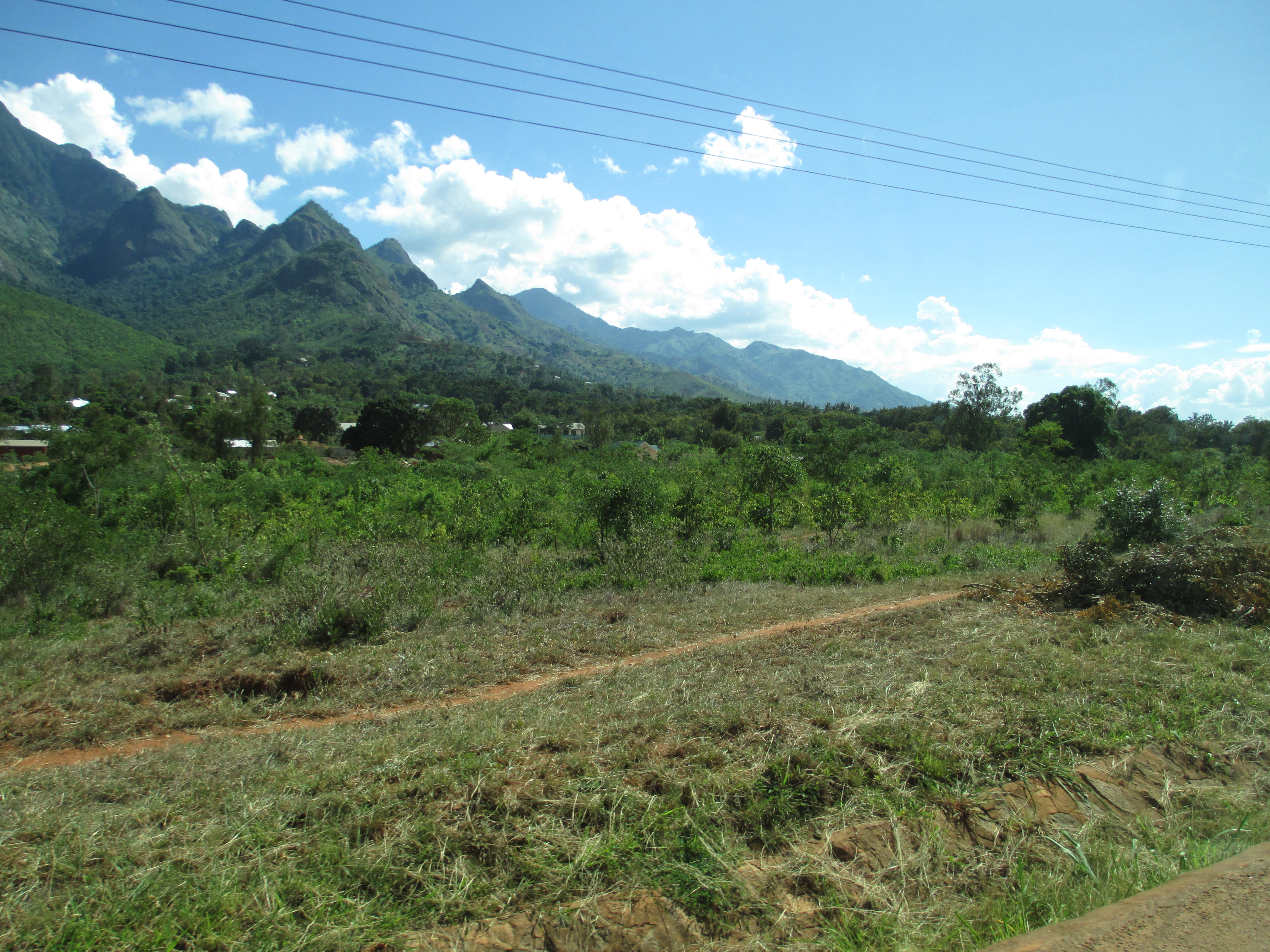
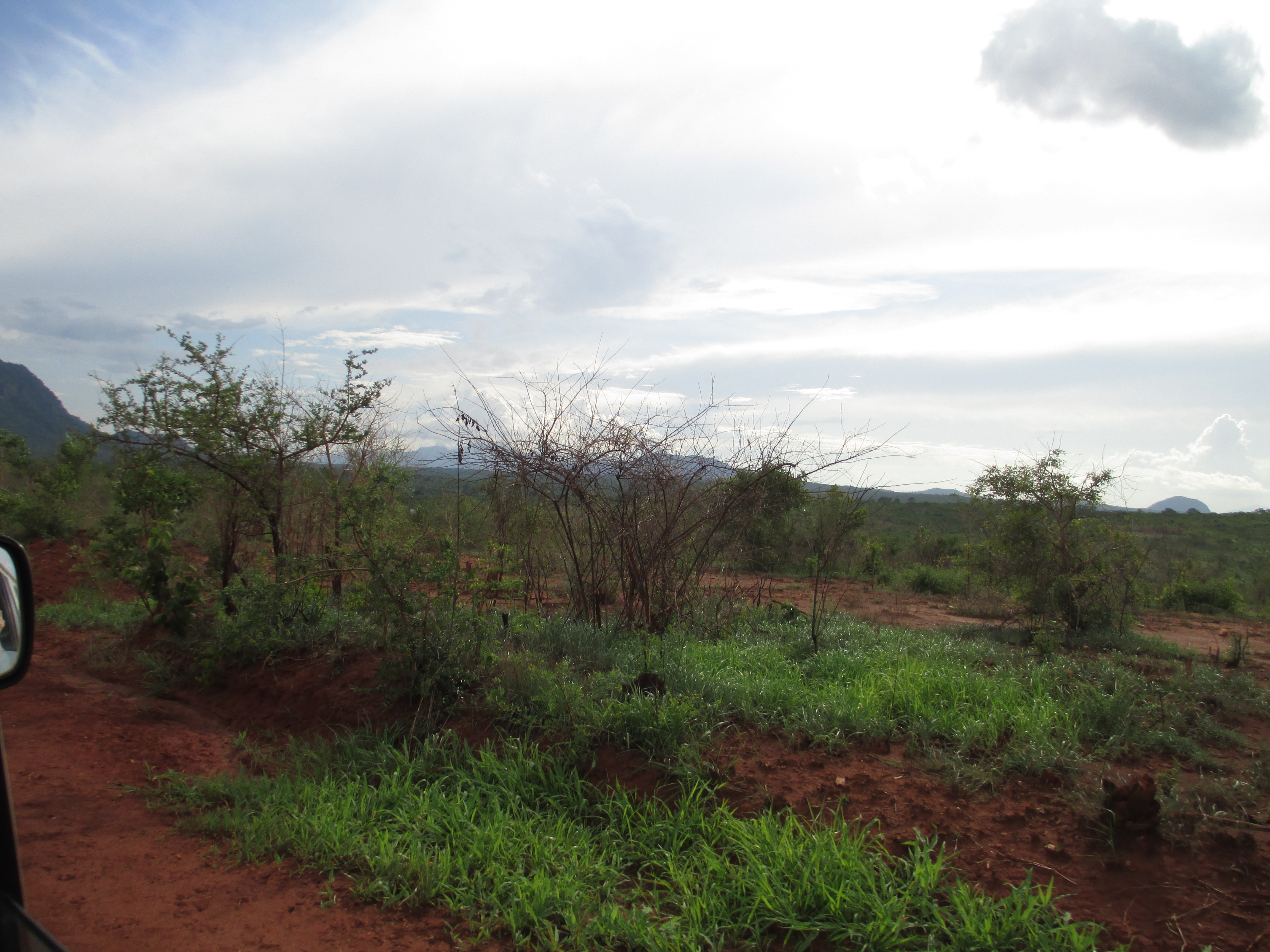
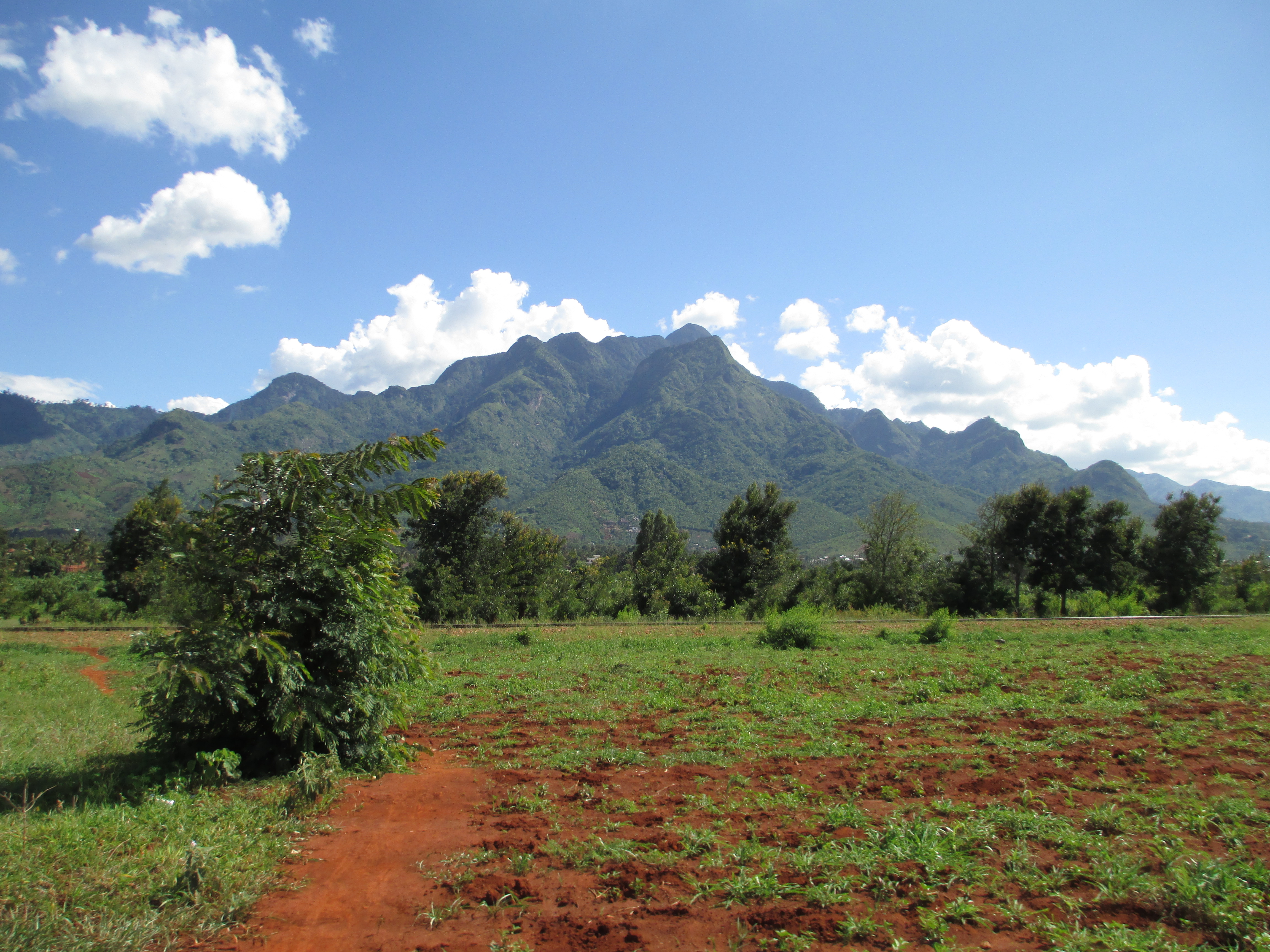
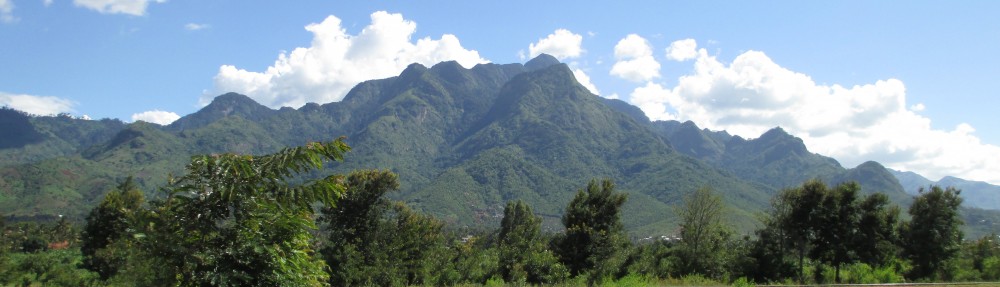
Last Friday morning Anne and I met another Lutheran missionary who has been living on campus for years now, off and on.  Robert is a retired man from Florida and IMG_0054oversees a mission that includes over 40 villages in the region.  He spends most Sundays driving to each of the different villages so that he can visit each at least once a year.  He invited Anne and me to go with him to one such village last Sunday, a special day because there was going to be a wedding.  We met up around 8:30am to head out in his jeep, beginning with half an hour on the paved road east to Dar es Salaam.  This gave me a chance to see some of the surrounding countryside- it had been dark when I reached this point on the road arriving in Morogoro.  It is beautiful here, with lush green mountains on the horizon and deep red soil peeking through the brush.

We then turned off the highway onto a dirt road and after a ways, arrived at a small church.  It was brick, with windows open to the outside and no door (many buildings are “open air” here).  It had a cement floor and benches inside, but was otherwise devoid of decoration.  The pastor, a Tanzanian, came out to meet us along with a small child named Rebecca, who ran out with her arms wide open and was swept up in greeting by Robert.  She was just a beautiful child with a huge smile and looked eagerly at the new strangers who had arrived.  Robert put her down and she gazed uIMG_0074p at me curiously as though trying to make up her mind.  I smiled and gave her a little wave and that settled it.  She took my hand and did not let go for the rest of the visit.  We didn’t speak each other’s languages, but there was a lot of giggling and a lot of playing that involved her imitating some animal crawling up my arm.  Robert explained that we were here to pick up the pastor and the choir of the church to take them with us further into the bush to the small village that was our destination.

I was a little confused at this point.  We came in an SUV- two seats up front, a bench seat in back that seats three, plus two small fold-down seats in the trunk area.  How could we fit a choir?  Fortunately there were only six of them, which, with the pastor, made seven (plus one child, so eight).  And, as I’m learning, here you make do.  So I said goodbye to Rebecca and in we piled.  Anne, I and one choir member on the bench seat, the pastor up front, and the remaining five choir members, plus the small toddler of one of the choir members, squished in the back.  Anne and I tried to take the back but they wouldn’t let us, a trend of treating us like guests that continued throughout the day.  On we continued down the increasingly precarious road.

You know how sometimes you’re riding in a bumpy jeep down a dirt path in the Tanzanian countryside that barely qualifies as a road, desperately holding onto the hand holds above you so you don’t bounce up and smash your head on the roof, and it’s uncomfortably hot and crowded, and you’re sweating through your clothes, and then suddenly the choir riding behind you breaks out into Swahili hymns, moving from call and response to beautiful harmonies and you think, “I am one lucky  son of a gun?”  Yeah.  That was my life for the next thirty minutes as I watched small farms and mud brick homes roll by.  We stopped at another church on our way just so we could say hello to some of the people there.  This was similar to the first, but with dirt floors and no benches, though it was fairly large in size.  Robert appeared to know many of the people in the area and both he and Ann conversed with them so effortlessly (it seemed to me).  Greetings are critically important here; I can’t help feeling my weaknesses when it comes to the language.

We also passed a gold mine, where men pushed heavy wheel burrows out of large pits in what looked like grueling work.  The village we were heading to is inhabited by both Maasai and members of other groups, and soon we began seeing Maasai herdsman with their cows standing watch at the side of the road.  The Maasai, of all Tanzania’s tribes, are very distinctive in appearance.  While most Tanzanians have adopted a mix of Western and traditional dress, with men in pants and t-shirts or button downs, and women in kangas (brightly colored wraps) and t-shirts, or western-style dresses, the Maasai stand out in their red, blue and purple wraps.

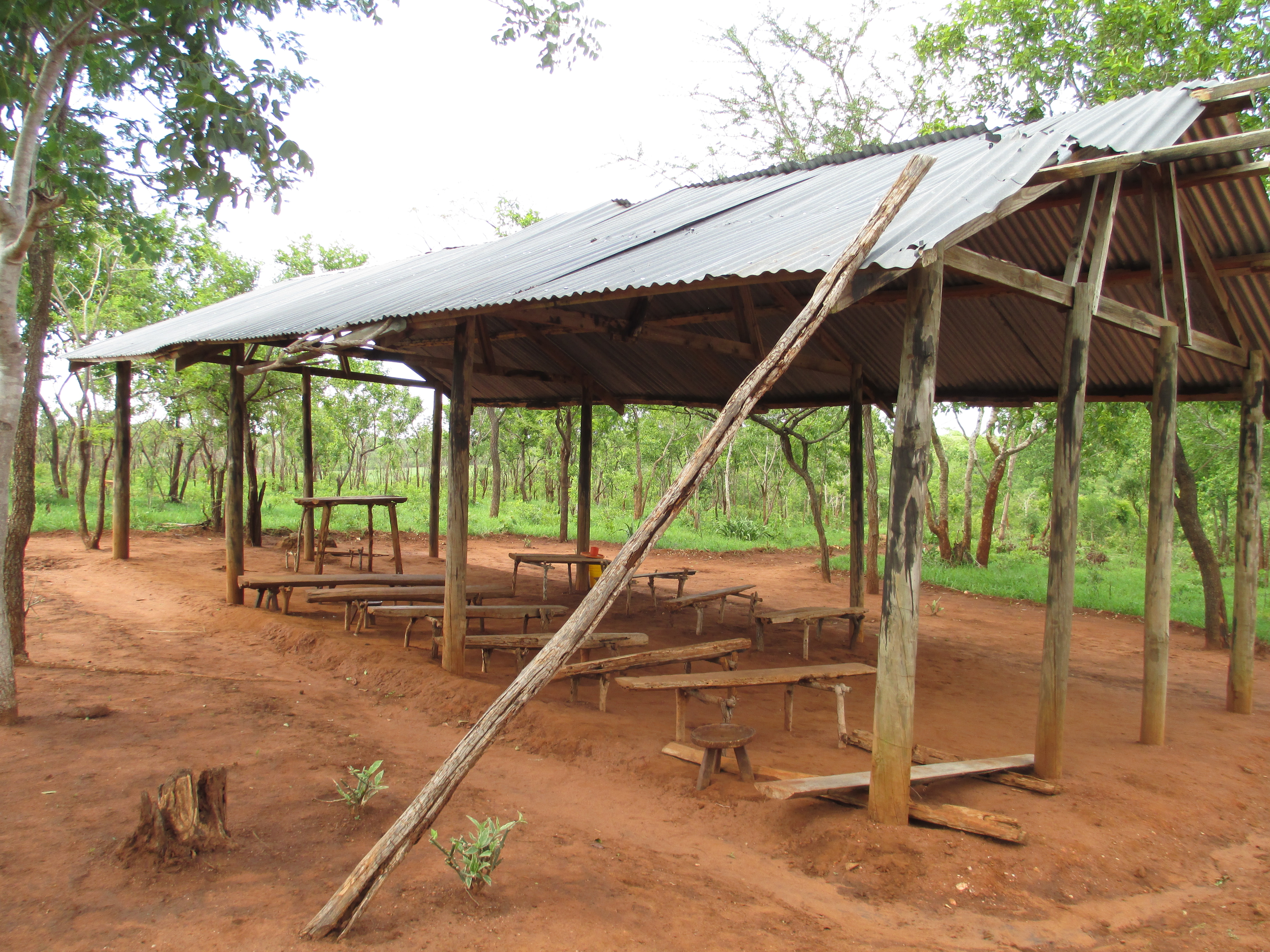
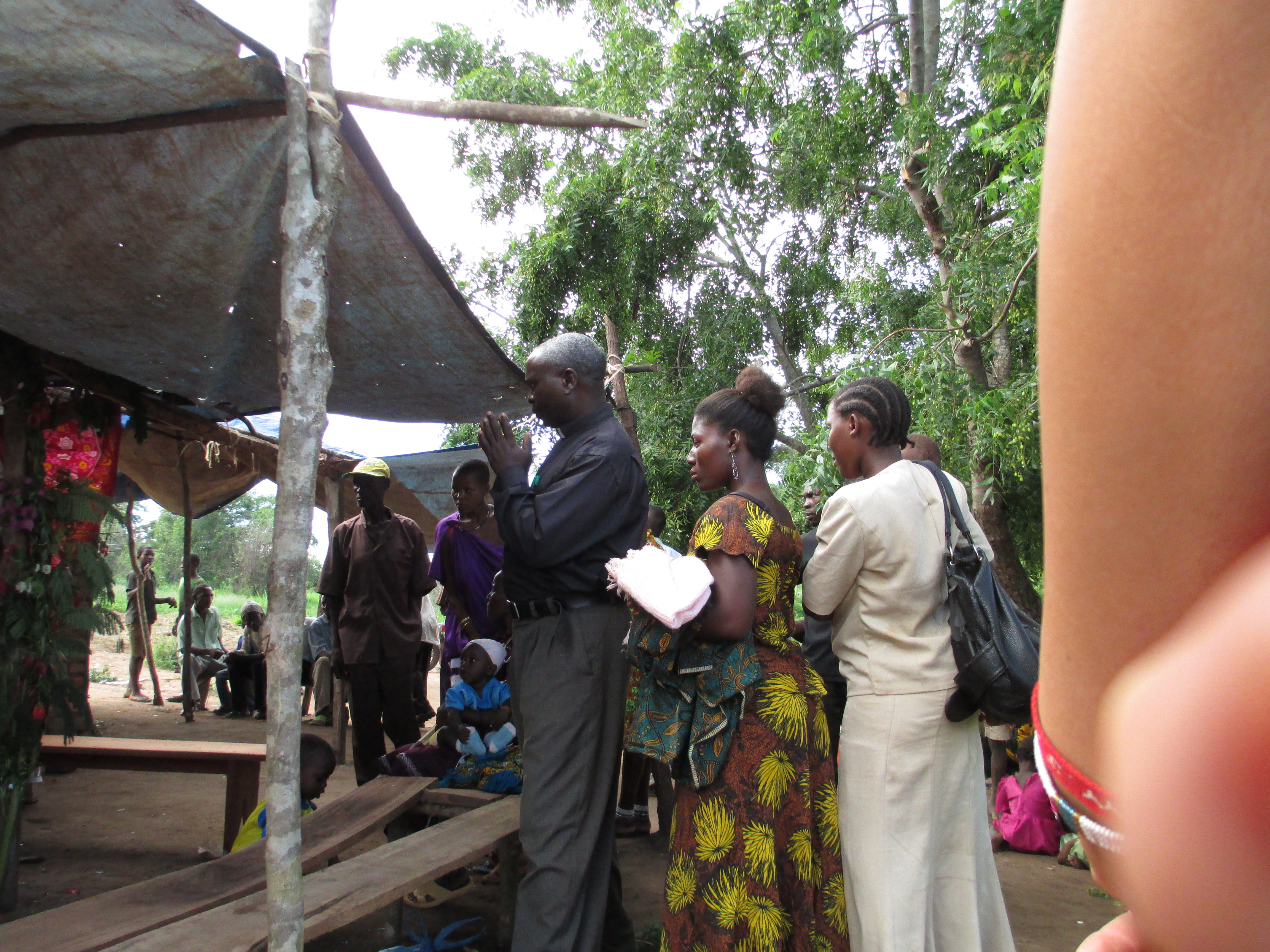
We finally arrived at our destination to see a church standing alone in the brush.  Made of a tin roof supported on wooden posts, there were no walls and simply diIMG_0066rt underfoot.  The “pews” were flat pieces of wood laid over forked sticks stuck in the ground.  It was hard at first to envision how they would not collapse under the weight of several people.  The alter was similarly situated.  There were no other buildings as far as we could see, and while one or two people rode up on motorcycles, most simply walked out of the bush to take their seats.  We arrived at around 9:30am and immediately Anne, Robert and I were situated on a bench up front, perpendicular to the other benches.  Neither Anne nor I were terribly comfortable with this; both having grown up attending church, we felt more comfortable with the idea of sitting with the rest of the congregants.  But Robert told us it wasn’t even worth trying… we had been given these seats because we were honored guests; whether the “honored” part was because we were foreign, because my friends were there as missionaries, or simply because we were actually just strangers, I do not know.  As an anthropologist, sometimes it is hard for me to accept situations like this when I am singled out because of who I am when all I really want to do is blend in.  But hospitality is extremely important in Tanzanian culture and it would hurt me far more to knowingly be rude in the face of welcome and so I kept my seat.

For the next hour or so, congregants wandered in one or two at a time.  The choir would occasionally break out into song, sometimes involving the crowd, sometimes singing alone.  There were no hymnals or even Bibles, other than that held by the Pastor and a couple of well-worn ones held by some of the older congregants.  Perhaps as an adaption to this, most of the hymns took a call and response format- one person would lead with the verse and then others would either repeat, or recognizing the verse, sing the chorus.  There were also no organs or other instruments, so time was kept by clapping or a mix of swaying and foot tapping.  But if you watched, there were always two or three different clapping patterns going on at once; the effect was a blended rhythmic mix of voice and percussion.  After a time, although the songs were all in Swahili, Anne and I managed to catch the words to some of the songs or refrains and so clapped and sang along when we could.  By the end of the first hour there were about thirty or so individuals, Maasai and non-Maasai, children and adults, gathered under the tin roof.  One woman came forward to offer her kanga for an alter cloth, and the pastor set out the communion cup.  Just before the service started, the groom arrived on a motorcycle and the bride came walking up in a lavender satin dress with sequined flowers and an off-white veil.  She was tall and thin, her husband-to-be a little shorter and looking to be a fair amount older than her, though she did not appear to be overly young.

The service that followed included the baptism of three children, numerous choir numbers, a sermon, and the marriage ceremony, which, given it was a Lutheran ceremony, was fairly familiar.  This choir though, I have to say…it will take a lot to impress me in future church services in the United States.  Until I see a choir member act as soloist AND choir director, keeping time by swaying her body and stamping her feet, while simultaneously bending over, swinging her crying child onto her back and wrapping him up in a spare kanga, tying it neatly up by her shoulder, all while carrying a tune and keeping a beat, and then, when the song ends, swinging the boy back around to nonchalantly breast-feed while she sits and listens to the sermon, I will be unaffected.  That was what struck me most about the service- it was so, for lack of a better word, practical.  In the States, we dress up, we sit in a sanctuary, everyone stands, sits, and sings on cue, and quiet is the name of the game.  We tell children, “be on your best behavior,” or we send them out for their own Sunday school.   Here, in this remote church anyway, we wore whatever we had that was clean, and sat under a tin roof that threatened to blow off in the wind.  Singing was punctuated by clapping and loud, appreciative whistles or whooping as people got excited, and crying children were either placed on the ground to play in the sand or, if they were too young, a breast was pulled out to feed them.  People wandered in late, or wandered off to relieve themselves in the bush.  Insects buzzed around.  Through it all, the service just kept rolling on.

The sermon and rest of the service were in Swahili- including when the guests introduced themselves.  Robert and Anne gave fairly long accountings of themselves; with my limited Swahili, I managed, “My name is Emily and I am from the United States,” then shrugged and everyone laughed and I sat down.  The bride couldn’t read very well, so a friend helped her to say her vows.  The communion cup and wafers had to be covered so the flies wouldn’t get to them, and the baptism water was in a pail that mothers later used to wash off their children’s hands after playing in the dirt.  Not joking, I am pretty sure at one point that a congregant got up, walked around behind the alter and the pastor who was preaching, and made change from the collection bowl when he realized there was going to be a second offering later in the service for a special cause.  I enjoyed it all immensely, although four hours sitting on a backless bench in the heat with no water is enough to try even the most patient among us.  I was fairly dehydrated by the time we filed out of the church.

Following a lot of handshaking outside the church, the singing started up again and we were pulled into a ring along with all of the congregants to encourage some of the more enthusiastic members in their dancing (forming a circle and having people move to the middle to bust a move is, it seems, a universal cultural practice).  It was such a beautiful moment with the clear blue sky above and the deep red ground underneath and no outside noise to interrupt the joyous music.

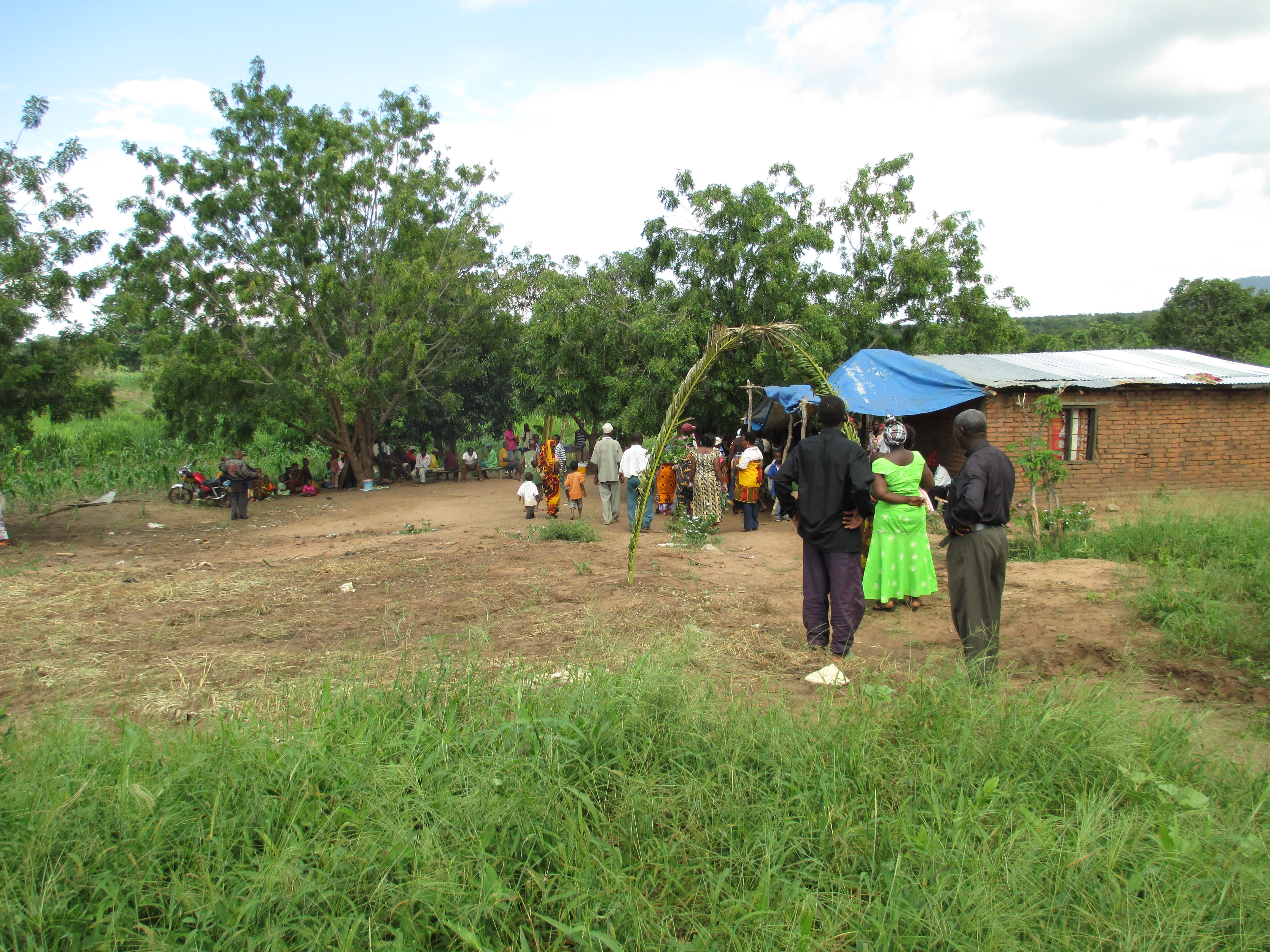
We left for the wedding celebration back at someone’s home (not entirely clear whose) soon after.  We pulled up to a small clearing in the brush and corn fields to see several small brick or mud buildings with tin or thatched roofs.  A crowd of people was gathered for the festivities and a nicer sterIMG_0067eo than I have ever owned in my life was out on a table for music (these kinds of wonderful incongruities seem to pop up everywhere, like the indigenous ladies in Bolivia who would pull cell phones out from under their bowler hats).  We were led under a palm arch and around to the back of the house, where a plastic tarp had been turned into an awning.  There was a table laid out IMG_0068with a table cloth, behind which the bride and groom sat rather seriously, not touching or speaking.  Flowers were laid over the table and hung on ropes from the tarp.  The bride’s mother, in an obviously festive mood, led us dancing under the tarp and sat us at places of honor with the pastor and his assistant near to the bride and groom.  It had the feel of a large do-it-yourself country wedding, with women filing in and out of the house, carrying endless plates of food and buckets of bottled soft drinks for the guests who danced or threw themselves down wheIMG_0071rever there was room on a bench, chair, or the ground.  We were given plates of rice, cabbage and goat meat (whose comrade was wandering around nearby), which we washed down with Sprite and Orangina while chickens ran underfoot.  Nearby children scooped up rice from their mothers’ plates into balls, hands moving from dish to mouth, their eyes staring at us openly.
I would have loved to stay all day because the party felt like it was just getting going.  But, we had a long trip back.  We gave the newlyweds the gift of a new Bible from Robert’s mission, and soon after the choir serenaded them once again had to take our leave.  We dropped off the choir and pastor on our way back; I got a hug from Rebecca who came once more flying out into my arms this time, my being her new best friend and all.  She was delighted that I had learned the Swahili word for butterfly in the interim (which was on her t-shirt).  We then drove back uneventfully to Morogoro.
A New Year

The thing about having a birthday right after New Year’s Eve is that people are usually kind of burned out. Thanksgiving, the December holidays, the final big bang of the 31st; by the 8th, the New Year has started, everyone is ready to move on from the celebrations and get back into their routines. So while I have been lucky to have wonderful friends and family who have been champs when it comes to the milestone birthdays, I’ve gotten used to generally having low-key get-togethers over the course of my life. This year however, was looking to be a bit of a new low. I don’t care how old you get, it’s never much fun to have a year go by without marking your birthday somehow, and alone, in a new country, it was hard to get up my enthusiasm to turn another year older.

I arrived in Tanzania the first week of January and made it to language school late on the night of the 5th. On the 7th, I realized that there were only two other students- Catholic priests from India- at the language school, neither of which were boarding there. But I did meet a friend of a friend. By strange coincidence, a friend from high school has a couple of friends here in Morogoro working as missionaries. One of them came by for tea (which we have every day at 10am and 4pm…LOVE) and we got to chatting. Shantelle is originally from Ohio, by way of San Diego, and has been studying aIMG_0017t the language school herself for a good chunk of the past year. Of course, I casually dropped into the conversation that my birthday was the next day (hey, I’m not above soliciting a pity “Happy Birthday” when alone in a foreign country).

Wouldn’t you know, the next day I was so busy with classes and homework and just generally feeling overwhelmed, that I completely forgot it was my birthday until about 4pm! Luckily, I had a bottle of one of my favorite whiskeys, specially brought from Amsterdam, tucked away in my bag. A few hours later, enjoying a small pour and a movie, I found myself appreciating the fact that for the first time since I arrived in Tanzania, I wasn’t running somewhere, or on a bus, or desperately fighting jet lag. I was just relaxing and it felt good. Around that time, Shantelle sent me a text message wishing a happy birthday, and suggested dinner the following night. I hadn’t seen anything of Morogoro town yet, and I readily agreed.

IMG_0038

Ingrid, Shantelle, and Anne…shamelessly recruited to celebrate my birthday with me.

IMG_0042

A present!

So, last night, Shantelle came to pick me up, along with two friends who live on campus. Ingrid is a German woman who has been in Tanzania for three years now, working for the Lutheran church in various capacities, but primarily as a teacher. Anne, also German, just graduated from secondary school and is spending a year in Tanzania as a volunteer for the Lutheran Church in the campus kindergarten. It was great to meet some people on campus and Anne lives just one building over from me. Ingrid gave me a carved wooden box wrapped up in a bow as a birthday present, which was so sweet. We went to a local place, Acropol, which is common with expats. It had a lovely front porch and a décor that made you feel like you were on safari with Hemingway back in the day (without being cheesy, somehow). I also had my first taste of Tanzanian pizza with cut up hot dogs in a starring role on top.

I don’t have much more to share about the evening, other than it was just great to unexpectedly find some new friends and celebrate my birthday out in my new home town!

An Arrival (or Two)…

IMG_0047

Morogoro

I arrived in Dar es Salaam at midnight in the rain on January 2nd.   Typically, the period between the moment you step off the plane and when you finally shut the taxi door is one long, hot, sweaty, loud, confusing mess.  You are shuffled down a narrow corridor petitioned off from the waiting area of the terminal and down stairs into a basement holding area.  Those who have been to Tanzania before quickly form some semblance of a line/mob to wait for their tourist visas, while those who either haven’t been to Tanzania before, or have but due to terrible memories typically rely on the kindness of strangers (i.e. me), look around bleary eyed for a pen to fill out their visa paperwork.  I say “those who haven’t been to Tanzania before” because anyone who HAS been here before would never ever assume that the long rows of tables with pen-holders provided for people to stand at and fill out forms would actually be stocked with pens.   Thereupon a long progression of “pass the single pen” begins, where the first person to dig into their bag for a writing utensil is pressed upon by all those around him to loan it to everyone else.   I had been to Tanzania before; I had played this game.  Did that forever teach me a valuable lesson to bring my own pens?  No, it did not.  “Pass the pen, please!”

As we try to read the tiny print of the forms through sleep-deprived eyes, a couple of officers work their way through the crowd demanding passports and visa fees.  That’s right, you hand over the only document you have proving your citizenship along with $100 to a tiny Tanzanian woman (currently juggling 10 other passports stuffed with cash), who then walks off into the crowd.  This is usually followed by a long period of milling about in close quarters with dozens of other folks who are bleary-eyed, overwhelmed, and haven’t showed in 24 hours.  The general feeling is, I imagine, akin to that of cattle before auction.

So we all just clump together waiting to be called up by name to the visa window.  Except that this is done by those with unfamiliar accents pronouncing names that they are often unaccustomed to.  Generally two or three people have to go up to the window before the person matching the name is actually found.  They scan your fingerprint and- Miracle!- return your previously lost passport.  From there, it is relatively painless.  You push your way through the security gate to the luggage carousel (by this time your bags have been sitting for some time), do your best to brush off the men who mill around the luggage wanting tips to carry it but eventually give in and allow it because you’re too tired to argue, and then emerge into the muggy but fresh air where you try to find the man holding a tiny sign with your name amongst the large crowd of taxi drivers yelling for your attention.  Or rather try to find the sign with the closest approximation to your name.  This time it was “Emil Chako.”

Fortunately for me, I arrived late at night on this trip.  Therefore, while all of these steps occurred, they occurred in a slightly cooler temperature and in a slightly smaller crowd.  Best of all, the usually tortuous traffic jam that is the Dar es Salaam road system was completely clear.  Racing through the dark city on deserted roads, I was able to see a different side of the city.  The usually hot, dusty, colorful, and bustling streets were quiet and cool, with hundreds of lights glittering off the wet roads.  Despite my exhaustion, I wasn’t sleepy at all.  Relishing the quiet after the constant white noise of the plane, I contemplated how similar this trip felt to my last two brief visits to Tanzania.  The fact that I was to be here for nearly a year hadn’t yet sunk in.

I spent the next three days in Dar es Salaam, alternately sleeping and venturing out into the neighborhood I was staying in for various necessities for the next ten months.   I wish I could say I was able to take in the sights, but after the whirlwind of wrapping up work in Colorado, moving all of my worldly belongings to Illinois, the holidays, New Year’s Eve in New York, and then flying halfway across the world, I was pooped.   And I knew there would be plenty of time in the coming year to explore Dar further.

On the fourth day, it was time to head for the ELCT Language School in Morogoro, a three hour bus ride from Dar es Salaam.  I had originally intended leave Dar at 1pm so that I would arrive at the school sometime in the late afternoon.  Unfortunately, I got stuck waiting in the heat outside at the bus station in Dar (actually, there is no “inside” to the bus station) for four hours because of a mix up with the bus times.  Finally, at 5pm, we boarded the bus and left about 30 minutes later.  The school is fairly far outside the actual town of Morogoro, so the administrators had told me to tell the bus driver to stop and drop me off at the seminary before we got to town.  Of course, I don’t speak Swahili yet (hence the language course) and he spoke very limited English, so naturally the driver didn’t understand me.  Fortunately, when I got on the bus I saw several girls wearing school uniforms- their shirts said Lutheran Junior Seminary, which I knew shared a campus with the language school.  I had no idea if they boarded at the school or would be heading to their homes, but I hoped for the former.  I tapped one on the shoulder and asked her if they were going to the seminary and if so, could they let me know when they were getting off the bus so that I could join them?  They smiled and nodded before hastily heading to the very back seats in the bus and so, with no idea whether or not they had understood, I sat in the only remaining seat in the front row of the bus.

I had been looking forward to my first glimpse of the Tanzanian countryside in two years; to leaving the suffocating heat and crowds of Dar es Salaam behind.  But after 30 minutes, I found myself nodding off and slept through most of the journey.  When I woke, it was dark and pouring rain.  Two and a half hours had passed, and the bus began pulling over every so often to let people off- this is usually a sign that we are nearing the destination.   Several people sitting around me had overheard me ask the girls about their school (who were still sitting at the back of the bus) and so suddenly I was surrounded by people tugging at my clothes and yelling, “Seminari, seminari!” to the driver while pulling my luggage off the rack and shoving into my arms.  The girls rushed to the front and I followed them off the bus.  We started down the road, them glancing behind at the silly mzungu (white person/foreigner) dragging her many bags through the mud and the rain.  It was pitch black so I couldn’t see anything, including the deep puddles I kept stepping into.  My shoes were immediately ruined (turns out Birkenstocks + Rain Puddles = Sad Birkenstocks) and my suitcase was drenched and filthy.  By the time we got to the school everything was shut down and only a night watchman was around.  As best I could between body language and what little Swahili I could conjure, I explained my predicament.   It being 9pm by this point, the girls shuffled off to their room and the night watchman took me over to the language school dormitories.  The two of us sat in chairs outside for about an hour waiting for someone with room keys to come and let me in.  Of course I had started my malaria prophylaxis a day late and my DEET was buried in my suitcase, so there I sat defenseless in prime mosquito time, in the rain, in the dark, and just when I began wondering how rude it would be to pull out my iPod since we couldn’t share a conversation anyway, the head of the school came with the keys.  And so ended my saga…I was finally home (for the next two months, anyway).

IMG_0030

My new room

IMG_0028

My new room