 After a couple of slow weeks in Ifakara, I was starting to get a little bit antsy and frustrated. At this point, I still don’t have my permits and so I haven’t been able to start my data collection. There are only a few streets in the main part of town and I’ve walked them. My housemate and her daughter have not moved in yet and the only person I know in Ifakara was out of town. I’ve been working on drafting some of my dissertation chapters, but it’s been hard to feel excited about it when I’m not even observing in the clinic yet. The cure for a grouchy mzungu? A girls’ weekend in Dar es Salaam!
I had been planning on a trip to Dar around now anyway because I wanted to go back to the government permit offices and check on my paperwork. I’ve found that going in person is one of the only ways progress is made. When I learned that two friends from Morogoro were going to visit a third friend who had recently moved to Dar, we decided to make a group trip out of it. One of the two friends from Morogoro, Christine, is also leaving soon and this was my last chance to see her before she went.
So on Friday, I left my house in the dark at 5:30am to get on the 6am bus bound for Dar es Salaam. It is not a fun ride. Aside from the 10 hour length, the first three hours are on dirt roads, the seats are very hard, are way too small for the average person, and inevitably I end up sitting next to a very large person who takes up half my seat and falls asleep on my shoulder. It is hot and stuffy, there is usually at least one child crying or throwing up, and my legs are so numb by the time I arrive that I don’t feel normal again until the next day. But, there is one highlight on every bus trip- the moment we make the lunch stop and I get my chips mayai.
 Chips mayai is a delightful little dish popular as street food in Tanzania. “Chips” refers to French fries and “mayai” is the Kiswahili word for eggs. So basically, you make French fries and then you pour beaten eggs over it to make what is essentially a French fry omelet. It often comes with what looks like radioactive ketchup ranging in color from florescent red to florescent pink. Sometimes it is served in take-out container. Sometimes it is just dumped into a plastic bag . You eat it with a toothpick. Not the nimblest of utensils, but still. It’s pretty much the highlight of my bus trips.
I arrived in Dar es Salaam around 4pm after sitting two blocks from the bus station for thirty minutes. Dar traffic is truly a nightmare. Shantelle came to pick me up and we waited for the others to arrive from Morogoro before heading to her new house. What followed was the most American weekend I have ever spent in Tanzania. Dar is the only place in Tanzania where it is possible to live a lifestyle virtually the same as that in the US. It costs a fair amount of money, but it’s possible. It was surreal and strange, but also kind of a nice little break to hang out with expat friends, eat some favorite foods, and enjoy some relaxation time.
Saturday morning, we helped friends move into their new house in Dar and snacked on peanut butter and jelly sandwiches for lunch. We had planned to go to the bea ch in the afternoon and I had no idea what to expect. Dar is on the ocean, and there are public beaches but many are considered unsafe and truthfully are not all that nice in terms of sand or water quality. So I had not actually been to any yet since I had been in Tanzania. Shantelle told us about a hotel called White Sands near her house where you could pay 5,000 shillings (about $3) for beach access and they also had the benefit of a bar and restaurant, so we decided to check it out.
 It was stunning! The beach was lined with chairs and umbrellas, and we enjoyed cocktails and mishikaki (grilled kabobs) with chips as we relaxed for a few hours and caught up. I spent time walking down the beach and back, though we didn’t swim because the water was pretty mucky. For a Saturday, the resort was quite uncrowded, though there were a few Tanzanian and tourist families swimming in the pool and sunbathing. It was great to have some quality time with girlfriends; I have to confess to having been a little lonely since I arrived in Ifakara.
Dinner upped the American factor even more. We went to an outdoor shopping mall and ate stuffed crust pizza. Real. Actual. Pizza. Not chipati with a single spoonful of sauce, cheese and cut up hot dogs on top. Actual wood-fired pizza crust, topped with a normal amount of sauce, gooey cheese, ham and sausage on top, and cheese baked into the crust. It was amazing. The dining experience itself was hilarious though. In the US, when you go to a food court you spend some time looking at your options which are usually posted on signs at each place, make a decision, get in line at the establishment of your choice, and then carry your food to a table. Here, there are roving waiters from each place carrying menus. You sit down at a table in the center and suddenly all of the waiters descend on you, throwing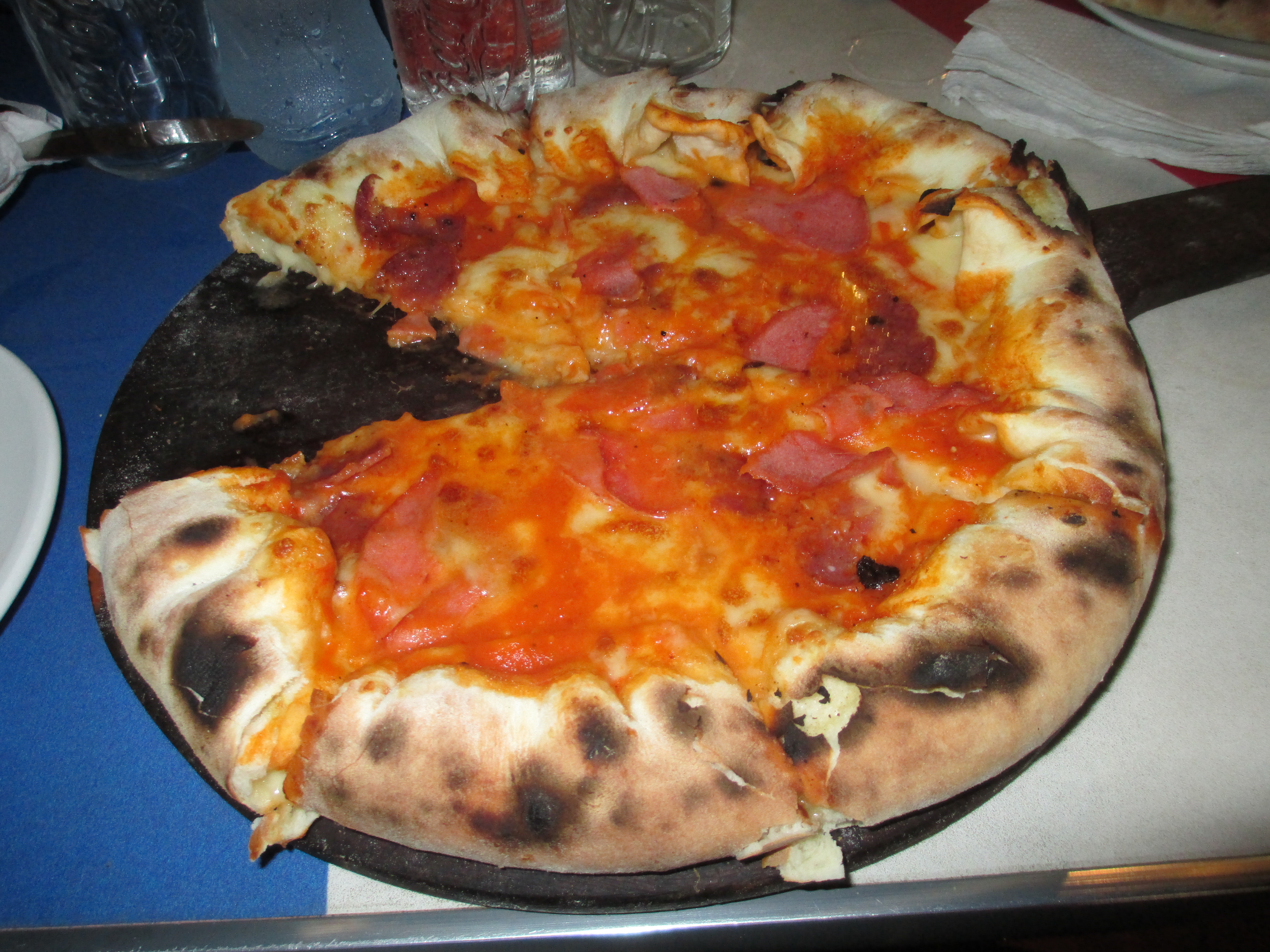 their menus in front of you, trying to get theirs in before the others. They then all hover behind you while you pick through all of the menus and you can place orders for as many places as you want. At the end, you get a separate bill from each place that you ordered from. It was also apparently a popular place for wealthy drunk Tanzanian teens, and we were treated to one vomiting in the middle of the food court mid-meal. This was strange for me because almost none of the Tanzanians I know drink and so I likewise rarely drink alcohol here. After dinner, we went t go a DVD store (strange experience after spending the last six months primarily seeing them sold off folding tables on the street), and then went to the American-style grocery store where I got to buy Reese’s Peanut Butter Cups and Barbeque sauce. It was pretty exciting.
Sunday was a day of strange juxtapositions. My friends in Dar are missionaries who work in one of the poorer areas of the city. We went to their church there for the service in the morning, which was started by one of their associates seventeen years ago, and where they also assist with several social programs in partnership with Tanzanians in the neighborhood. The service had beautiful music and I even understood a li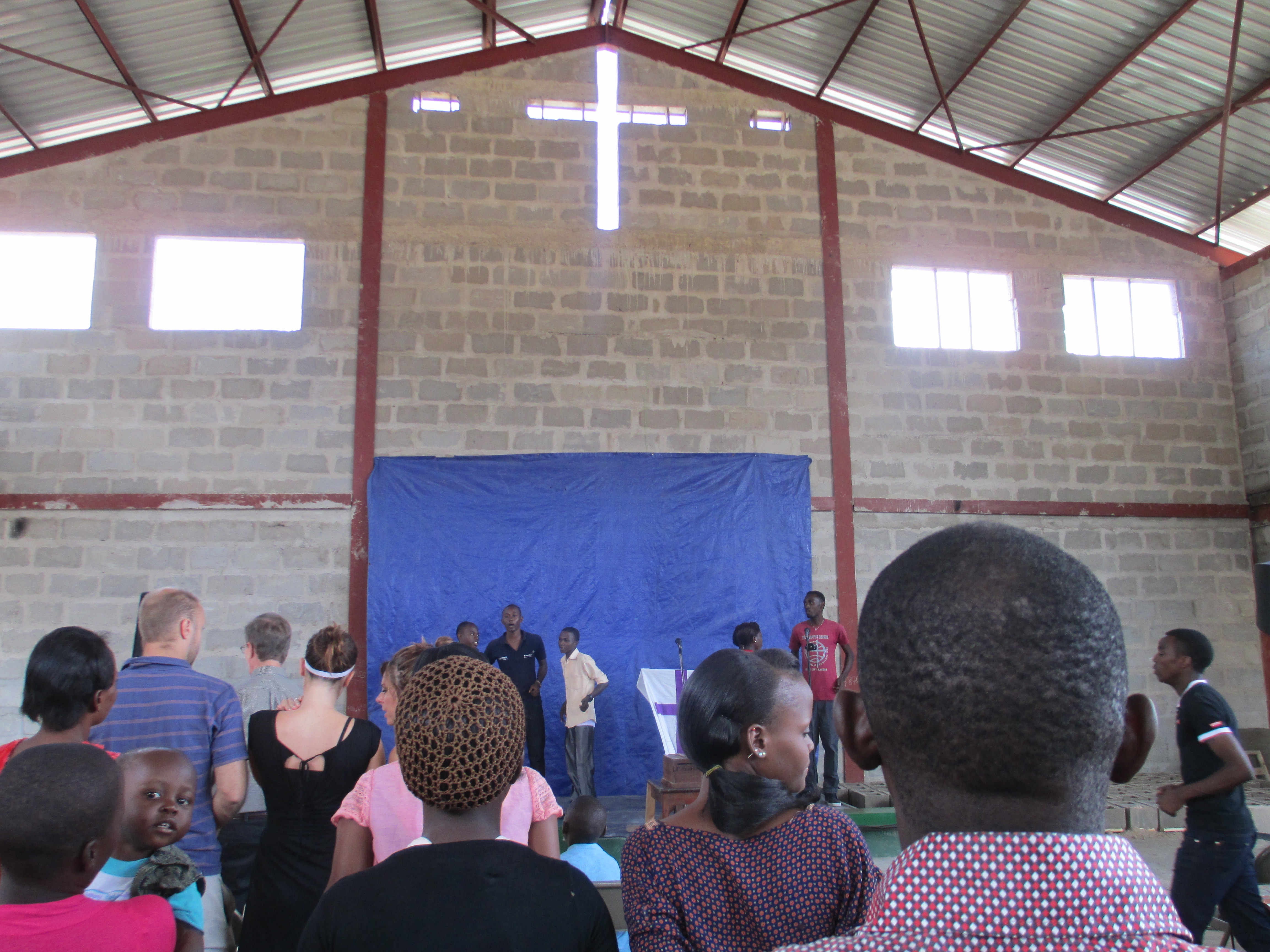 ttle bit of the sermon, which was in Swahili. After the service we spent some time talking with people before heading to lunch…which was at a fast food fried chicken restaurant located at a different shopping mall. Where I also went shopping at a home décor store for sheets and to another American-style grocery store that actually sold dried basil and oregano.
Our friends Christine and Anne were leaving that afternoon, and another friend Kevin was driving from Dar to Morogoro, so he came to the mall to pick them up. Shantelle had gone to one of the few sushi restaurants in the city a few weeks before and found it good, so we decided to go there for dinner. It was located at the fanciest hotel I have ever seen in Tanzania and I felt very grungy as we walked through the lobby. We suspect it might be where Obama will stay when he comes to visit. What followed was two hours of absolute bliss. I have been missing sushi desperately since I came to Tanzania, particularly since I tend to eat a lot of it when it’s hot out in the States. We went a little overboard, ordering not only sushi but a cooked dish as well, and could barely move by the end of the meal. I spent the equivalent of several weeks’ foodbudget on this single meal so I guess it’s lucky that I bought a big bag of rice and a big bag of beans in Ifakara because that is all I will be eating for some time. But in truth, it was worth every second.
Monday and Tuesday I had to spend a lot of time going back and forth to the government office I needed to visit and while I made some progress, I am still permit-less. I will have to come back in a few weeks. But I did manage to get a little more time on the beach, and enjoyed relaxing at Shantelle’s house, which has hot water and a stove and so seems quite luxurious to me.
But I have to be honest. It is very easy to fall into the trap of only hanging out with wazungu because they speak your language and understand your background. Every conversation isn’t a back and forth discussion of the differences between Americans and Tanzanian culture; you are not constantly apologizing for doing things wrong or differently. You don’t feel like a five-year-old trying to express yourself in a second language. And it is difficult to balance the differing worlds here. I know that my friends who live in Dar struggle with this, particularly those who work in poorer areas. Because the truth is most Americans here live a lifestyle that is more comfortable than even middle-class Tanzanians. It is disconcerting to work in one setting and then live completely differently at home. It is strange to completely enjoy my day-to-day Tanzanian life in rural Ifakara but still crave the comforts of home when I go to Dar. It can feel uncomfortable to strive to make and enjoy friendships you form with Tanzanians but still hanker for the company of those from your own culture or one a bit more similar to yours. It can leave you feeling like you are on a roller-coaster sometimes and questioning how well you are really embracing life here. So far I think I have been striking a decent balance but it can be a challenge at times and it can be difficult to resist the temptation to run to Dar when I get lonely or life gets difficult. And yet I really do love this incredible experience I am having.
I’m back in Ifakara now and back to normalcy. My new normal at least!


 Potholes and Pili Pili