Today, I was lucky.
Ingrid, a German woman working in Tanzania that I have become friends with, had been telling me off and on about a group of artists she was working with. We stopped one day at a small hut next to the bus station, to see the work of Hillary, a local woodworker she knew. Another day she mentioned that the paintings in her house were by the same artist whose work was sold at the language school. Yet another day, that her bag was made by a local fundi. So when I asked her earlier this week if she would be going into town this morning and she mentioned needing to meet up with this same painter about a commission, I agreed to go with her. Actually, I jumped at the chance. It can get a little confining here at the language school since we are outside of town and I am always eager to go off campus.
We met Deo, the artist, in town and he directed us to his home, a small duplex in a neighborhood I had never been in before. Showing us inside to the small cozy living room, he invited us to take a seat and then, with obvious pleasure, introduced us to his two children. The smallest, a boy with a huge smile, was eager to try out a little of his English on us; bouncing up and down on the arm of the easy chair while he did so. His daughter, a young teen, was a little quieter but after a shy smile welcomed us by quickly bringing out tea.
Deo was clearly proud of his children; their photos, along with a couple of his works, were the main decorations on the walls. He was also visibly happy to have us there, taking tea with him. A note about the tea… it was delicious. Actually, I always enjoy tea here. Chai is typical, though I usually drink mine straight. His daughter brought out tea flavored with lemongrass, a first for me and absolutely lovely.
He and Ingrid conversed for quite some time in Swahili about a commission she wanted done- a series of paintings with a religious theme for a primary school. This might sound boring for me, a Swahili beginner. But I have noticed a steady trend in the past week with my Swahili comprehension. If I don’t have to talk, but can just listen to two other people converse, I am actually often able to get quite a bit. Perhaps not the details, but at least the general flow of conversation. While frustrated that this doesn’t seem to translate into an improvement in my own speaking ability, it is nonetheless encouraging. I also have not been invited into Tanzanian residences very often. Given my research interests, I have spent most of previous trips on hospital or clinic grounds, making my way from one office to another. But, as an anthropologist, I have a natural curiosity about how people live. I feel so fortunate when I am traveling and someone invites me into their home. When I get to share a drink or a meal, meet their family, or just experience a little piece of their world. So despite sitting silently while the other two spoke, I was enjoying myself immensely.
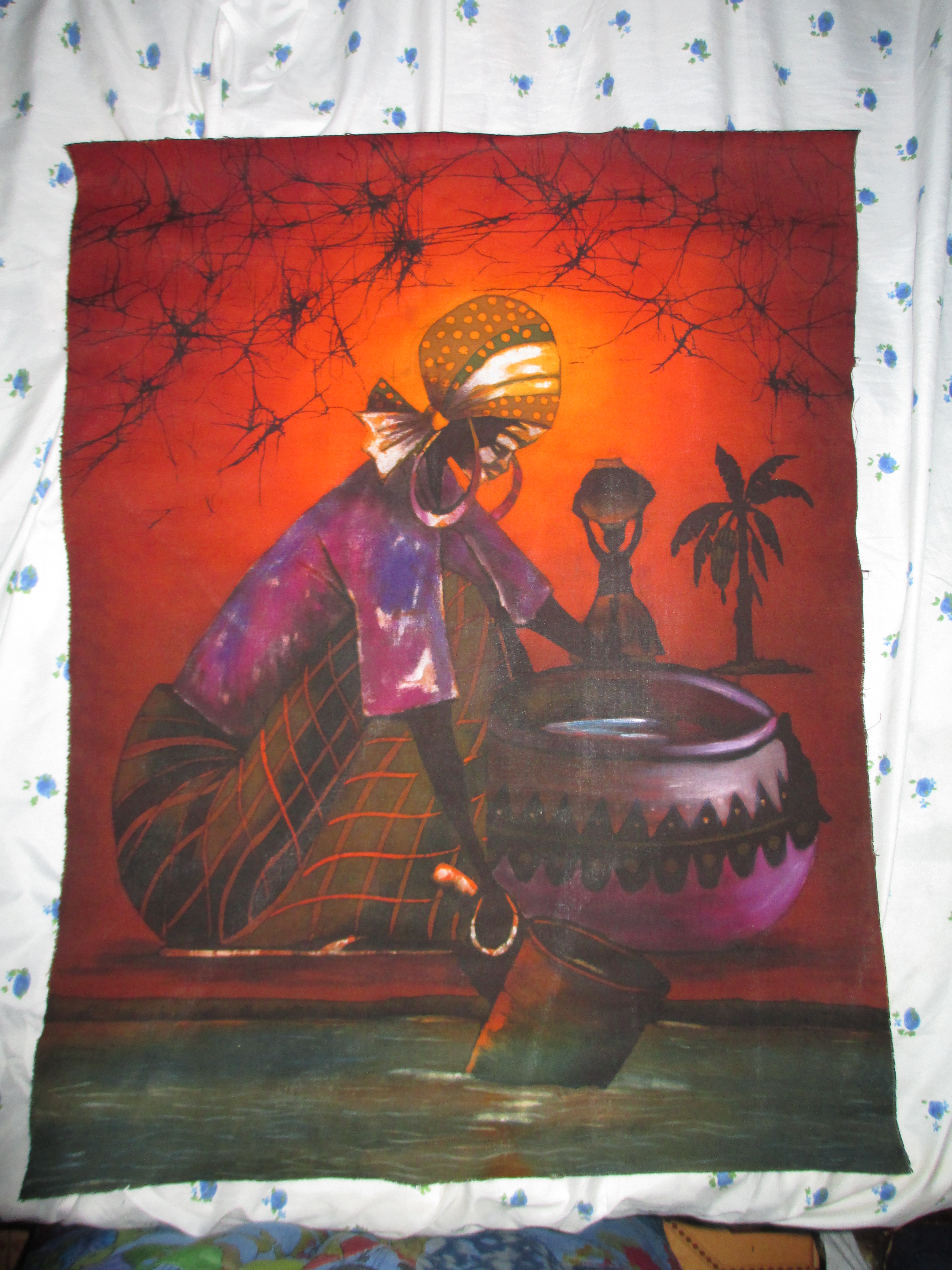
The conversation turned towards specifics and Deo pulled out two albums filled with photos of his work so that Ingrid could look at samples. He also began hauling out many of the paintings he had in storage, piling them up on the dining room table, a Technicolor mountain of canvas. Most of his work was wax batik, although he had pictures of murals he had done too. You see that a lot here; black silhouettes of safari animals against a bright explosion of sunset reds and yellows or moody blues and purples. They are often marketed to tourists and can sometimes look a little mass-produced. But Deo was clearly a more gifted painter than many of the more cookie-cutter artists I had seen hawking their wares. He used a much wider variety of colors, played with light and shadow, and embraced a broader style and subject matter, in addition to the usual scenes. I wanted to support his work, particularly since he and a group of other artists are trying to get together the money to start a co-op in town where they can share a rented space to sell their goods. I bought two small paintings of more traditional scenes, but the one I really liked was more abstract and unusual. He offered to paint me a large work in the abstract style that I could pick up in a couple of weeks …my very first commissioned work!
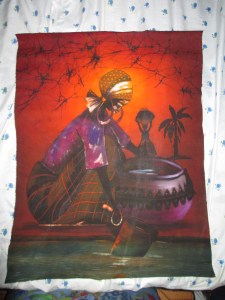
Towards the end of our visit, Deo took us out to his work area on the porch and walked us through the first few steps of creating a wax batik painting. Each painting, depending on the design of course, requires multiple rounds of laying down wax and paint to create the final scene. Because each layer has to dry completely before the next round can be applied, we were only able to watch him begin his next work. Which was probably just was well because his son was quickly becoming bored with all of the grown-up talk and began to repeatedly bounce a ball “accidently” against the bucket I was sitting on. Clearly this was a not-so-subtle invitation, so while Ingrid and Deo talked a few last details, his son and I kicked the ball back and forth while I dazzled him with the few Swahili sentences I knew and he giggled appreciatively. Sometimes the little interactions are the best.
On the ride home, Ingrid apologized for the visit being such a long one and said she hoped I wasn’t too bored. I told her, truthfully, that it was one of the best days I’d ever had in Tanzania
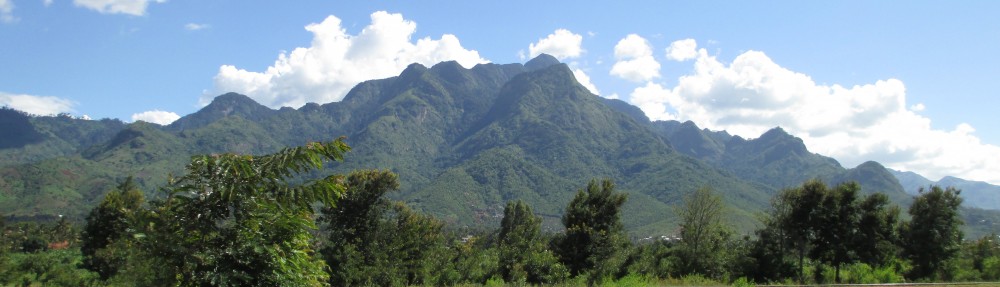

 a. But now there is no reason to delay further. Since I’ve been back, I have been very busy preparing for the move to my field site in Ifakara, a small rural town southwest of Morogoro. I will be living there for the remainder of the year and conducting my research with the cervical cancer screening program at the hospital there. So my days recently have been filled with laundry, buying supplies, visiting favorite places, and saying goodbye to friends. One of those friends is Ingrid, a German woman who is has been here in Tanzania for three years as a missionary with the Lutheran Church.
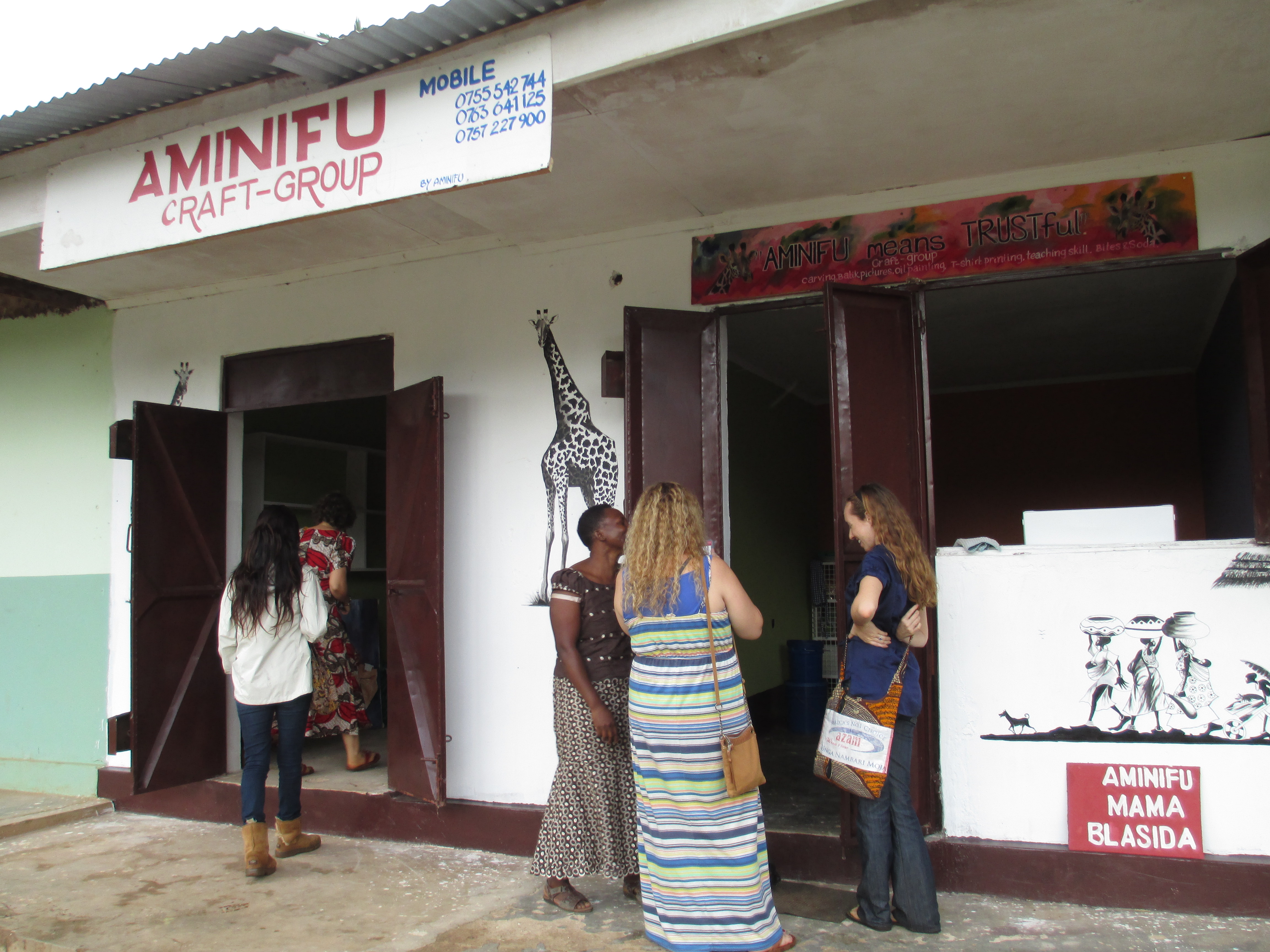
 s development before I left. Some friends and I stopped by the set of spaces the craftsmen have rented in a single story building in town. The group includes two painters, a fundi who sews cloth goods, a furniture maker, a woodcarver, and a baker. They have painted the interiors bright beautiful colors and had set up a few displays to showcase their goods. Currently, the rooms were not stocked, but a small subset of goods had been brought in. These included a handful of paintings, a very comfortable chair, cloth bags, floor mats, and blankets. My friend’s new puppy nosed around while we admired the goods and picked out a few things to buy to support the new venture. We also were able to meet Mama Blasida, the baker who will sell her creations out of one of the storefronts. It was a great opportunity to share in this blossoming enterprise and on the extremely small chance that any of you ever make it to Morogoro, I would like to recommend that you check out Aminifu Craft Group!


 Potholes and Pili Pili