
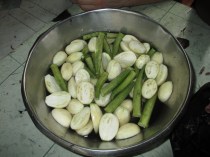
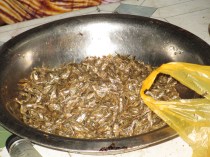
I love to cook. LOVE IT. Well, I love most things related to food, but I really love the act of actually preparing food. It’s one of those daily tasks I miss most in Tanzania. Right now, I am staying at language school where meals are provided for us, but I am hoping to do more cooking once I move to Ifakara.
However, the language school has a tradition of holding a cooking day during each course, where the students make foods from their own countries. Although we have quite a few students, it actually boils down to only a handful countries: the US, Germany, Finland, and South Korea (Actually, we have students from Croatia and India too, but they elected to just help with preparations). We decided it made sense for each to group together and decide on one dish from each place. The Tanzanians would also cook some foods that we hadn’t gotten to try yet, and then we would have a big meal together.
Kim, from South Korea, decided to make fried chicken drumsticks in a soy sauce with vegetables. The Finnish couple couldn’t join us for cooking, so they just brought some items from town. The Germans made a dish called “Farmer’s Breakfast,” which was a bacon and potato egg scramble. And the Americans, you ask? We made tacos. Nothing says traditional Stateside fare like tacos. But seriously, this was largely a concession to me, for which I am forever grateful to my fellow Americans here. See, I love Mexican food (and yes, I realize I’m talking about Mexican food in the States, don’t get all huffy about it not being “authentic”). Particularly spicy Mexican food, and particularly tacos. And I’ve lived in Colorado for the past seven years, which means I’ve had access to pretty quality Mexican food. If I could only eat one type of food for the rest of my life, it would be Mexican. If I could only eat two types of food for the rest of my life, it would be Mexican and sushi. But for what I’m sure you can imagine are obvious reasons, sushi was not a practical choice in this case. Because of this, and because I am slightly food-obsessed, I have not shut up about missing spicy Mexican food since I arrived. Of course I don’t do this in front of the ladies who cook our food- the reality is that the food they make for us is good and filling and I really appreciate their effort and tell them so. B ut yes, I have been guilty of moaning a bit when it’s just us students and we’re talking about things we miss from back home. Okay, maybe more than a bit. So my fellow Americans decided to make tacos for our dish (in fact, they made this decision while I was in my room sweating out the malaria so it may have been not only to shut me up, but also out of pity). I quite literally got tears in my eyes when I heard.
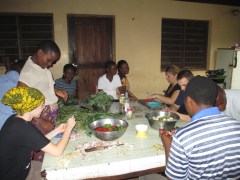
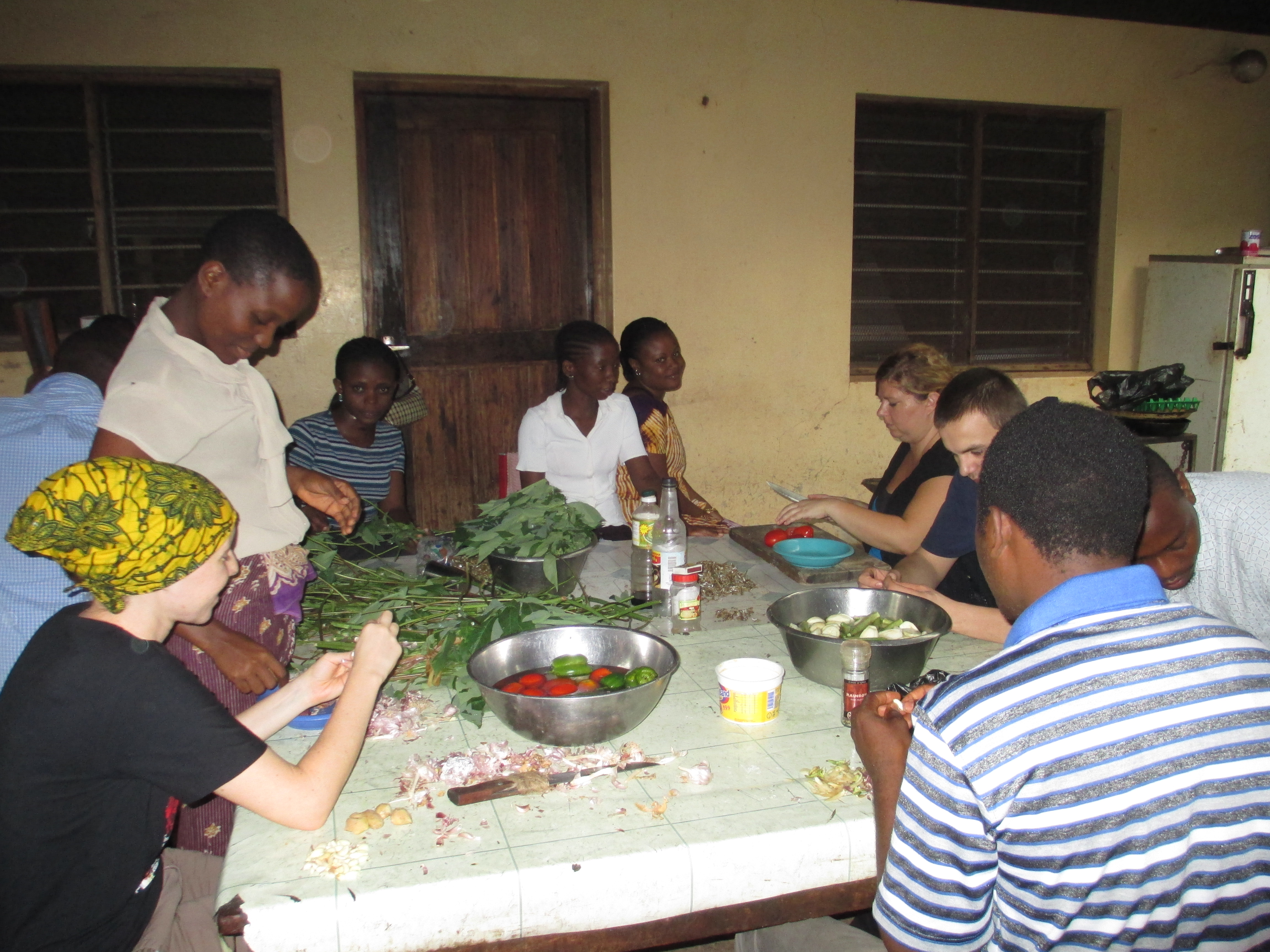
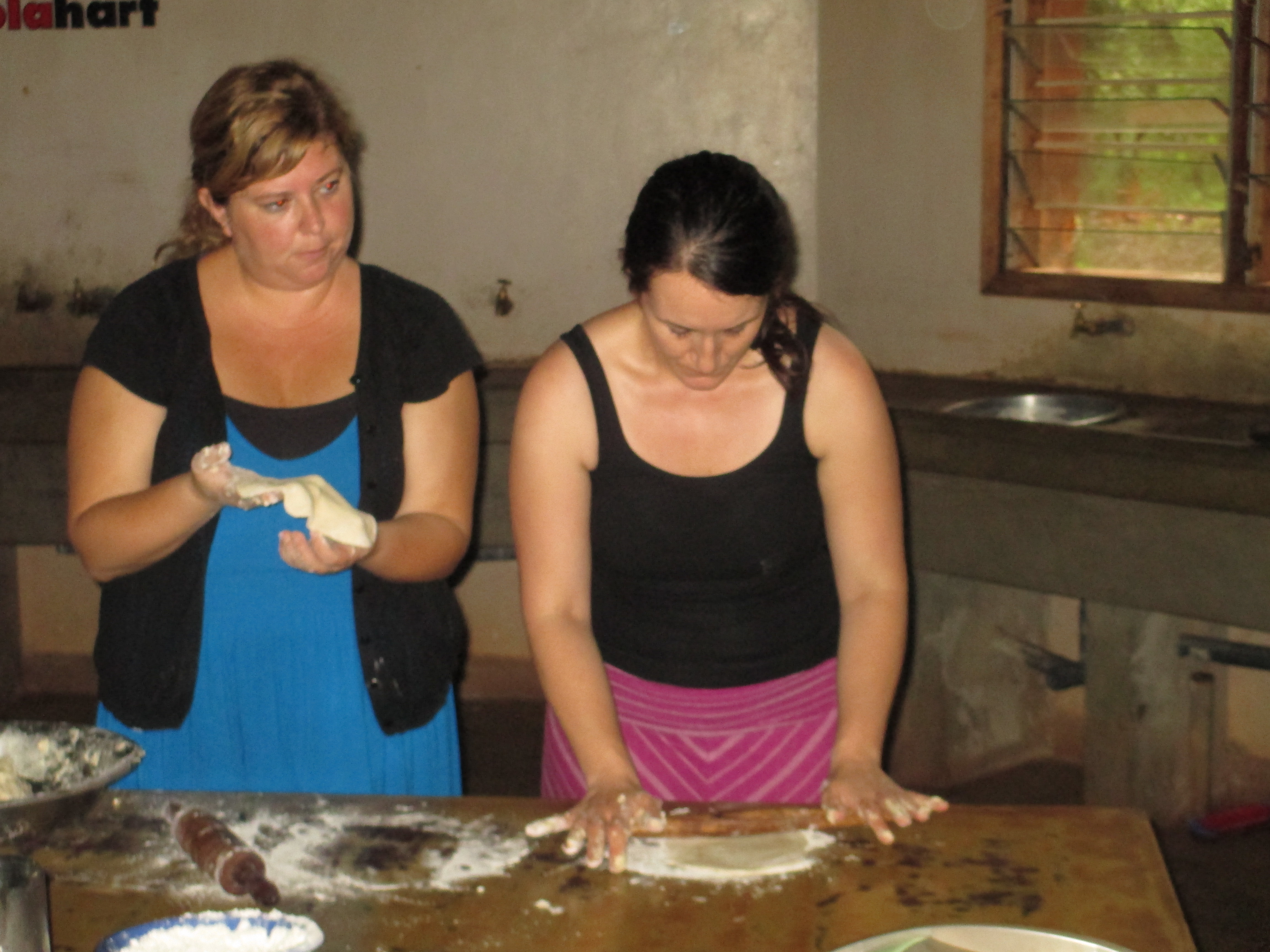
Of course the one sticky part of this equation is that we had no tortillas. They make a delicious thin flat bread here called chapati but it is thicker and a bit greaser. I was determined though, so I just told them to pick up some flour in town and we would figure it out. I forgot to specify corn though. I’ve lived so long in Denver that it hadn’t occurred to me someone would hear “tortillas” and assume that meant wheat. But it is the thought that counts, and I certainly wasn’t going to let that bar my enjoyment of the dish. So while the other students sat out in the open-air part of the kitchen chopping vegetables, Shantelle and I took over a table inside to get going on the tortillas. The Mamas watched us curiously and made suggestions as to water to flour ratio, but we soon had a system going. I was in heaven.
Agnes, one of our teachers, came over to help out while Shantelle started up the charcoal stove outside. After a bit of silence, and noticing the smile on my face, she asked me, “You are happy? You like this?” I assured her I did, saying, “I love to cook. It is one of my favorite things.” More silence. I could see her with a furrowed brow, occasionally shooting me sidelong glances. “I thought,” she started, “I thought Americans do not cook.” “How do you think we eat?” I asked. She told me that she thought Americans only went to restaurants, for every meal. It’s not surprising  since here in Tanzania most Americans either actually DO do this, or else hire cooks. “No, many Americans cook. My family likes to cook. There are people who only go to restaurants, but most Americans cook also.” “Kweli?” (Really?) She said, surprised and as if she did not quite believe me. She laughed a bit to herself and we moved on, but it was one of those moments that really highlighted to me how the U.S. is perceived from the
  outside versus the reality. Since I have been here, I have heard so many statements, said confidently, from Tanzanians about the US. All Americans are rich. All Americans have big houses. All Americans own their own house. All Americans have cars. All Americans can afford whatever they want to buy or can afford to go wherever they want to go. When I have contradicted these statements, or gently pointed out the diversity that actually exists in American lifestyles, or the idea of relative wealth, I am met with surprise or argument. Particularly my position, as a student with very little disposable income, is a source of frustration.
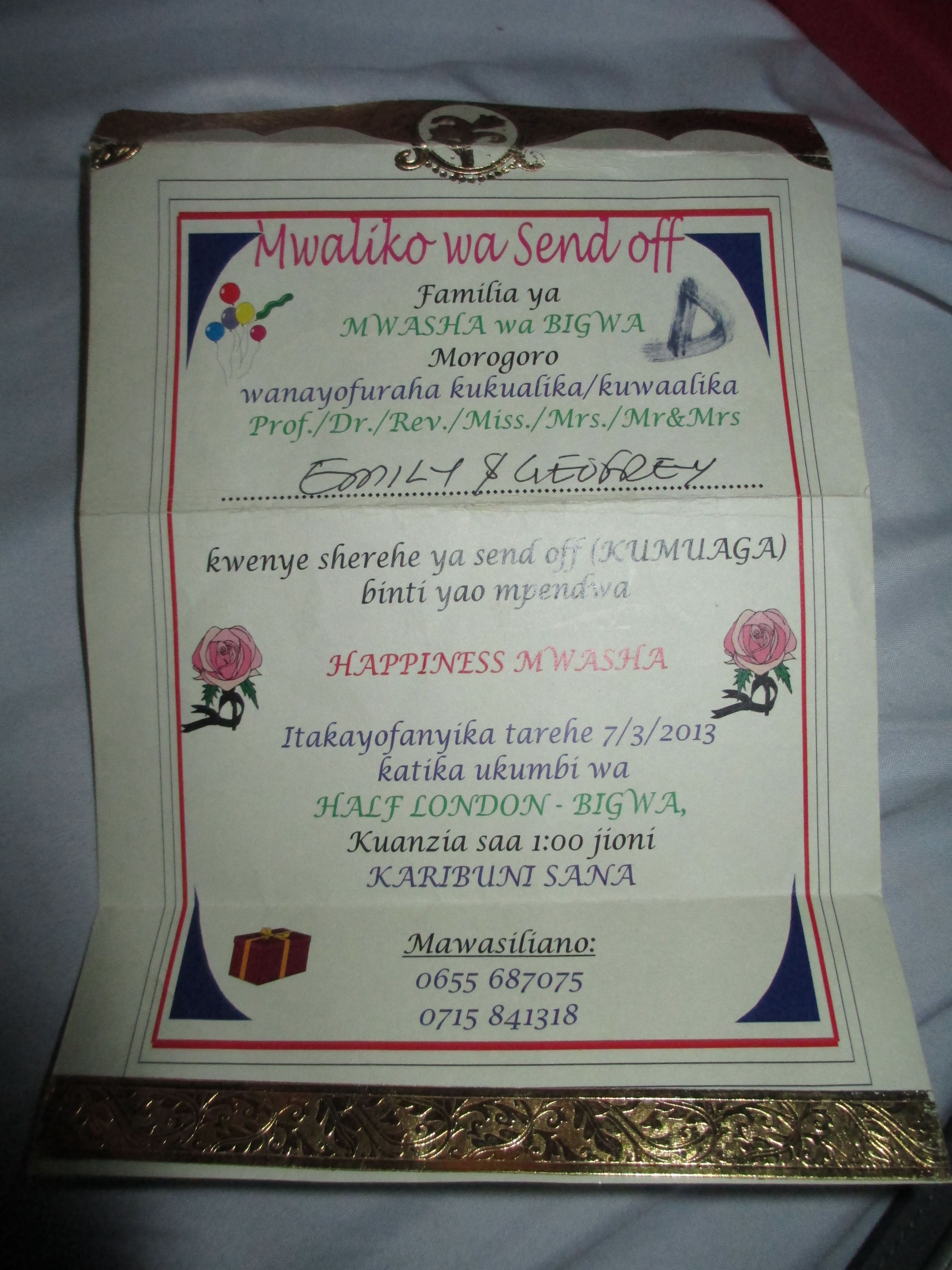
  If I can afford to come all the way to Tanzania, how can I not have money to give to people? I have a computer, an i-Pod, an e-reader. Why do I refuse someone who wants $50 or $100 for their children’s school fees or $70 for their daughter’s Send-Off? Trying to explain that two were gifts and the third took me forever to save up for, that I am funded to be here and on a very strict budget, that I have to track each dollar, that I have student loans, that yes, here I am comparatively well-off, but in six months I will be back in my own country without a job or income where I am not well-off, is difficult with my limited Swahili. Or that if I gave money to every person that asked, I would quickly be in deep trouble. Of course I realize my financial situation is better than many here, I’m not trying to play it off as though it’s not. And of course, not all Tanzanians hold these views. Many have been to the US or have siblings, aunts, uncles, etc. somewhere in the States. Many are educated and knowledgeable about the US. But I hear these things often enough to struggle with how to talk about it.
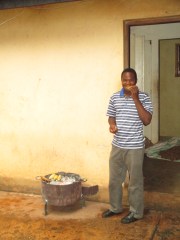
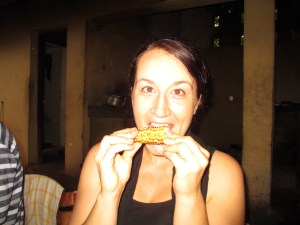
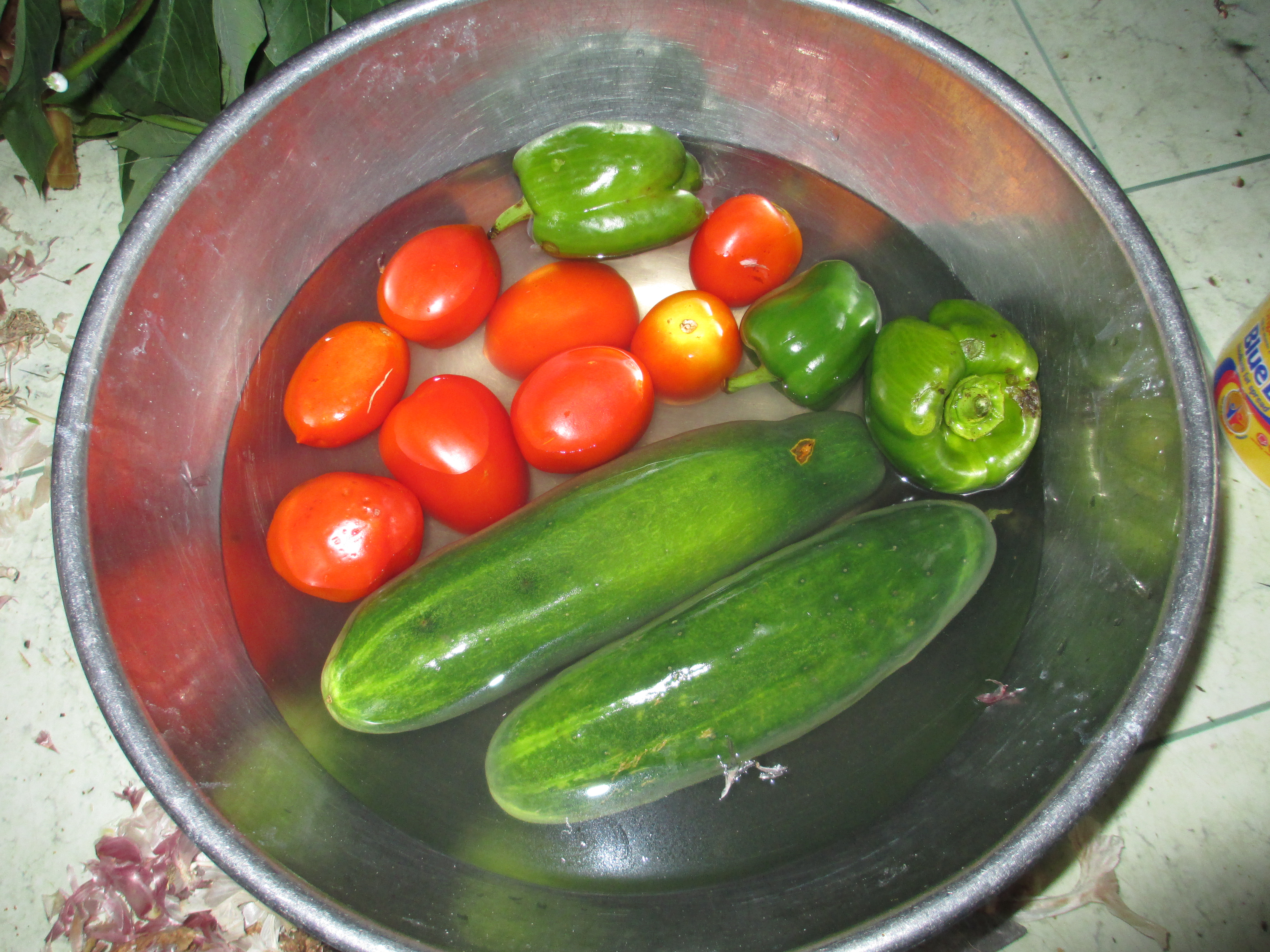
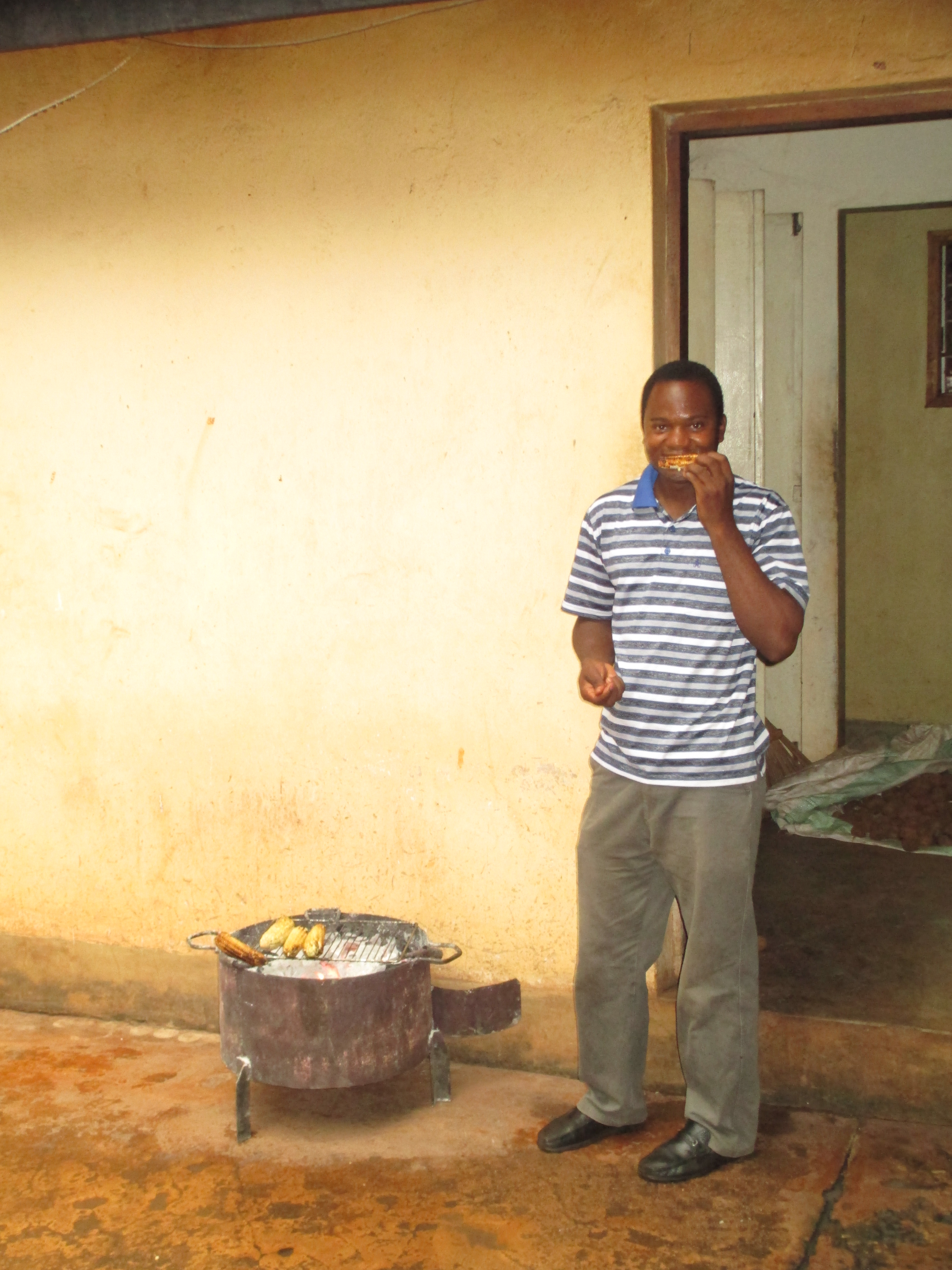
But back to cooking. By this time, we were making good headway. Shantelle had almost finished up the tortillas, I was overseeing the production of the make-shift pico de gallo (this mostly consisted of watching Jerianne chop vegetables while I comp lained about my malaria hot flashes), the Germans had their dish sizzling in a pan, and some of the female teachers were watching Kim with an air of incredulity as he expertly showed off his knife skills (most cooking is done by women here, I’m not sure they believed how good he was). Geoffrey manned the grill to whip up some corn as a snack, while another teacher demonstrated how to use a giant mortar and pestle to crush the leafy greens
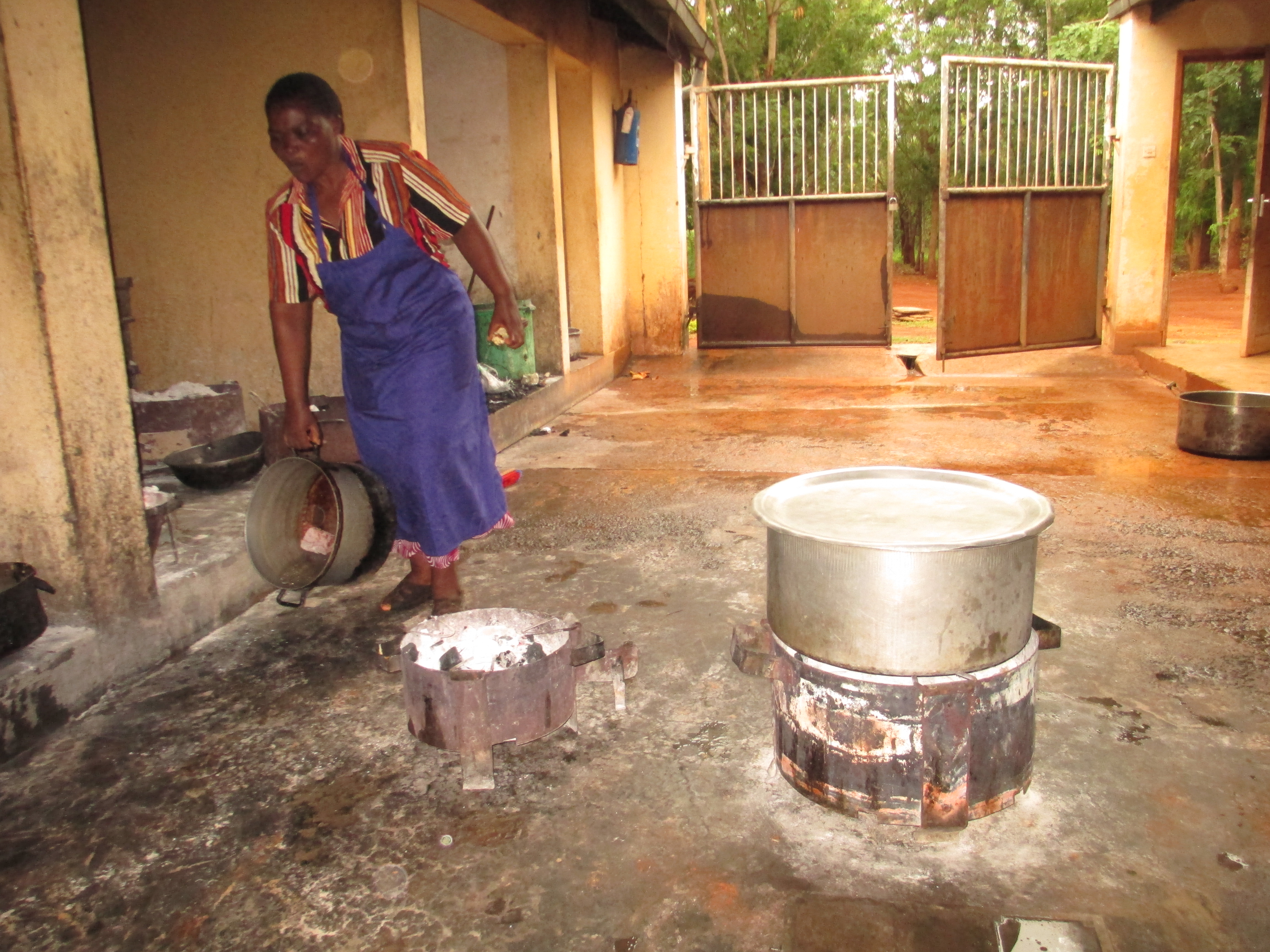
  piled high on the table. We cooked using charcoal stoves, so it took some time and a lot of creative logistics to get everything prepared and ready to eat at roughly the same time, but at last we were done!
Pictures were taken, and a prayer said. The dining hall was full with far more than just the usual handful of students who board at the school. In the spirit of the event, I took a tiny bit of everything, but the bulk of my plate, the place of honor, was saved for two exquisite tacos. Flavored juicy beef, a bit of avocado, Pico de gallo stacked high, all wrapped up in a home-made tortilla. And on top? A bit of Tabasco Chipotle sauce, sent from the States by my wonderful mother.














 Potholes and Pili Pili