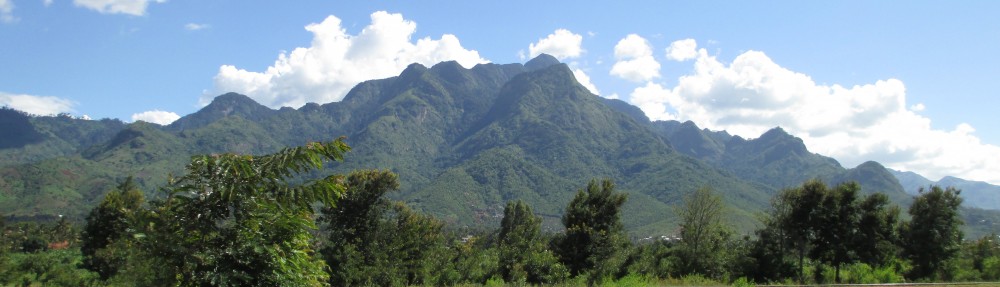
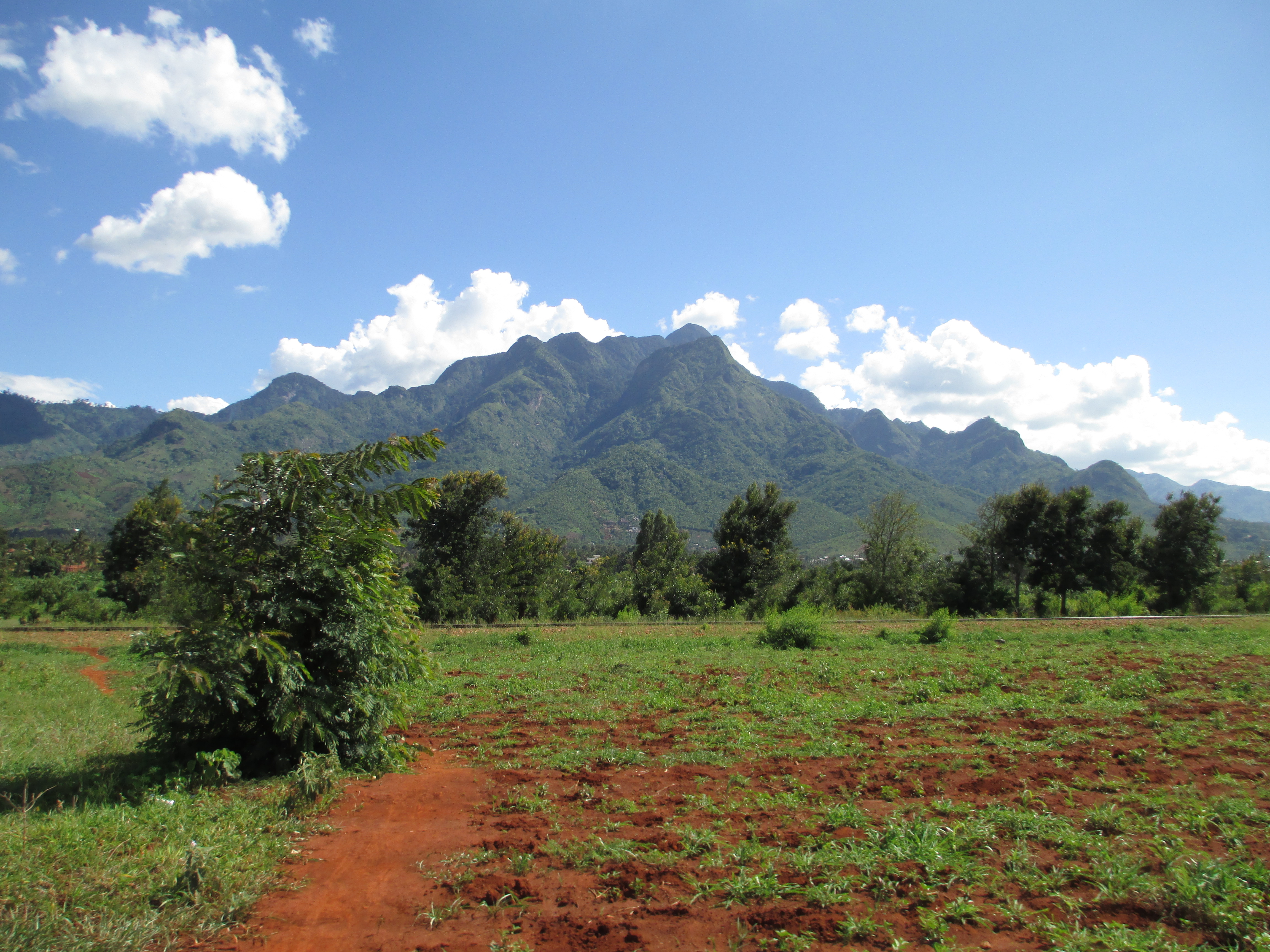
Last Friday morning Anne and I met another Lutheran missionary who has been living on campus for years now, off and on. Robert is a retired man from Florida and 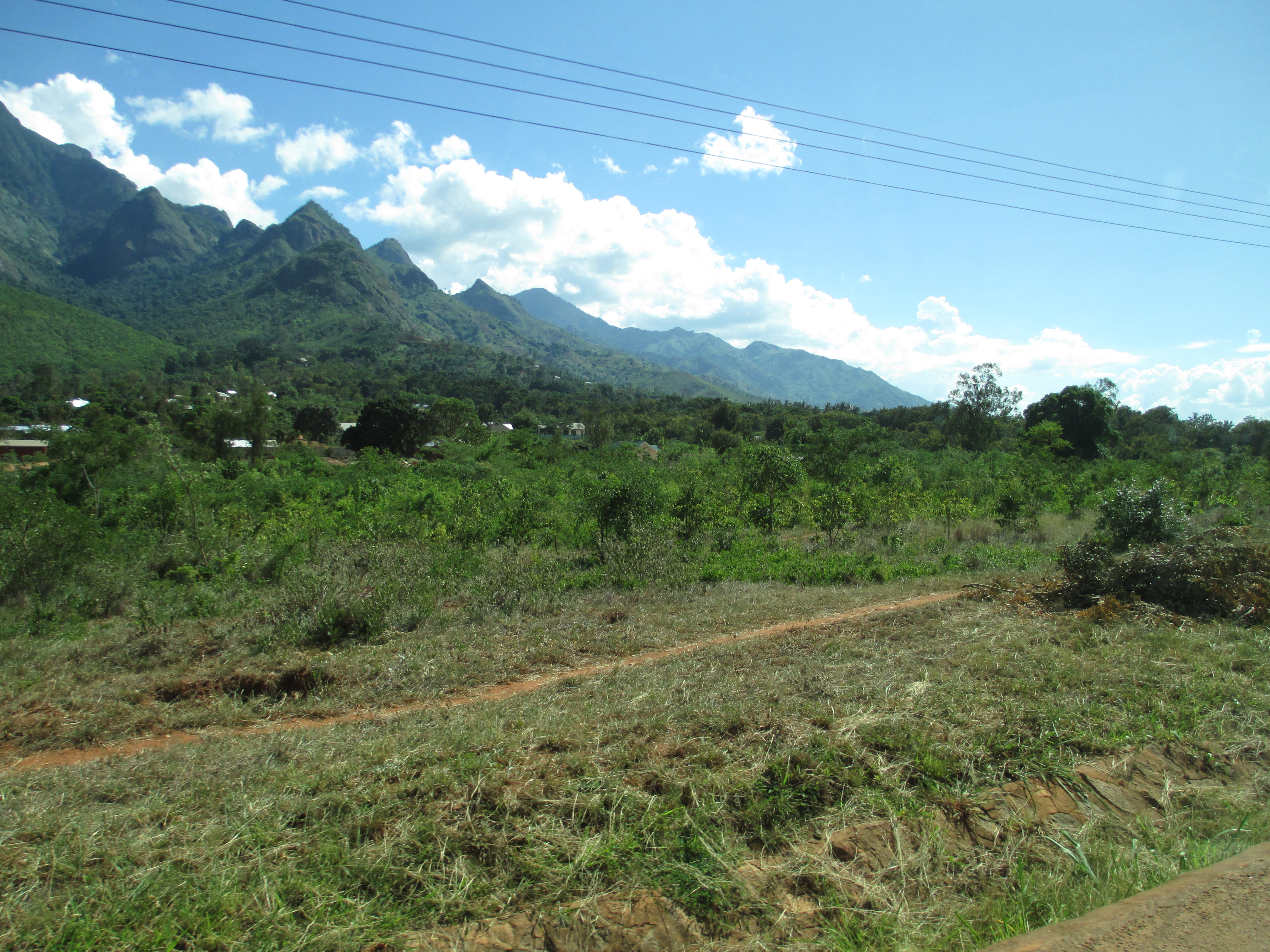 oversees a mission that includes over 40 villages in the region. He spends most Sundays driving to each of the different villages so that he can visit each at least once a year. He invited Anne and me to go with him to one such village last Sunday, a special day because there was going to be a wedding. We met up around 8:30am to head out in his jeep, beginning with half an hour on the paved road east to Dar es Salaam. This gave me a chance to see some of the surrounding countryside- it had been dark when I reached this point on the road arriving in Morogoro. It is beautiful here, with lush green mountains on the horizon and deep red soil peeking through the brush.
We then turned off the highway onto a dirt road and after a ways, arrived at a small church. It was brick, with windows open to the outside and no door (many buildings are “open air” here). It had a cement floor and benches inside, but was otherwise devoid of decoration. The pastor, a Tanzanian, came out to meet us along with a small child named Rebecca, who ran out with her arms wide open and was swept up in greeting by Robert. She was just a beautiful child with a huge smile and looked eagerly at the new strangers who had arrived. Robert put her down and she gazed u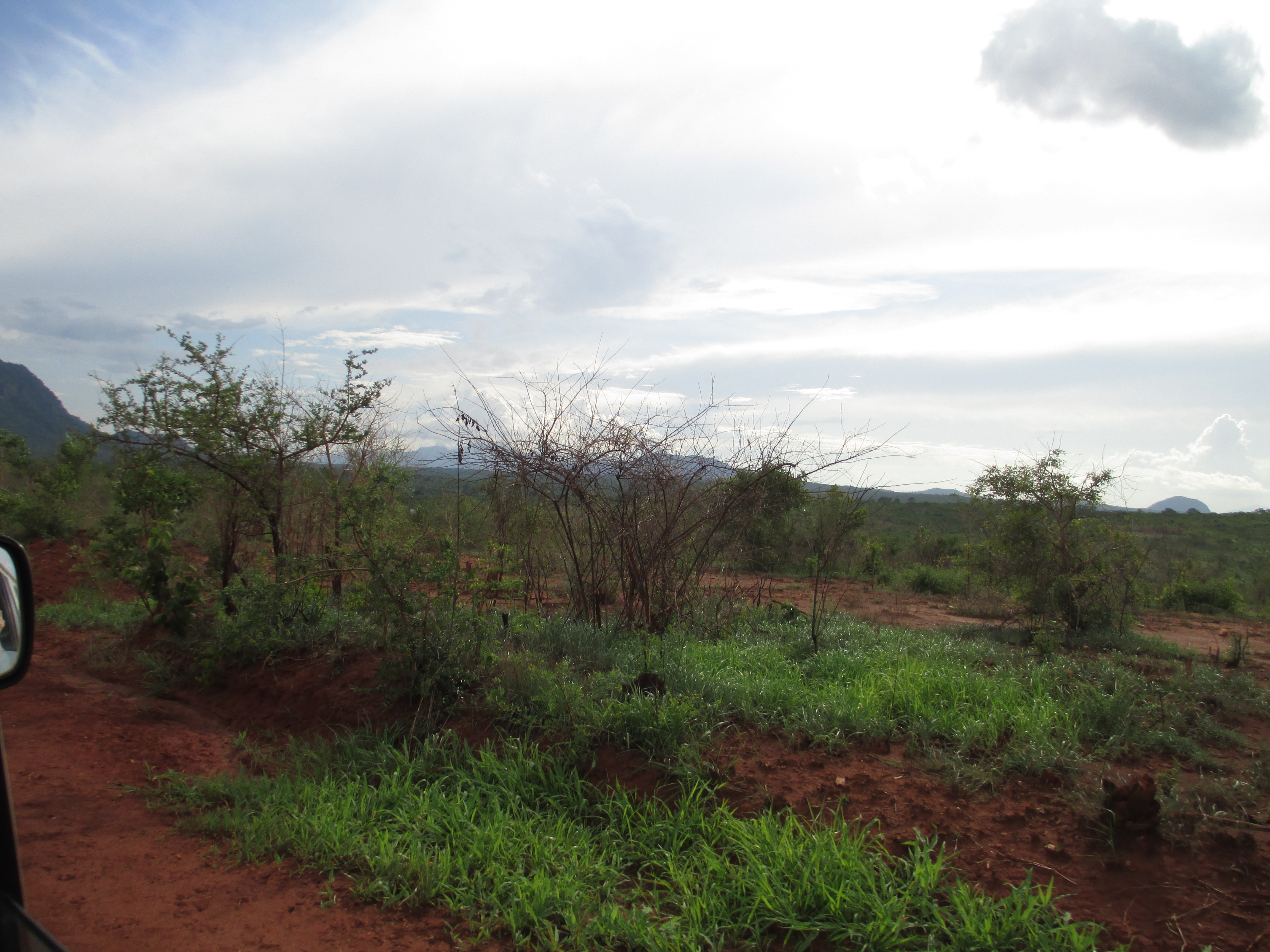 p at me curiously as though trying to make up her mind. I smiled and gave her a little wave and that settled it. She took my hand and did not let go for the rest of the visit. We didn’t speak each other’s languages, but there was a lot of giggling and a lot of playing that involved her imitating some animal crawling up my arm. Robert explained that we were here to pick up the pastor and the choir of the church to take them with us further into the bush to the small village that was our destination.
I was a little confused at this point. We came in an SUV- two seats up front, a bench seat in back that seats three, plus two small fold-down seats in the trunk area. How could we fit a choir? Fortunately there were only six of them, which, with the pastor, made seven (plus one child, so eight). And, as I’m learning, here you make do. So I said goodbye to Rebecca and in we piled. Anne, I and one choir member on the bench seat, the pastor up front, and the remaining five choir members, plus the small toddler of one of the choir members, squished in the back. Anne and I tried to take the back but they wouldn’t let us, a trend of treating us like guests that continued throughout the day. On we continued down the increasingly precarious road.
You know how sometimes you’re riding in a bumpy jeep down a dirt path in the Tanzanian countryside that barely qualifies as a road, desperately holding onto the hand holds above you so you don’t bounce up and smash your head on the roof, and it’s uncomfortably hot and crowded, and you’re sweating through your clothes, and then suddenly the choir riding behind you breaks out into Swahili hymns, moving from call and response to beautiful harmonies and you think, “I am one lucky son of a gun?” Yeah. That was my life for the next thirty minutes as I watched small farms and mud brick homes roll by. We stopped at another church on our way just so we could say hello to some of the people there. This was similar to the first, but with dirt floors and no benches, though it was fairly large in size. Robert appeared to know many of the people in the area and both he and Ann conversed with them so effortlessly (it seemed to me). Greetings are critically important here; I can’t help feeling my weaknesses when it comes to the language.
We also passed a gold mine, where men pushed heavy wheel burrows out of large pits in what looked like grueling work. The village we were heading to is inhabited by both Maasai and members of other groups, and soon we began seeing Maasai herdsman with their cows standing watch at the side of the road. The Maasai, of all Tanzania’s tribes, are very distinctive in appearance. While most Tanzanians have adopted a mix of Western and traditional dress, with men in pants and t-shirts or button downs, and women in kangas (brightly colored wraps) and t-shirts, or western-style dresses, the Maasai stand out in their red, blue and purple wraps.
We finally arrived at our destination to see a church standing alone in the brush. Made of a tin roof supported on wooden posts, there were no walls and simply di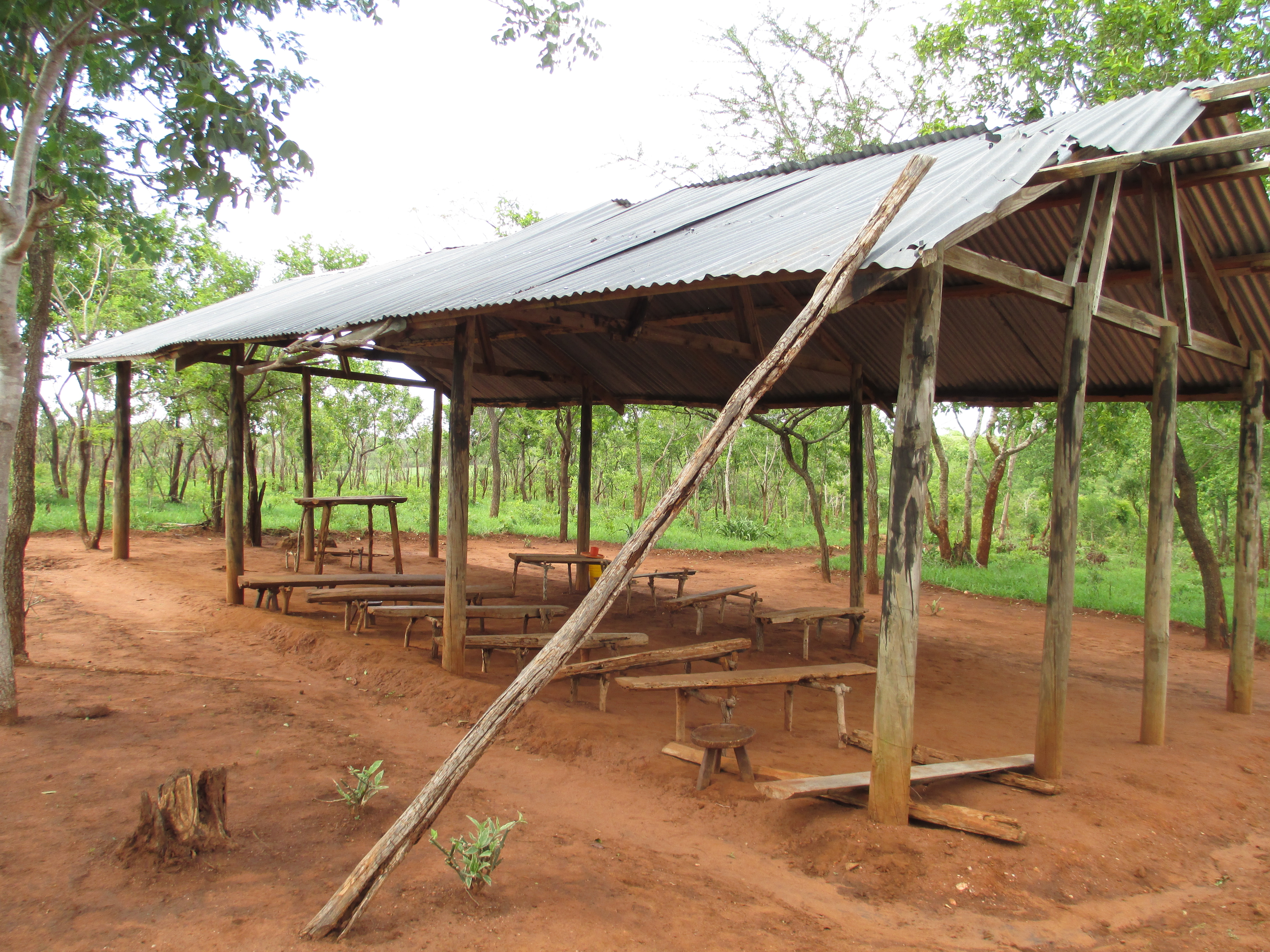 rt underfoot. The “pews” were flat pieces of wood laid over forked sticks stuck in the ground. It was hard at first to envision how they would not collapse under the weight of several people. The alter was similarly situated. There were no other buildings as far as we could see, and while one or two people rode up on motorcycles, most simply walked out of the bush to take their seats. We arrived at around 9:30am and immediately Anne, Robert and I were situated on a bench up front, perpendicular to the other benches. Neither Anne nor I were terribly comfortable with this; both having grown up attending church, we felt more comfortable with the idea of sitting with the rest of the congregants. But Robert told us it wasn’t even worth trying… we had been given these seats because we were honored guests; whether the “honored” part was because we were foreign, because my friends were there as missionaries, or simply because we were actually just strangers, I do not know. As an anthropologist, sometimes it is hard for me to accept situations like this when I am singled out because of who I am when all I really want to do is blend in. But hospitality is extremely important in Tanzanian culture and it would hurt me far more to knowingly be rude in the face of welcome and so I kept my seat.
For the next hour or so, congregants wandered in one or two at a time. The choir would occasionally break out into song, sometimes involving the crowd, sometimes singing alone. There were no hymnals or even Bibles, other than that held by the Pastor and a couple of well-worn ones held by some of the older congregants. Perhaps as an adaption to this, most of the hymns took a call and response format- one person would lead with the verse and then others would either repeat, or recognizing the verse, sing the chorus. There were also no organs or other instruments, so time was kept by clapping or a mix of swaying and foot tapping. But if you watched, there were always two or three different clapping patterns going on at once; the effect was a blended rhythmic mix of voice and percussion. After a time, although the songs were all in Swahili, Anne and I managed to catch the words to some of the songs or refrains and so clapped and sang along when we could. By the end of the first hour there were about thirty or so individuals, Maasai and non-Maasai, children and adults, gathered under the tin roof. One woman came forward to offer her kanga for an alter cloth, and the pastor set out the communion cup. Just before the service started, the groom arrived on a motorcycle and the bride came walking up in a lavender satin dress with sequined flowers and an off-white veil. She was tall and thin, her husband-to-be a little shorter and looking to be a fair amount older than her, though she did not appear to be overly young.
The service that followed included the baptism of three children, numerous choir numbers, a sermon, and the marriage ceremony, which, given it was a Lutheran ceremony, was fairly familiar. This choir though, I have to say…it will take a lot to impress me in future church services in the United States. Until I see a choir member act as soloist AND choir director, keeping time by swaying her body and stamping her feet, while simultaneously bending over, swinging her crying child onto her back and wrapping him up in a spare kanga, tying it neatly up by her shoulder, all while carrying a tune and keeping a beat, and then, when the song ends, swinging the boy back around to nonchalantly breast-feed while she sits and listens to the sermon, I will be unaffected. That was what struck me most about the service- it was so, for lack of a better word, practical. In the States, we dress up, we sit in a sanctuary, everyone stands, sits, and sings on cue, and quiet is the name of the game. We tell children, “be on your best behavior,” or we send them out for their own Sunday school. Here, in this remote church anyway, we wore whatever we had that was clean, and sat under a tin roof that threatened to blow off in the wind. Singing was punctuated by clapping and loud, appreciative whistles or whooping as people got excited, and crying children were either placed on the ground to play in the sand or, if they were too young, a breast was pulled out to feed them. People wandered in late, or wandered off to relieve themselves in the bush. Insects buzzed around. Through it all, the service just kept rolling on.
The sermon and rest of the service were in Swahili- including when the guests introduced themselves. Robert and Anne gave fairly long accountings of themselves; with my limited Swahili, I managed, “My name is Emily and I am from the United States,” then shrugged and everyone laughed and I sat down. The bride couldn’t read very well, so a friend helped her to say her vows. The communion cup and wafers had to be covered so the flies wouldn’t get to them, and the baptism water was in a pail that mothers later used to wash off their children’s hands after playing in the dirt. Not joking, I am pretty sure at one point that a congregant got up, walked around behind the alter and the pastor who was preaching, and made change from the collection bowl when he realized there was going to be a second offering later in the service for a special cause. I enjoyed it all immensely, although four hours sitting on a backless bench in the heat with no water is enough to try even the most patient among us. I was fairly dehydrated by the time we filed out of the church.
Following a lot of handshaking outside the church, the singing started up again and we were pulled into a ring along with all of the congregants to encourage some of the more enthusiastic members in their dancing (forming a circle and having people move to the middle to bust a move is, it seems, a universal cultural practice). It was such a beautiful moment with the clear blue sky above and the deep red ground underneath and no outside noise to interrupt the joyous music.
We left for the wedding celebration back at someone’s home (not entirely clear whose) soon after. We pulled up to a small clearing in the brush and corn fields to see several small brick or mud buildings with tin or thatched roofs. A crowd of people was gathered for the festivities and a nicer ster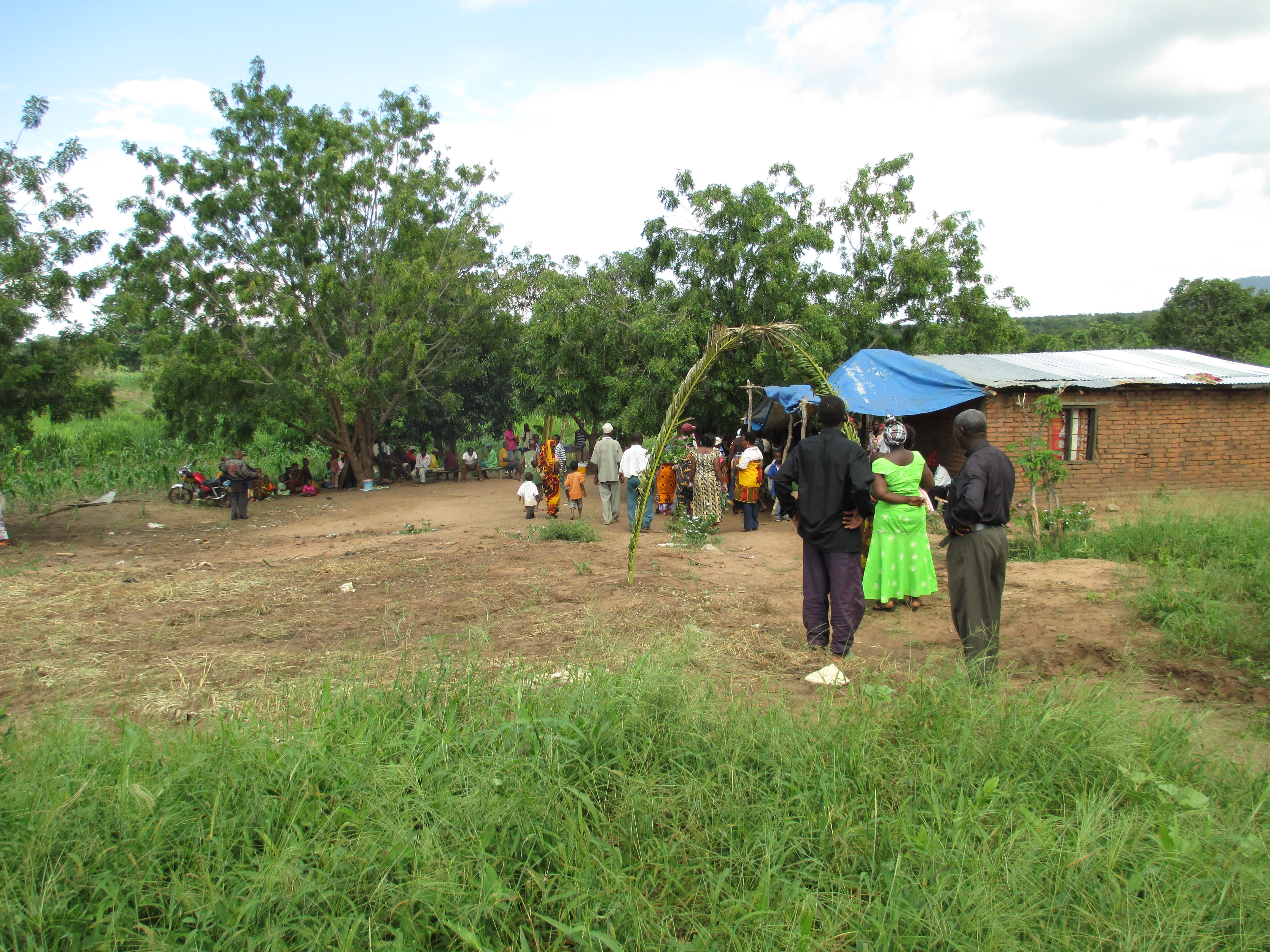 eo than I have ever owned in my life was out on a table for music (these kinds of wonderful incongruities seem to pop up everywhere, like the indigenous ladies in Bolivia who would pull cell phones out from under their bowler hats). We were led under a palm arch and around to the back of the house, where a plastic tarp had been turned into an awning. There was a table laid out
 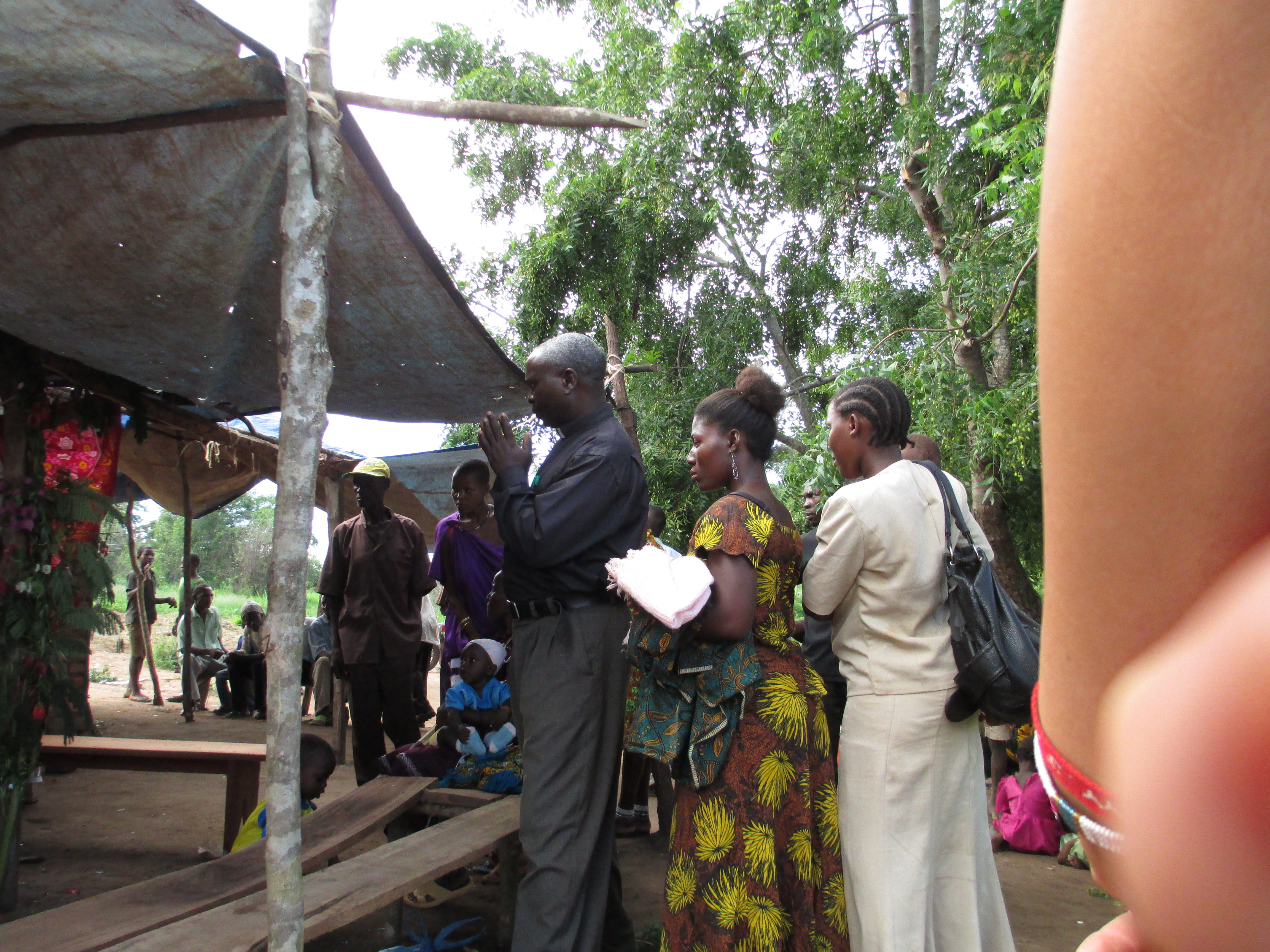 with a table cloth, behind which the bride and groom sat rather seriously, not touching or speaking. Flowers were laid over the table and hung on ropes from the tarp. The bride’s mother, in an obviously festive mood, led us dancing under the tarp and sat us at places of honor with the pastor and his assistant near to the bride and groom. It had the feel of a large do-it-yourself country wedding, with women filing in and out of the house, carrying endless plates of food and buckets of bottled soft drinks for the guests who danced or threw themselves down whe
 rever there was room on a bench, chair, or the ground. We were given plates of rice, cabbage and goat meat (whose comrade was wandering around nearby), which we washed down with Sprite and Orangina while chickens ran underfoot. Nearby children scooped up rice from their mothers’ plates into balls, hands moving from dish to mouth, their eyes staring at us openly.
I would have loved to stay all day because the party felt like it was just getting going. But, we had a long trip back. We gave the newlyweds the gift of a new Bible from Robert’s mission, and soon after the choir serenaded them once again had to take our leave. We dropped off the choir and pastor on our way back; I got a hug from Rebecca who came once more flying out into my arms this time, my being her new best friend and all. She was delighted that I had learned the Swahili word for butterfly in the interim (which was on her t-shirt). We then drove back uneventfully to Morogoro.




 Potholes and Pili Pili