Celebrating the Bachelorette

As I wrote in my last post, life in Tanzania for wazungu can be a difficult balancing act at times, particularly if you live in a larger town or city.  Sometimes the pull between the lifestyle you led in the U.S. and the lifestyle more typical of the average Tanzanian can result in feelings of confusion and guilt.  At other times, the desire to mark certain occasions or celebrations in a fashion that feels true to your own traditions has to be negotiated within this new cultural context.  Too often we think about culture as something that other nationalities/ethnicities/people have.  But the truth is that we in the U.S. also have our own cultural practices that mean something to us.  While it’s important to embrace Tanzanian culture while we’re here, to immerse ourselves in new experiences and practices, I know that for myself and for other wazungu friends I have here, there are times during which we feel a strong need to assert our own culture in order to recharge our batteries, so to speak, or simply to mark what would be an important day in our own country.

This need recently arose in a very specific way for a friend of mine.  Jerianne, a missionary from the U.S., was a fellow student at language school in Morogoro.  She lives in Kigoma, which is in the far west of Tanzania, on Lake Malawi (or Lake Nyasa, as it is called here).  In just a little while, Jerianne will be marrying a Tanzanian man by the name of Amani and they plan to live here in Tanzania permanently.  Naturally, given that, her life going forward will look very different from her past life in the U.S. and while I admire the enthusiasm with which she has embraced this, and the, at times and to American eyes, huge compromises she has made, she has acknowledged one thing from back home that she was sad to miss out on… a bachelorette party.   IMG_0721

“A bachelorette party,” you might ask?  “Is that really the kind of American cultural tradition we want to be known for, the kind of cultural celebration that you feel the need to practice overseas?”  But hear me out.  I could get into anthropological theory regarding rites of initiation, liminality, and a lot of other jargon but to boil it down to something I think everyone can understand, bachelorette parties are part of the rite of passage marking the movement of a woman from single status to married.  They are the final celebration of singlehood, and mark the process of saying goodbye in a sense to a specific social status that you often share with your fellow celebrants.  They are often a strange combination of giddy excitement touched with an element of sadness, as your friends recount the things you will no longer be able to do or the upcoming change in your name.  I would argue that traditions like these are every bit as important as those we like to exoticize when we visit other countries.

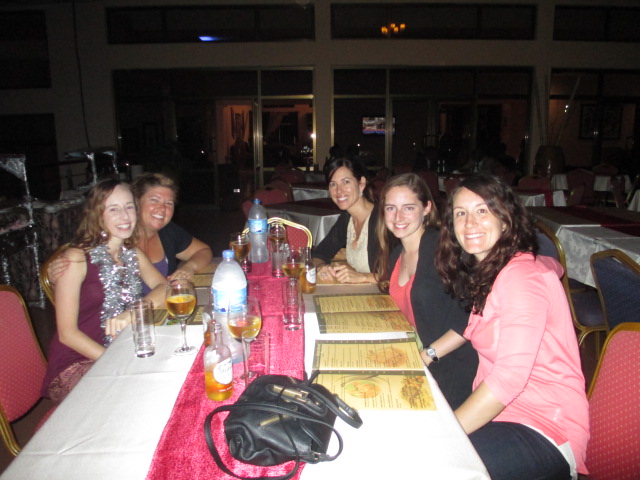
After a lot of discussion, a couple of friends and I determined that we simply had to give Jerianne a proper send-off into married-womanhood.  Given that this is Tanzania and Jerianne is a missionary (as were several other attendants), we weren’t looking for a drunken booze fest marked by the appearance of a Policeman with tear-away pants.  But we still wanted to celebrate in style.  And this past weekend, we all converged on Morogoro with plans for 24 hours of pool, sun, good food, and maybe even a little dancing.

IMG_0715 IMG_0716


We had booked a room at the nicest hotel in town.  Shantelle and I went shopping for some decorations and spent about an hour blowing up balloons until we were red in the face.  We bought her the usual American type of gift (i.e. slightly racy), as well as a Tanzanian kanga she could wear for her soon-to-be husband.  As the final touch, we commissioned a cake for her from a local restaurant.  Cakes aren’t common here, so we were particularly excited about this piece and the fact that we could have a message written in icing on the top.  When we showed up to pick up the cake a couple hours later, the woman was quite excited to show it to us because she had taken it upon herself to not only write a congratulatory message on it, but also to press strawberry halves around the edges (berries are a huge luxury here- my friend once paid about $7 for 12 raspberries).  It looked delicious and we had to spend a good five minutes sharing in her excitement.  The last step was to take everything back to the hotel and set it all up before we went to pick up the party participants: Jerianne, Michelle, and Grace.
IMG_0720

What followed was a fun evening of great food out on the patio of our hotel, where we watched the sunset and enjoyed live music; dancing did occur.  Shantelle and I were a bit dismayed to find that when they ceremoniously brought out the cake, the heat had caused the chocolate icing to melt and the strawberries (formerly on top of the cake) had now traveled halfway down the sides.  But let’s be honest, since when do a group of girls let something like that stop them from devouring chocolate?  The hoped for sun and pool time did not materialize the next day as planned, but a couple more friends, Ingrid and Santa, joined us for lunch and serenaded Jerianne with an impromptu duet  as a gift, while our fellow diners looked on and wondered why we were interrupting their brunch.  But I thought it was a lovely idea in a place where it can be hard to come up with inventive gift ideas.
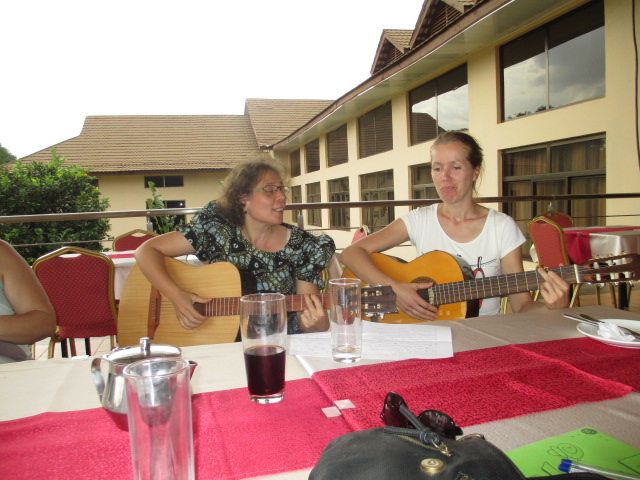
IMG_0728

It may not have looked and felt exactly like the traditional American bachelorette party, but we were fairly proud of our attempt, and now Jerianne can get married without feeling like she has missed out!
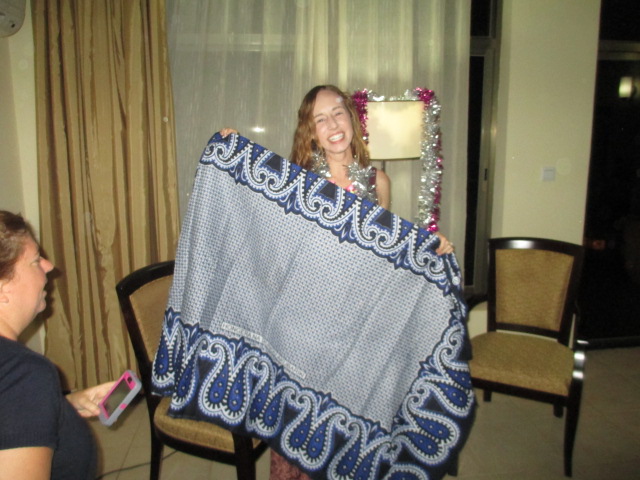
IMG_0725

My American Weekend

IMG_0714After a couple of slow weeks in Ifakara, I was starting to get a little bit antsy and frustrated.  At this point, I still don’t have my permits and so I haven’t been able to start my data collection.  There are only a few streets in the main part of town and I’ve walked them.  My housemate and her daughter have not moved in yet and the only person I know in Ifakara was out of town.  I’ve been working on drafting some of my dissertation chapters, but it’s been hard to feel excited about it when I’m not even observing in the clinic yet.  The cure for a grouchy mzungu?  A girls’ weekend in Dar es Salaam!

I had been planning on a trip to Dar around now anyway because I wanted to go back to the government permit offices and check on my paperwork.  I’ve found that going in person is one of the only ways progress is made.  When I learned that two friends from Morogoro were going to visit a third friend who had recently moved to Dar, we decided to make a group trip out of it.   One of the two friends from Morogoro, Christine, is also leaving soon and this was my last chance to see her before she went.

So on Friday, I left my house in the dark at 5:30am to get on the 6am bus bound for Dar es Salaam.  It is not a fun ride.  Aside from the 10 hour length, the first three hours are on dirt roads, the seats are very hard, are way too small for the average person, and inevitably I end up sitting next to a very large person who takes up half my seat and falls asleep on my shoulder.  It is hot and stuffy, there is usually at least one child crying or throwing up, and my legs are so numb by the time I arrive that I don’t feel normal again until the next day.  But, there is one highlight on every bus trip- the moment we make the lunch stop and I get my chips mayai.

IMG_0687Chips mayai is a delightful little dish popular as street food in Tanzania.  “Chips” refers to French fries and “mayai” is the Kiswahili word for eggs.  So basically, you make French fries and then you pour beaten eggs over it to make what is essentially a French fry omelet.  It often comes with what looks like radioactive ketchup ranging in color from florescent red to florescent pink.  Sometimes it is served in take-out container.  Sometimes it is just dumped into a plastic bag .  You eat it with a toothpick.  Not the nimblest of utensils, but still.  It’s pretty much the highlight of my bus trips.

I arrived in Dar es Salaam around 4pm after sitting two blocks from the bus station for thirty minutes.  Dar traffic is truly a nightmare.  Shantelle came to pick me up and we waited for the others to arrive from Morogoro before heading to her new house.  What followed was the most American weekend I have ever spent in Tanzania.  Dar is the only place in Tanzania where it is possible to live a lifestyle virtually the same as that in the US.  It costs a fair amount of money, but it’s possible.  It was surreal and strange, but also kind of a nice little break to hang out with expat friends, eat some favorite foods, and enjoy some relaxation time.

Saturday morning, we helped friends move into their new house in Dar and snacked on peanut butter and jelly sandwiches for lunch.  We had planned to go to the beaIMG_0700ch in the afternoon and I had no idea what to expect.  Dar is on the ocean, and there are public beaches but many are considered unsafe and truthfully are not all that nice in terms of sand or water quality.  So I had not actually been to any yet since I had been in Tanzania.  Shantelle told us about a hotel called White Sands near her house where you could pay 5,000 shillings (about $3) for beach access and they also had the benefit of a bar and restaurant, so we decided to check it out.

IMG_0697It was stunning!  The beach was lined with chairs and umbrellas, and we enjoyed cocktails and mishikaki (grilled kabobs) with chips as we relaxed for a few hours and caught up.  I spent time walking down the beach and back, though we didn’t swim because the water was pretty mucky.  For a Saturday, the resort was quite uncrowded, though there were a few Tanzanian and tourist families swimming in the pool and sunbathing.  It was great to have some quality time with girlfriends; I have to confess to having been a little lonely since I arrived in Ifakara.

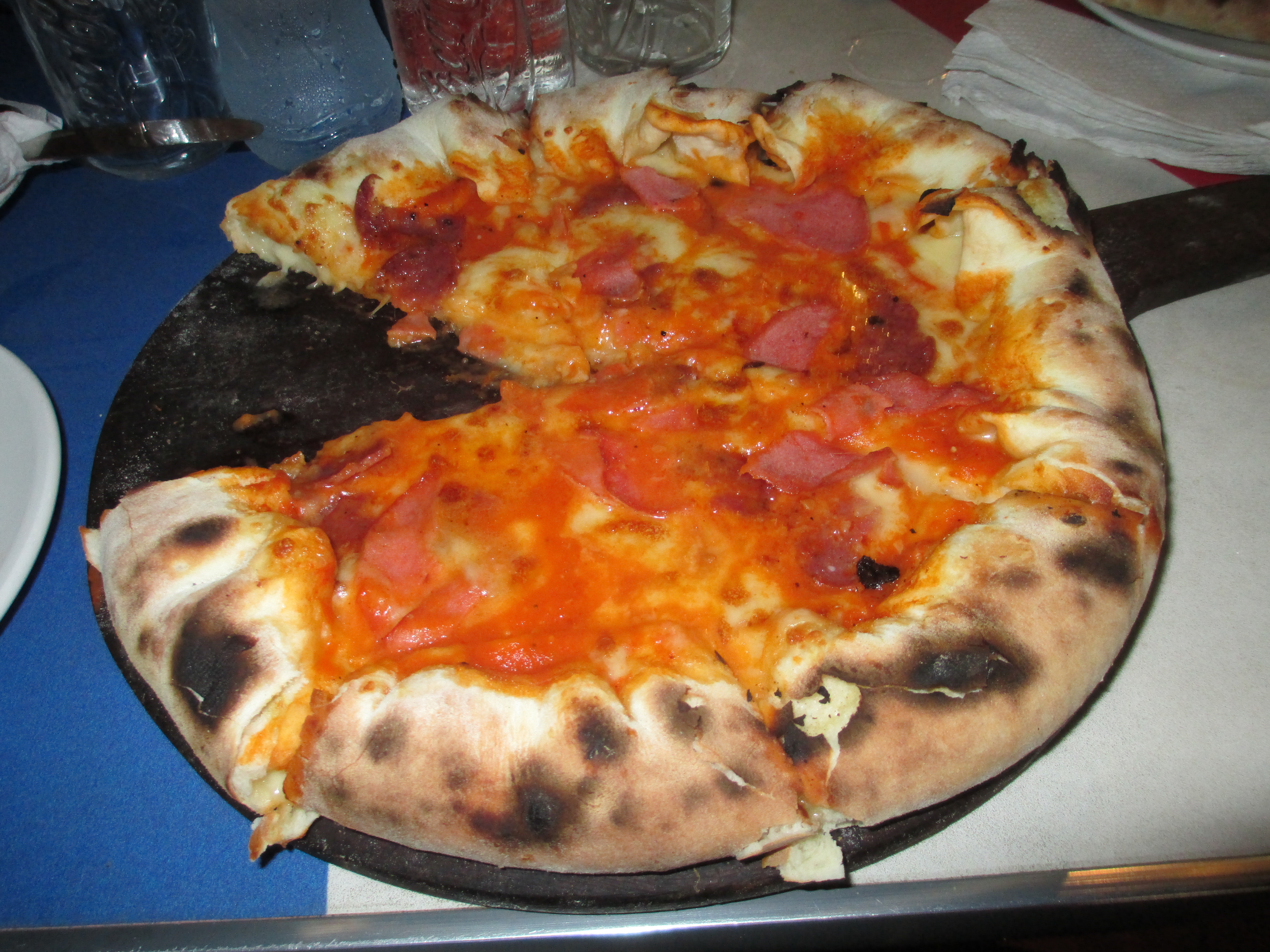
Dinner upped the American factor even more.  We went to an outdoor shopping mall and ate stuffed crust pizza.  Real.  Actual. Pizza.  Not chipati with a single spoonful of sauce, cheese and cut up hot dogs on top.  Actual wood-fired pizza crust, topped with a normal amount of sauce, gooey cheese, ham and sausage on top, and cheese baked into the crust.   It was amazing.  The dining experience itself was hilarious though.  In the US, when you go to a food court you spend some time looking at your options which are usually posted on signs at each place, make a decision, get in line at the establishment of your choice, and then carry your food to a table.  Here, there are roving waiters from each place carrying menus.  You sit down at a table in the center and suddenly all of the waiters descend on you, throwingIMG_0691 their menus in front of you, trying to get theirs in before the others.  They then all hover behind you while you pick through all of the menus and you can place orders for as many places as you want.  At the end, you get a separate bill from each place that you ordered from.  It was also apparently a popular place for wealthy drunk Tanzanian teens, and we were treated to one vomiting in the middle of the food court mid-meal.  This was strange for me because almost none of the Tanzanians I know drink and so I likewise rarely drink alcohol here.  After dinner, we went t go a DVD store (strange experience after spending the last six months primarily seeing them sold off folding tables on the street), and then went to the American-style grocery store where I got to buy Reese’s Peanut Butter Cups and Barbeque sauce.  It was pretty exciting.

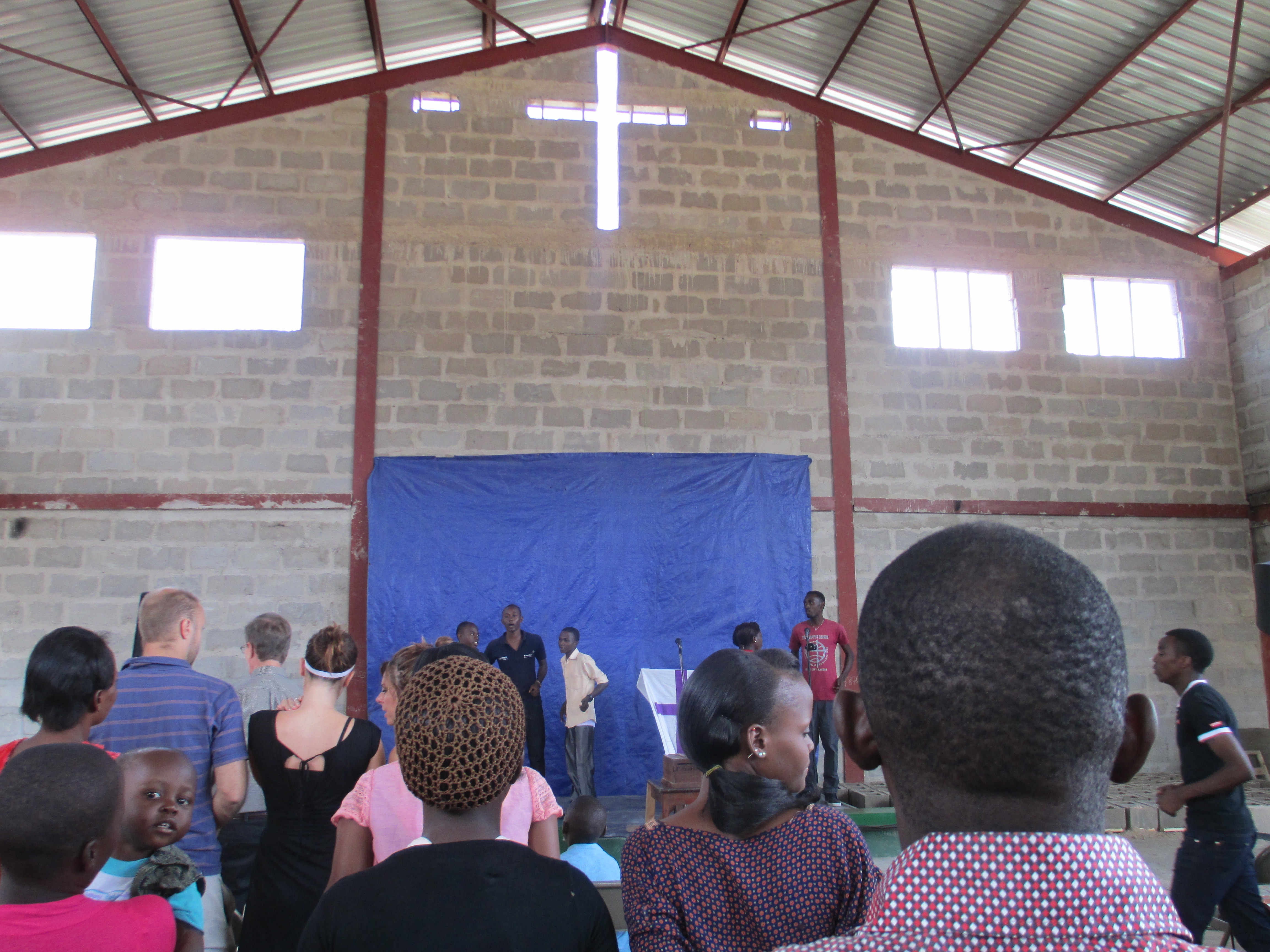
Sunday was a day of strange juxtapositions.  My friends in Dar are missionaries who work in one of the poorer areas of the city.  We went to their church there for the service in the morning, which was started by one of their associates seventeen years ago, and where they also assist with several social programs in partnership with Tanzanians in the neighborhood.  The service had beautiful music and I even understood a liIMG_0692ttle bit of the sermon, which was in Swahili.  After the service we spent some time talking with people before heading to lunch…which was at a fast food fried chicken restaurant located at a different shopping mall.  Where I also went shopping at a home décor store for sheets and to another American-style grocery store that actually sold dried basil and oregano.

Our friends Christine and Anne were leavingIMG_0696 that afternoon, and another friend Kevin was driving from Dar to Morogoro, so he came to the mall to pick them up.  Shantelle had gone to one of the few sushi restaurants in the city a few weeks before and found it good, so we decided to go there for dinner.  It was located at the fanciest hotel I have ever seen in Tanzania and I felt very grungy as we walked through the lobby.  We suspect it might be where Obama will stay when he comes to visit.  What followed was two hours of absolute bliss.  I have been missing sushi desperately since I came to Tanzania, particularly since I tend to eat a lot of it when it’s hot out in the States.  We went a little overboard, ordering not only sushi but a cooked dish as well, and could barely move by the end of the meal.  I spent the equivalent of several weeks’ foodbudget on this single meal so I guess it’s lucky that I bought a big bag of rice and a big bag of beans in Ifakara because that is all I will be eating for some time.  But in truth, it was worth every second.

Monday and Tuesday I had to spend a lot of time going back and forth to the government office I needed to visit and while I made some progress, I am still permit-less.  I will have to come back in a few weeks.  But I did manage to get a little more time on the beach, and enjoyed relaxing at Shantelle’s house, which has hot water and a stove and so seems quite luxurious to me.

But I have to be honest.  It is very easy to fall into the trap of only hanging out with wazungu because they speak your language and understand your background.  Every conversation isn’t a back and forth   discussion of the differences between Americans and Tanzanian culture; you are not constantly apologizing for doing things wrong or differently.  You don’t feel like a five-year-old trying to express yourself in a second language.  And it is difficult to balance the differing worlds here.  I know that my friends who live in Dar struggle with this, particularly those who work in poorer areas.  Because the truth is most Americans here live a lifestyle that is more comfortable than even middle-class Tanzanians.  It is disconcerting to work in one setting and then live completely differently at home.  It is strange to completely enjoy my day-to-day Tanzanian life in rural Ifakara but still crave the comforts of home when I go to Dar.  It can feel uncomfortable to strive to make and enjoy friendships you form with Tanzanians but still hanker for the company of those from your own culture or one a bit more similar to yours.  It can leave you feeling like you are on a roller-coaster sometimes and questioning how well you are really embracing life here.  So far I think I have been striking a decent balance but it can be a challenge at times and it can be difficult to resist the temptation to run to Dar when I get lonely or life gets difficult.  And yet I really do love this incredible experience I am having.

I’m back in Ifakara now and back to normalcy.  My new normal at least!
IMG_0713

A Cook Abroad

My first week in my new home has been progressing rather uneventfully.  Due to frustrations with research permits and documentation, I have been making multiple trips to the hospital to speak with the doctor I will be working with there but have as yet been unable to actually begin any sort of research other than just observing things in the public areas of the hospital.  I have to make another trip to Dar es Salaam at the end of this week to visit the permit offices again, and in the meantime I am simply adjusting to my new home.  So this seemed as good a time as any to a) talk about food and cooking, and b) explain the pilipili reference in my blog title (six months in is still timely, right?).

When I first arrived in Tanzania, as I mentioned in my previous cooking entry, I was quite homesick for food back home.  I could say “American food,” but truthfully it was more like “American food plus the various ethnic foods that we have appropriated.”  I craved burgers, sandwiches, pizza, sushi, Mexican, Italian, Thai, Chinese, Indian, and most of all I craved spicy.  Anything spicy.  I am the type of person who puts Tabasco on my eggs and Siracha in nearly everything else.  I like a good dose of wasabi with my sushi.  Red pepper on my pizza.  Cayenne blended into my burger.  There is very little I think cannot be improved by the addition of a few serranos or jalepeños.  I guess what I’m saying is, I like things hot.  (And yes, Shefali, if you’re reading this, you have every right now to say, “I told you so.”)

So I was somewhIMG_0658at dismayed to find that Tanzanian food in general is not spicy.  There are a few exceptions depending on the region and cook, but most of the meals I ate were not.  They were very good, don’t get me wrong, but I missed that extra kick.  Many places have what is called Chile Ketchup or Tomato Chile on the table, which I was warned by Tanzanians was pretty spicy but is actually exactly what it sounds like.  Ketchup with just the mildest hint of chile in it.  It serves its purpose, particularly on French fries, but it did not satisfy my spiciness craving.  Fortunately, on the table at the language school, I discovered a small little bottle of pilipiliPilipili is actually a generic name for a spicy pepper here (with pilipili hoho used to refer to your standard green bell pepper), but it also refers to the red or green sauces made from spicy peppers.  You may have encountered or heard of similar sauces referred to as peri-peri or piri-piri from other countries, but Swahili speakers often mix up their R and L sounds when speaking (thus rafiki might become lafiki for example) and so here it is called pilipili.  If you’re interested in the subject at all, there is actually a lot of really interesting information online about the history of its spread around the world.  Many restaurants have it, I’ve found, you just have to ask for it.

Since then, I have become somewhat obsessed.  I seem to be the only person who eats it.  I never see another Tanzanian eating it (though they must, since it is carried in restaurants and stores here) and most of the expats I know do not share my love of spicy food.  So I have resorted to buying my own bottles and carrying them with me.  I realize this is sad and a little strange, but my love is that strongIMG_0651

Therefore, when I began to set up house here in Ifakara, two bottles of pilipili, red and green, were among my first purchases.  If you are uninterested in hearing me wax poetic about my rather mundane first experiences cooking for myself here in Tanzania, this would be a good time to stop reading.  If not, keep reading, but I make no promises that this will be interesting! Since this blog is also serving as something of a journal while I’m gone, I sometimes get to write about things that may only be of interest to me.
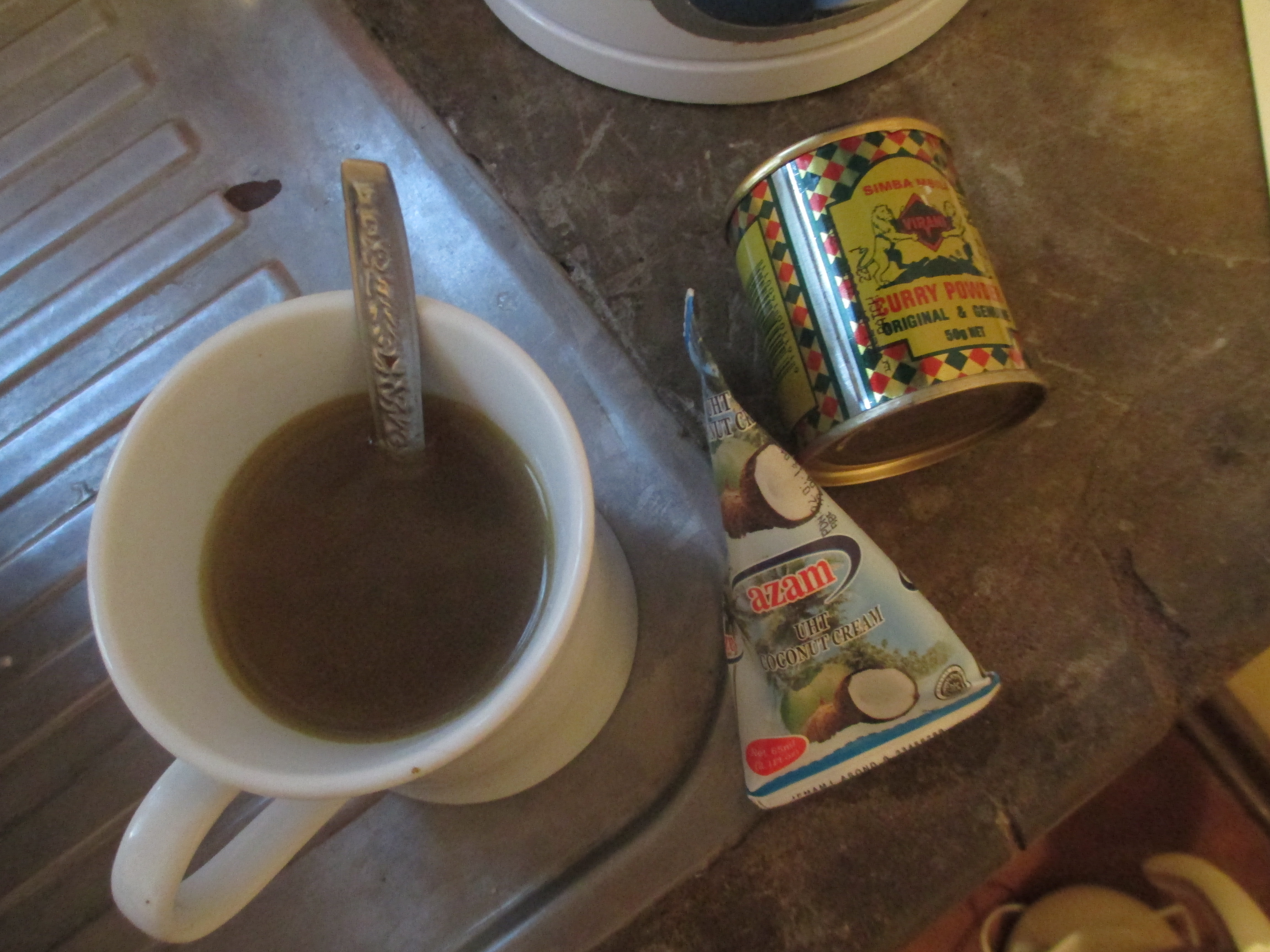
I thought I would share some of my first attempts at meals here in my new home.  Most of the ingredients are pretty familiar (it makes you realize the ridiculous access with have to a worldwide selection of foods in the US) and the only real difficulty has been getting used to the single propane burner on the floor that serves as my stove.  I also have no refrigerator (though I do have a small freezer that works when the power is on), so I have to buy most produce within a couple days of when I intend to use them.  There are also a couple of very small (think half the size of a gas-station shop) stores in town that sell pasta, bread, a few spices (“Fish curry,” “Chicken curry,” “Beef curry” and “Curry” being the selection), coconut cream, beverages, and chips.  I have to admit,  although I don’t eat them often in the States, I couldn’t help but do a little internal dance of joy when I found two lone cans of Pringles in one of them.  As far as tools go, I will have to wait until my trip to Dar to buy things, so I am currently left with a small very dull knife and plastic plate to cut things up.  Meals are typically cooked in silver pots without handles (you can buy a gripper-type thing to go around it but my home does not seem to have one to go with its four pots), so you need to either try to do one-pot cooking or else cook one pot of food at a time for different dishes and then put a lid on to keep them hot.

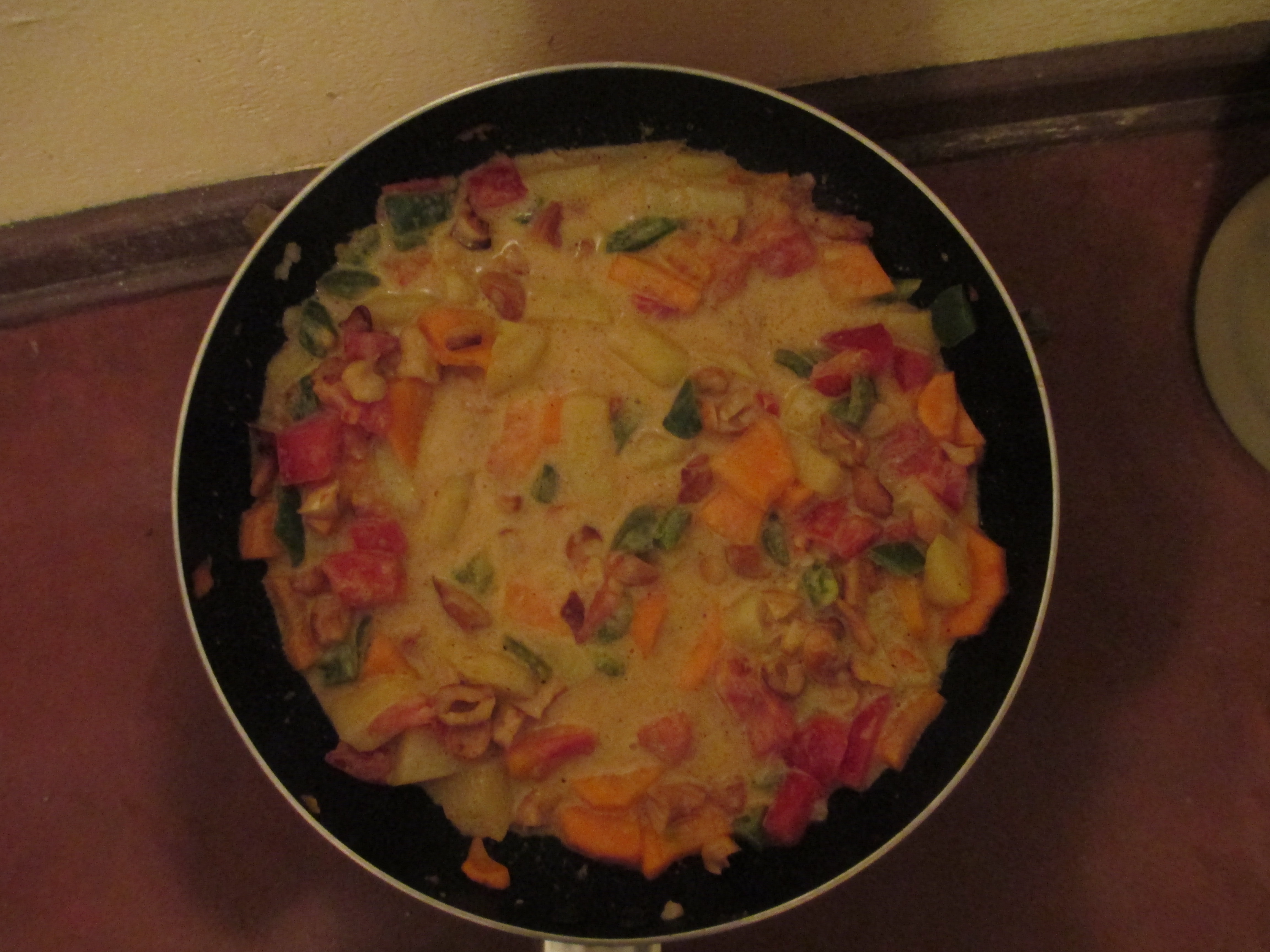
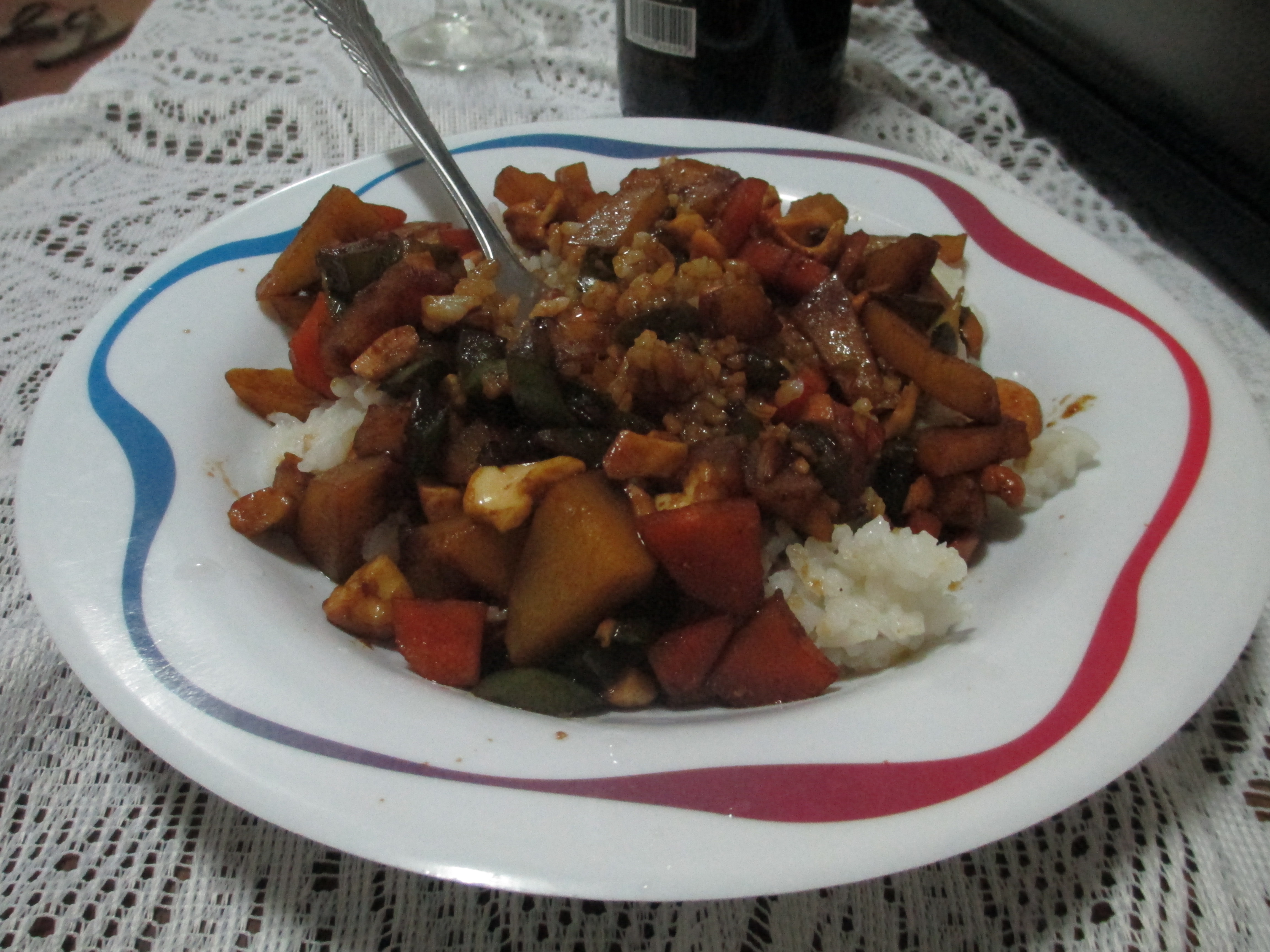
Since I have nIMG_0664ot yet figured out where to buy meat (need to find a reliable butcher) and my little shop only sells hot dogs, I decided the first attempt would be a vegetable coconut curry.  I was able to buy a variety of vegetables- carrots, peppers, potatoes, onions, garlic, etc.- at a little market near my house, and had bought coconut cream, chicken broth, and curry at the shop in town (eventually I want to experiment with making my own coconut cream siIMG_0665nce coconuts are easily available).  For protein, I chopped up the incredibly pricey cashews I found at the shop as well).  I quickly discovered that my new home has an ant problem, and so everything went into Tupperware as soon as it was opened/chopped because those suckers are on food faster than you can blink here.  From there it was a somewhat straight forward stir fry process, except that I had to first toast theIMG_0667 cashews, then remove the pan and cook the rice, then remove the pan and cook the vegetables and sauce.  Total it took about two hours from start to finish, but it was delicious.  In fact, it was so successful, that the next night I made the same exact dish except with an Asian-style sauce using soy sauce and ginger.

I wanted to shake things up IMG_0660tonight but from what I’ve seen, what I have already bought is pretty much what is available near my house and I didn’t want to walk all the way to town to the market (about 20-25 minutes away) because I was busy trying to do some dissertation writing.  I had asked for suggestions from friends on Facebook on what to cook given my limited ingredients.  One of those I liked best was the idea to do a fritter or veggie burger using shredded vegetables and beans.  I had vegetables left over from the stir fry and popped over to the nearby stalls to by red beans, which I let soak most of today.

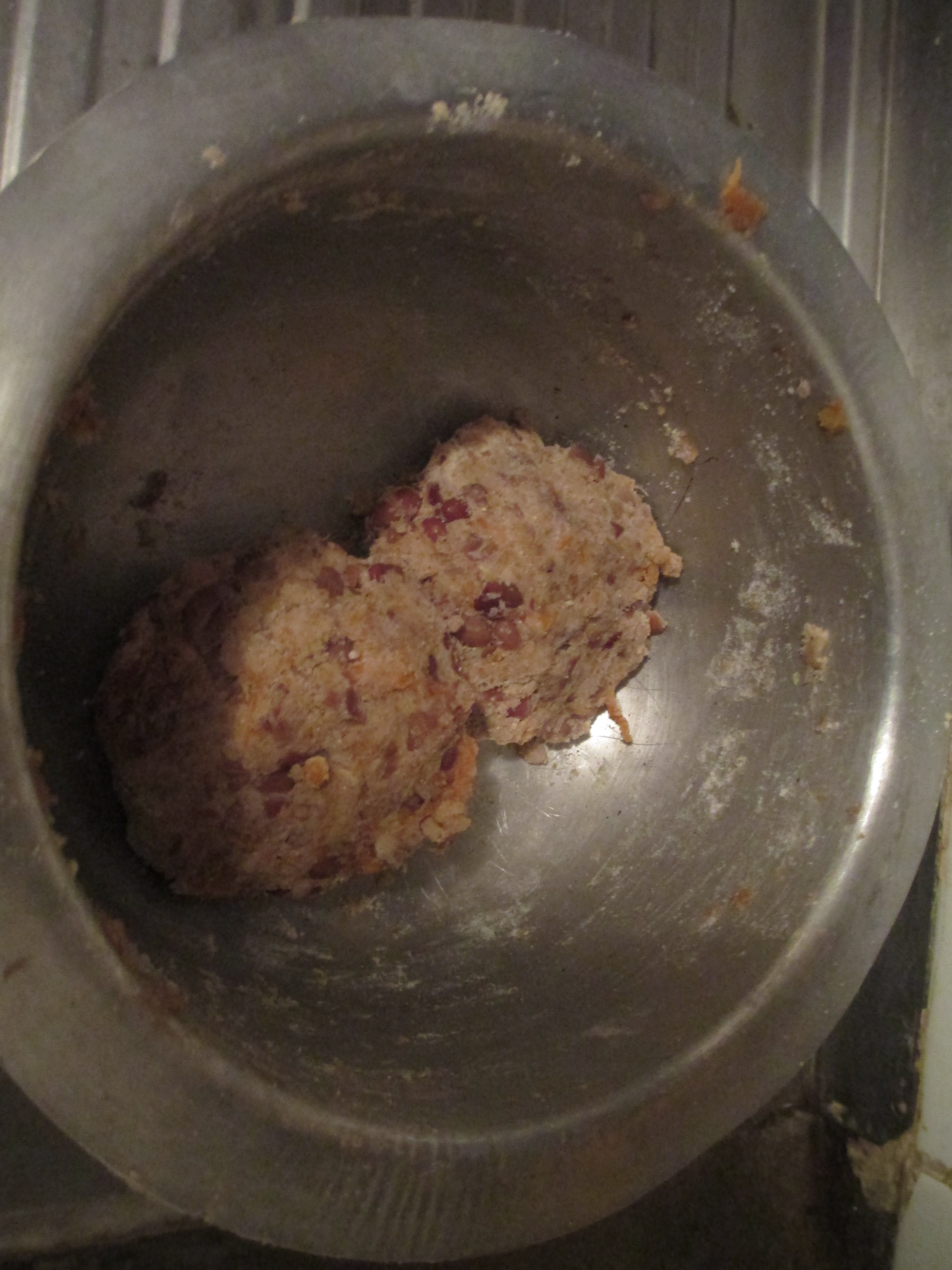
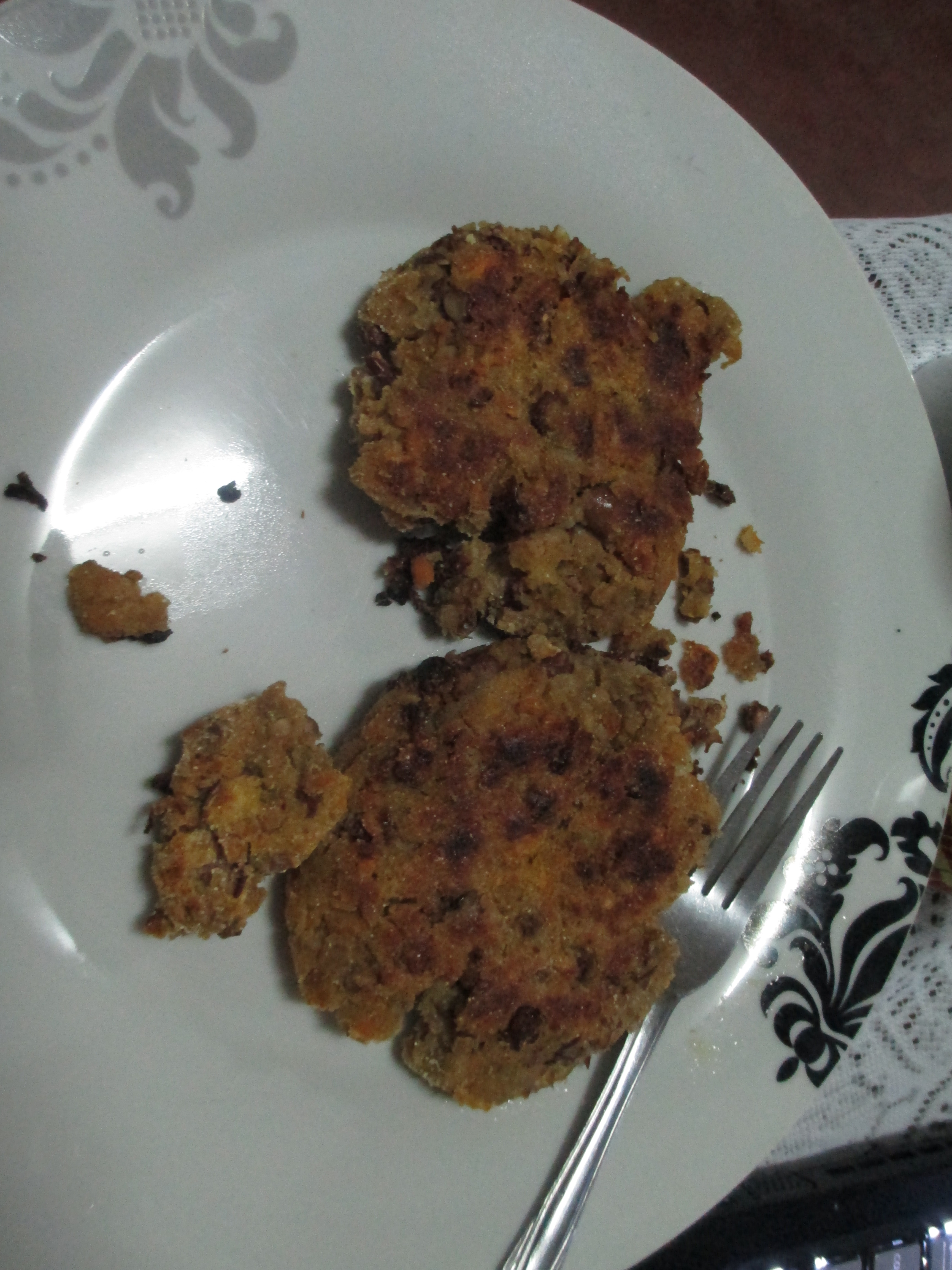
IMG_0670I don’t know why I have never made these in the States.  It was so easy and (mostly) delicious.  I shredded the carrots, potatoes, green peppers, garlic, and ginger I had leftover on the strangest little ineffective plastic shredder I have ever seen and which I had found in a bowl in the kitchen (note to self, add to Dar list).  After cooking the beans, I simply mashed it all together, added a large amount of curry, and then formed them into balls to fry in a pan.  I had been told to add a bit of flour to help it stay together, and I had some millet that i had bought to make uji (porridge) for breakfast, so I added that to the mixture.  The reason I say they were “mostly” delicious though is IMG_0673because millet has a bit of a bitter taste and the result was a floury bitter taste to the end product.  Next time I will use chickpea flour or corn I think.  But….TA DA!  Pilipili cures everything!  I just poured some of the magic sauce over the top of the patties and was happy again.  After cutting up a few potatoes, I fried up some serviceable French fries and enjoyed the end result with a movie and a glass of Tanzanian wine.

 “But Emily,” you’re saying to yourself now, “why not cook IMG_0669Tanzanian food?”  I’m glad you asked, friend.  The truth is, I very much want to but I thought I would start with some easy dishes i knew first.  But my last attempt this week was something called maandazi, a Tanzanian savory doughnut.  They are delicious and I have to stop myself eating a million of them because my stomach unfortunately hates gluten.  Still, I wanted to attempt it because they always smell so good when I walk by a place selling them.  I also figured, how hard could they be?  They’re just fried dough.  I looked online to find a recipe, bought the ingredients and came home already tasting the maandazi that would fill my kitchen in an hour’s time.

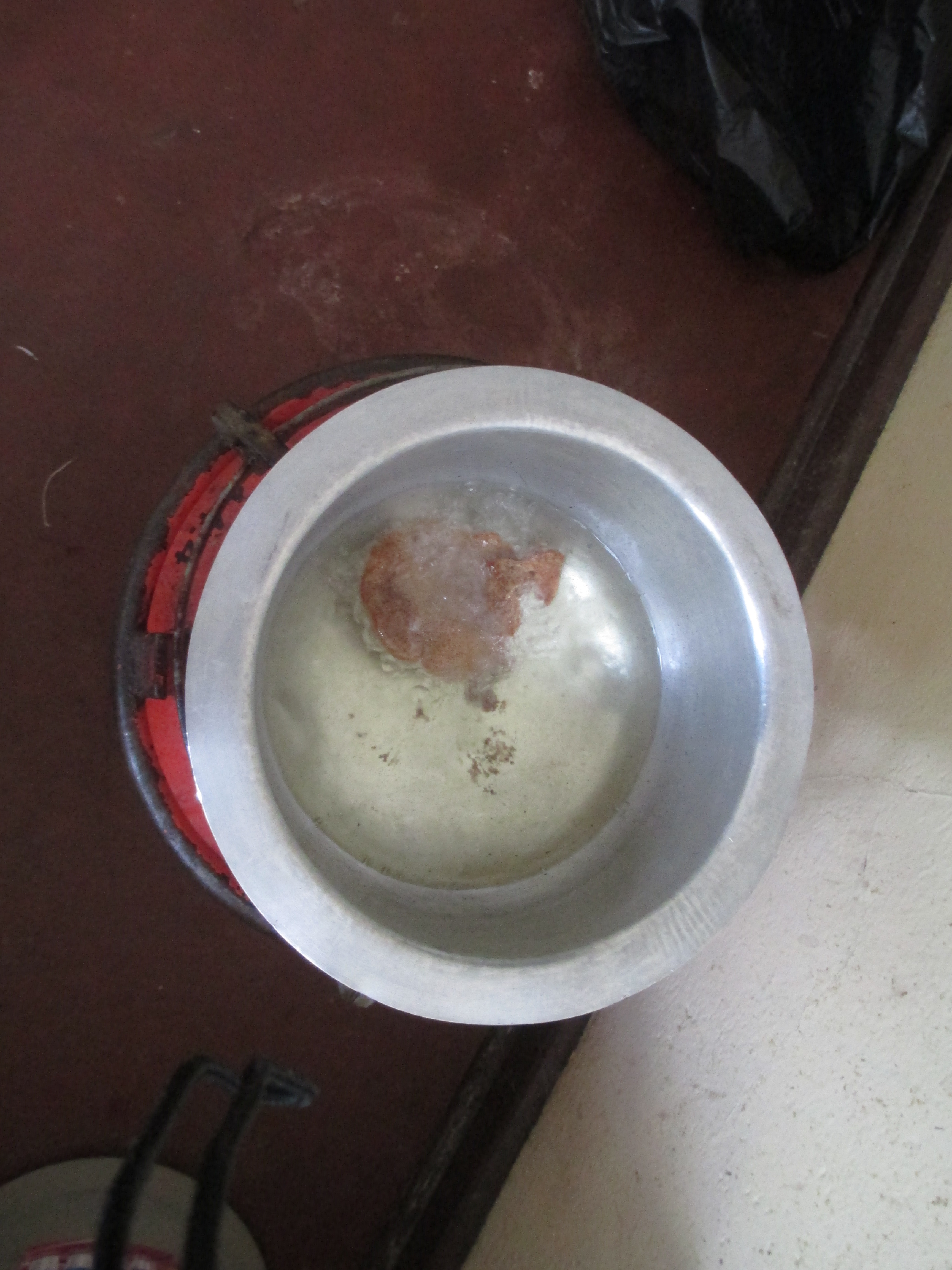
IMG_0662It turns out, they are difficult.  Or I did something wrong.  Or the recipe I downloaded was terrible.  Possibly all three are true.  First, I was missing several useful tools, such as a rolling pin and board.  Second, I am pretty sure something like this should have yeast and this recipe called for no yeast.  Third, I never deep fry anything at home, so I possibly did not do that step correctly.  Whatever happened, I ended up with flat, rock-hard lumps of bitter dough rather than the dense, chewy, yummy rolls I wanted.  Sigh.  This was a little bit of an ego bruiser, because I was making baked goods with IMG_0663my dad when I was still too short to reach the counter without a stool.  But, you can’t win them all.  I will try again soon with a different recipe or make a Tanzanian friend here who wants to teach me.  That is all for now.  My cooking adventures I’m sure will continue, but I’ll wait until I learn more about Tanzanian dishes to post anything.  I have my eye on several recipes I want to learn!

My New Home

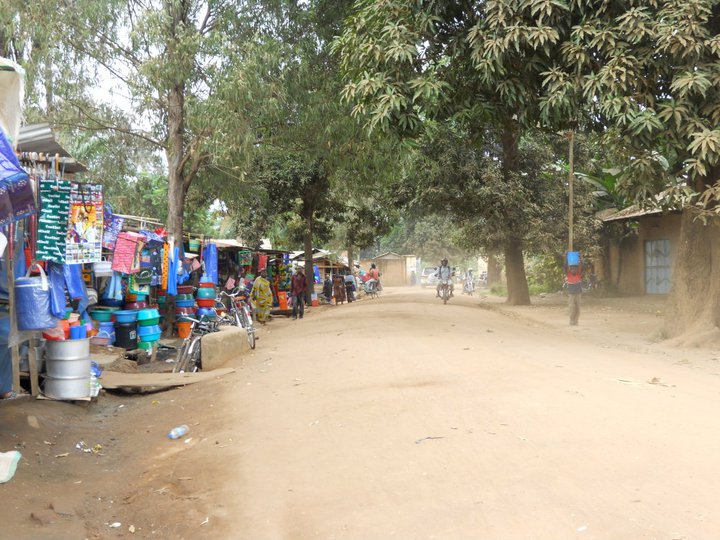
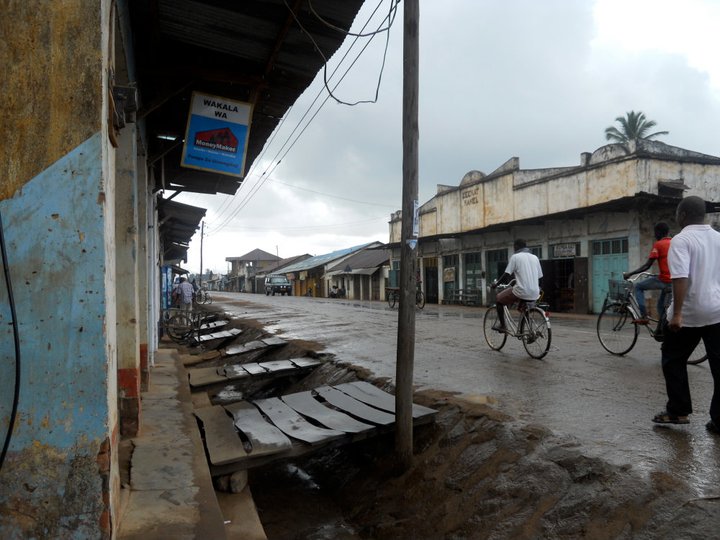
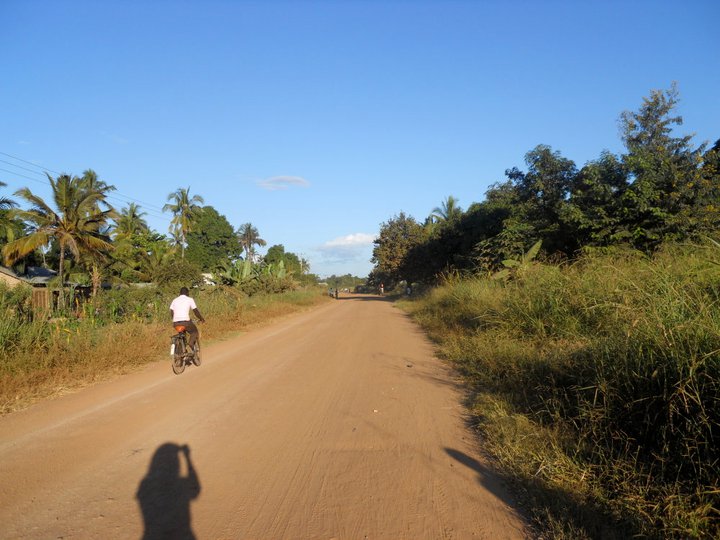
I thought it was about time to give an update and a few photos of my new town.  My first two weeks living in Ifakara were, to be honest, a little frustrating.  It can be difficult for an American to get used to the pace of life here in Tanzania.  We are used to things happening quickly and efficiently.  We WANT things to happen quickly and efficiently.   But life simply moves at a slower pace here and efficiency is not really a cultural value; it is something that nearly every expat I know struggles with.  Many aspects of this slower-paced reality are wonderful.  People really take the time to greet one another.  The workday is shorter than what many of us are used to (I’m speaking of course about office-type jobs; there are many Tanzanians who work very hard and long hours in factories or agriculture for example).  You don’t feel you have to check your email on a near constant basis in case you miss something important.  Families eat all meals together.

Header pic 4

Road to the hospital lined with shops

But there are frustrations as well.  Customer service in stores doesn’t really exist in the way we think of it and it’s not uncommon for a quick five minute copy job to take over thirty minutes because the shopkeeper is stopping every few minutes to take a phone call, run next door, or talk to their friend who just came in.  Waiting in line is a pretty fluid concept so just because you’re next, doesn’t mean you will be helped next or that you won’t be pushed aside by a newcomer.  For those of us used to instant communication, the lack of anything resembling it can be frustrating and I often find myself showing up on an appointed day to pick up/drop off something, only to be told that the person isn’t there after all or the item isn’t ready and to come back next week.  And perhaps most of all, nothing seems to every get done unless you are at the place itself in person.

So despite over a year of trying to figure out my housing situation in Ifakara, I of course arrived two weeks ago only to be told that they had no housing arranged for me and furthermore, there would be no housing available my entire trip.  I had originally been told to go immediately to the campus-owned guest house only to show up and find it full.  Hence my shower-less guest house way out on the edge of town.  Then the person in charge of hospital housing suggested I just stay at that guest house the entire six months I was here.  Given that it is quite far from the hospital, has no kitchen or fridge or way to cook at all (though it does have a restaurant which, despite a full two page menu, only served two meals), no shower, and is one of the loudest places I have ever stayed in my life, this was not a possibility.  In spite of all of the workers there who were very sweet and nice to me and decided that I should be their new best friend/ticket to an American green card.

Header pic 3

The main road in town (and the only paved one)

So with a little further pushing, I found myself back speaking to the Principal of the medical school here, who was my original contact at the field site and a friend of my professor back home.  He has been really welcoming and supportive, and fortunately found a room for me in a house currently occupied by one of the medical school instructors.  The person who had my room just left to study in Japan, and the instructor was currently on maternity leave so the house was empty.  After a few more days of phone calls, I was finally able to get in to see the house on Thursday of this week and it looked great.  Near the hospital, with a kitchen, and three bedrooms, one of which looked like it was currently used for storage.  It definitely exceeded my expectations, so I was thrilled.  The person who showed me the house told me that the medical instructor would be coming back with her infant daughter in a few weeks, but in the meantime, I could move in and get settled.

Therefore yesterday, Friday, was moving day for me.  I called Mpundo, my taxi driver, to come pick up me and my bags and we drove over.  I then spent most of the day making various trips back and forth to town to procure things for the house.  Although there was living room furniture, my room was empty other than a bed and desk and the kitchen was pretty sparsely stocked.  With no idea where to buy things like bedding, dishes, a washtub, etc., I wrote myself out a list in English and then used my Swahili dictionary to write the correct word next to it.

Header pic 2

The road to my house

And this brings me to one of the things I love about Tanzanians.  They are incredibly welcoming and helpful as a group.  More than once I have found myself helped out of a sticky situation by a Tanzanian who saw me struggling and took me under their wing.  So as I walked down the main street in town peeking into little maduka to see what I could find, I had an ulterior motive.  I planned to buy something at the first shop I found with something I needed, and then to use my limited Swahili to see if the shopkeeper could point me in the right direction to obtain the rest of my goods, perhaps even convince them to draw me a little map.  About a third of the way down the main road, I spotted an iron in a glass case of a shop.  Given my intense obsession with avoiding mango flies and the role of irons in defeating them, I figured this would be a good place to start.  I walked in and behind the counter were a young man and a middle-aged woman.  I pointed to the iron and inquired as to its cost.  It was reasonable, worked when they plugged it in, and was only covered with a thin layer of dirt, and so I said I would like to buy it.  Then I brought out my list and made my request.

Header pic 1

Me taking pictures of roads in town

It went better than I could have hoped.  At first, the young man tried to tell me where to go, but the directions were too complicated for me to understand.  He called over to the woman, and showed her the list.  She then started gesturing and I was able to roughly follow what she meant.  Trying to clarify, I repeated back my understanding of her directions.  She nodded along, but then after pausing and looking at me (and my obvious new-ness to town), she told the boy to watch the shop and taking my arm, pulled me out to the street.  All I can say is bless her, because she spent the next half an hour walking me all over the market and into various shops, helping me with shopkeepers to be sure I got a decent price, and made sure I got nearly everything on my list.  She then helped me carry it all back to her shop and let me leave it there while I made multiple trips back and forth to my house to get it all home.  On my last trip, I bought a few more things from her shop that I didn’t really need and then went next store to buy a couple of cold juices for her and the young man as a thank you.  They laughed and thanked me, welcoming back with a “Karibu tena!

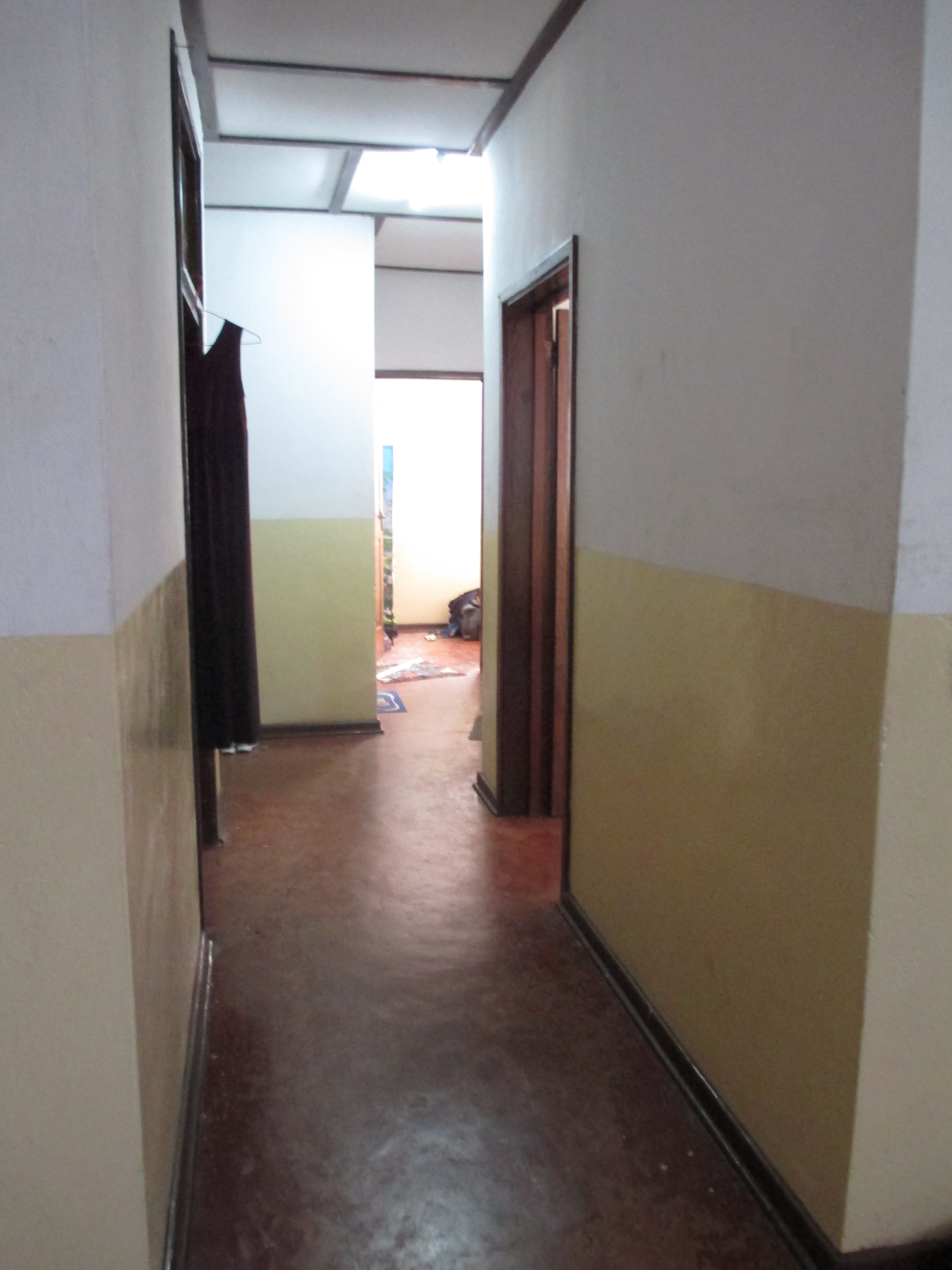
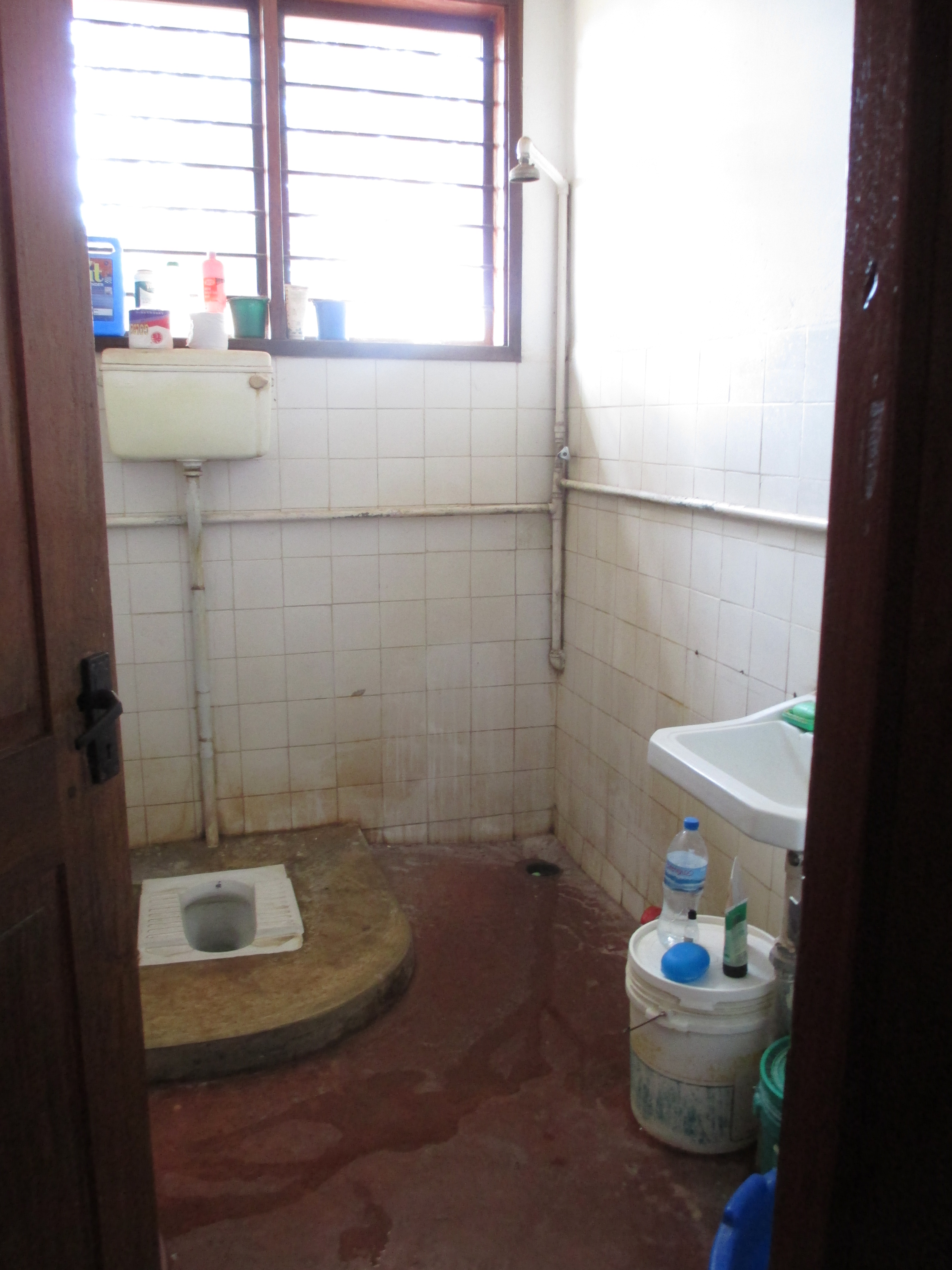
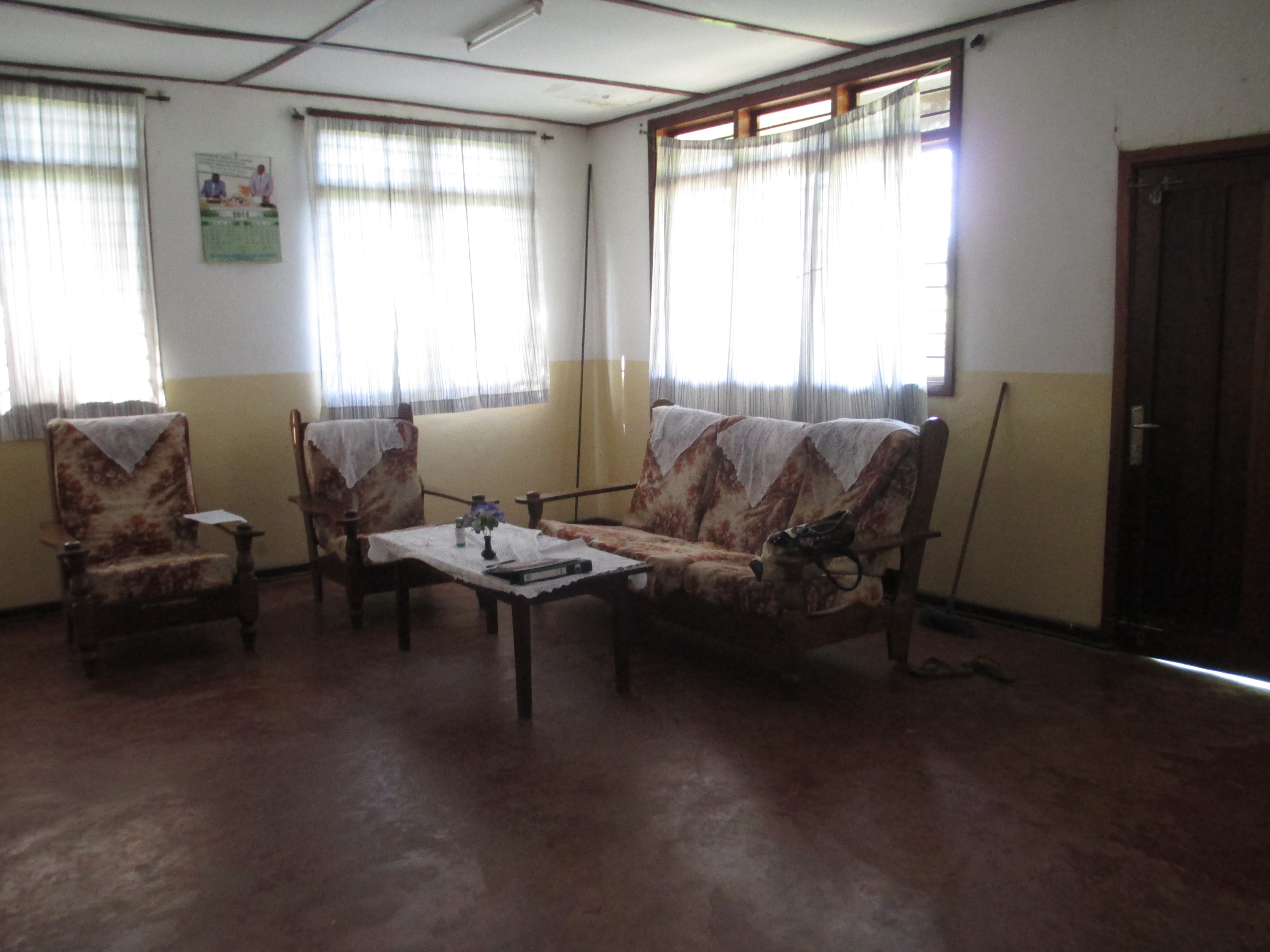
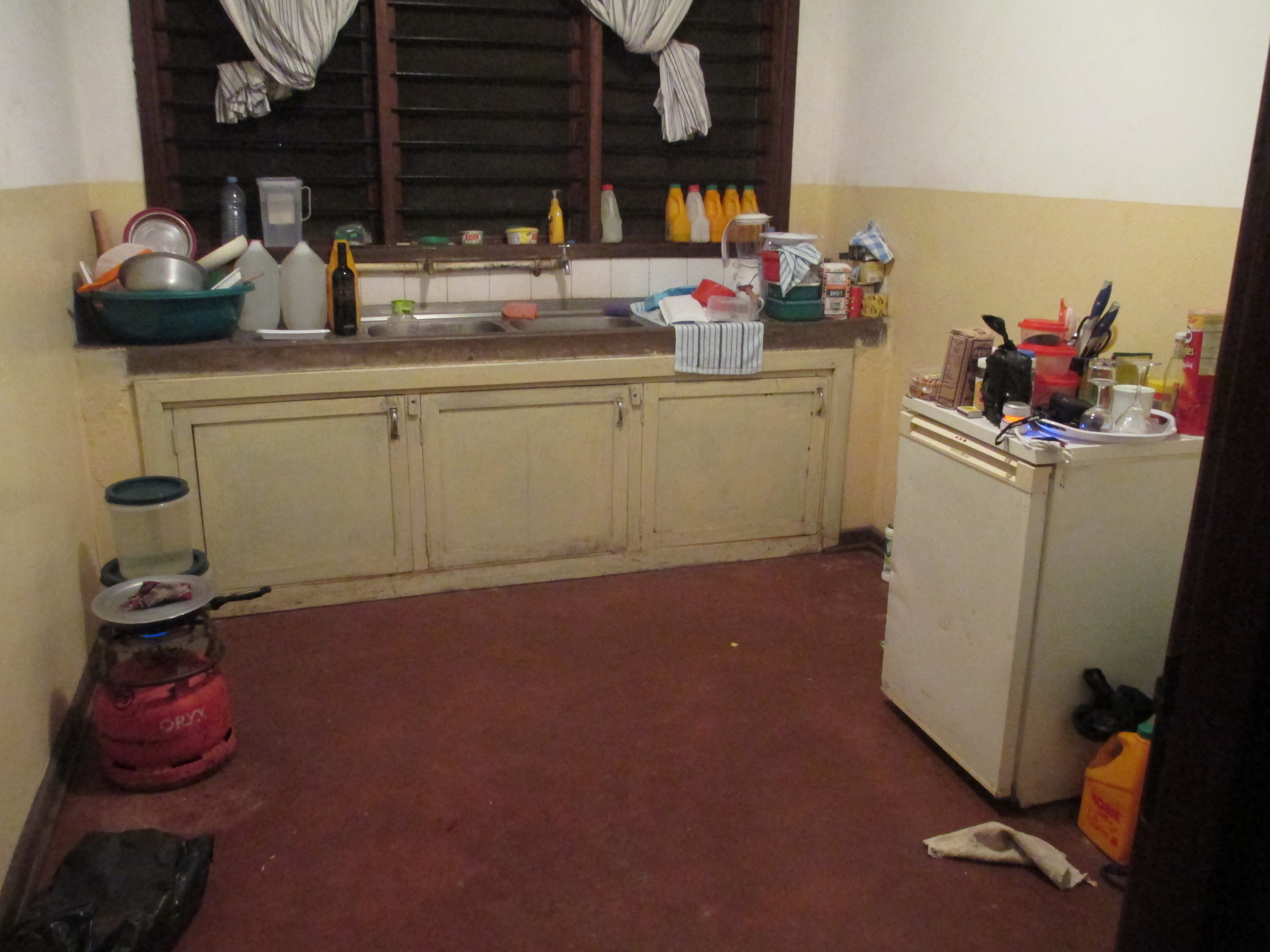
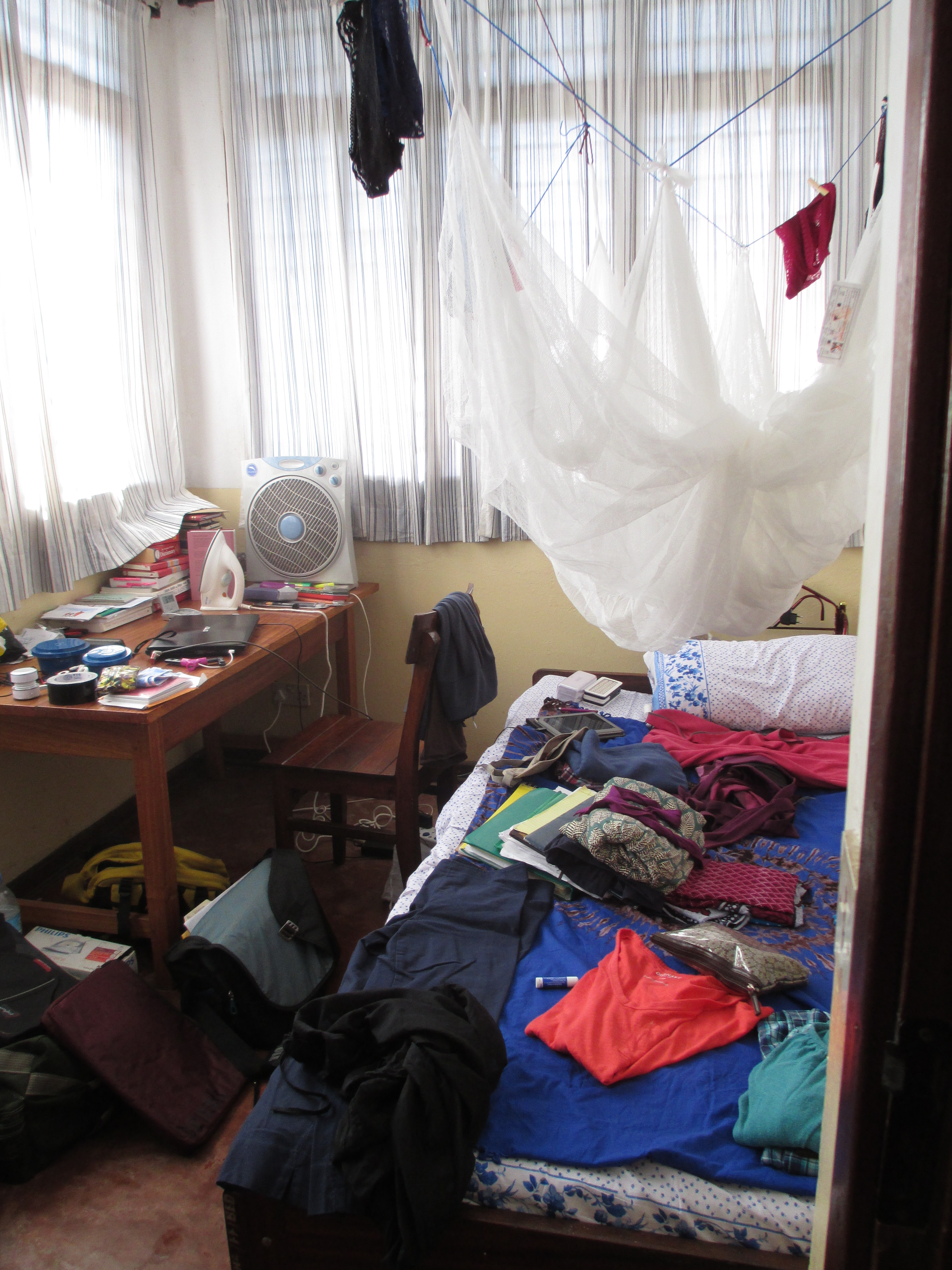
Most of this weekend has been spent unpacking, doing laundry, and getting myself set up.  I hope to spend more time exploring my new home in the coming week and getting started at the hospital with my study.  In the meantime, here are a few pictures of the outside and inside of my new house, which is actually one unit in a triplex-type building.  You can see the back yard, porch, hallway, bathroom (yes, it’s a “squatty potty”), living room, kitchen, and the extremely messy unpacked bedroom.  Just to give you an idea of where I am living!

BackyardIMG_0681 Hallway Bathroom   Living Room IMG_0654Messy Bedroom

A Night For Netball

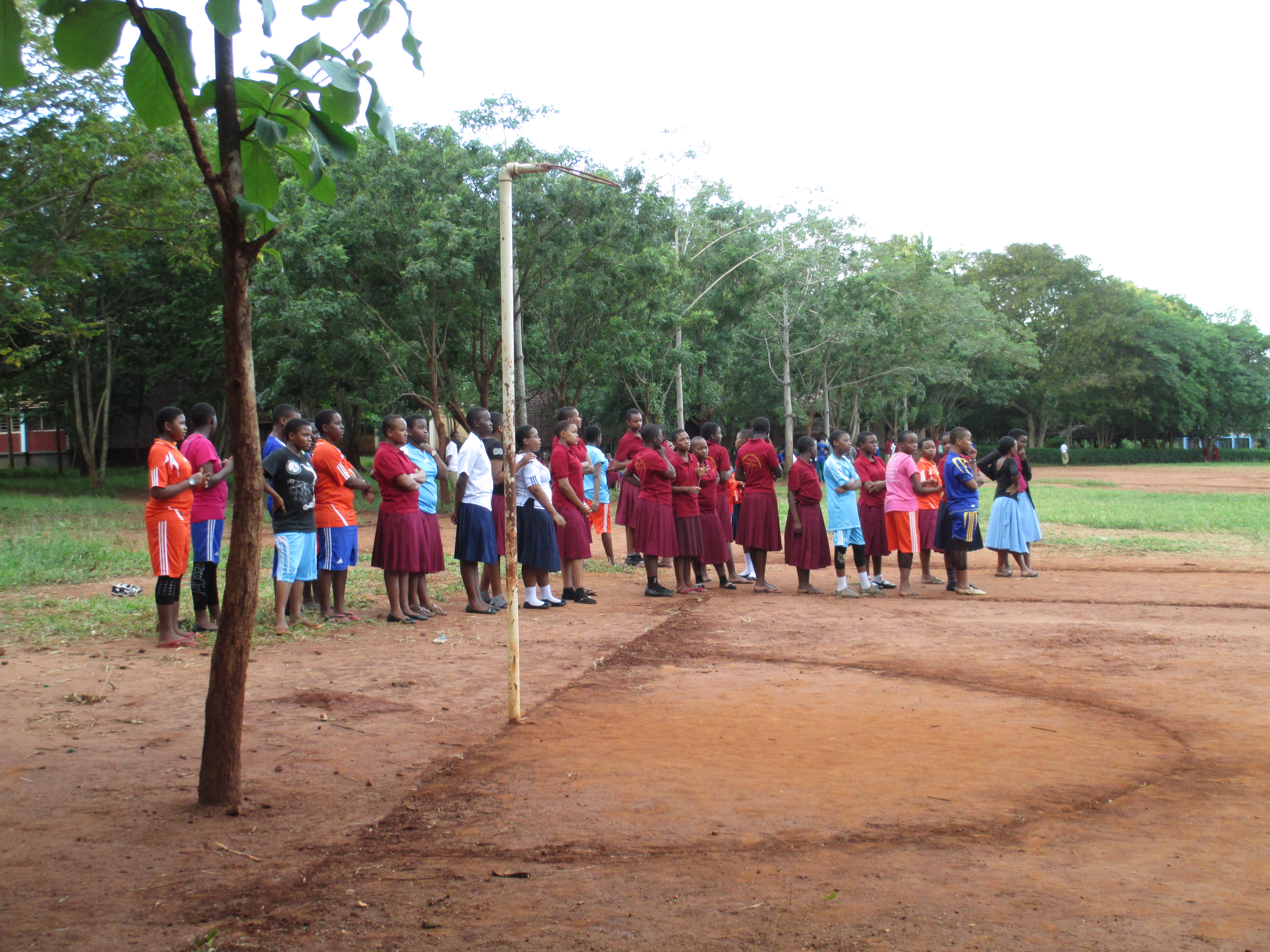
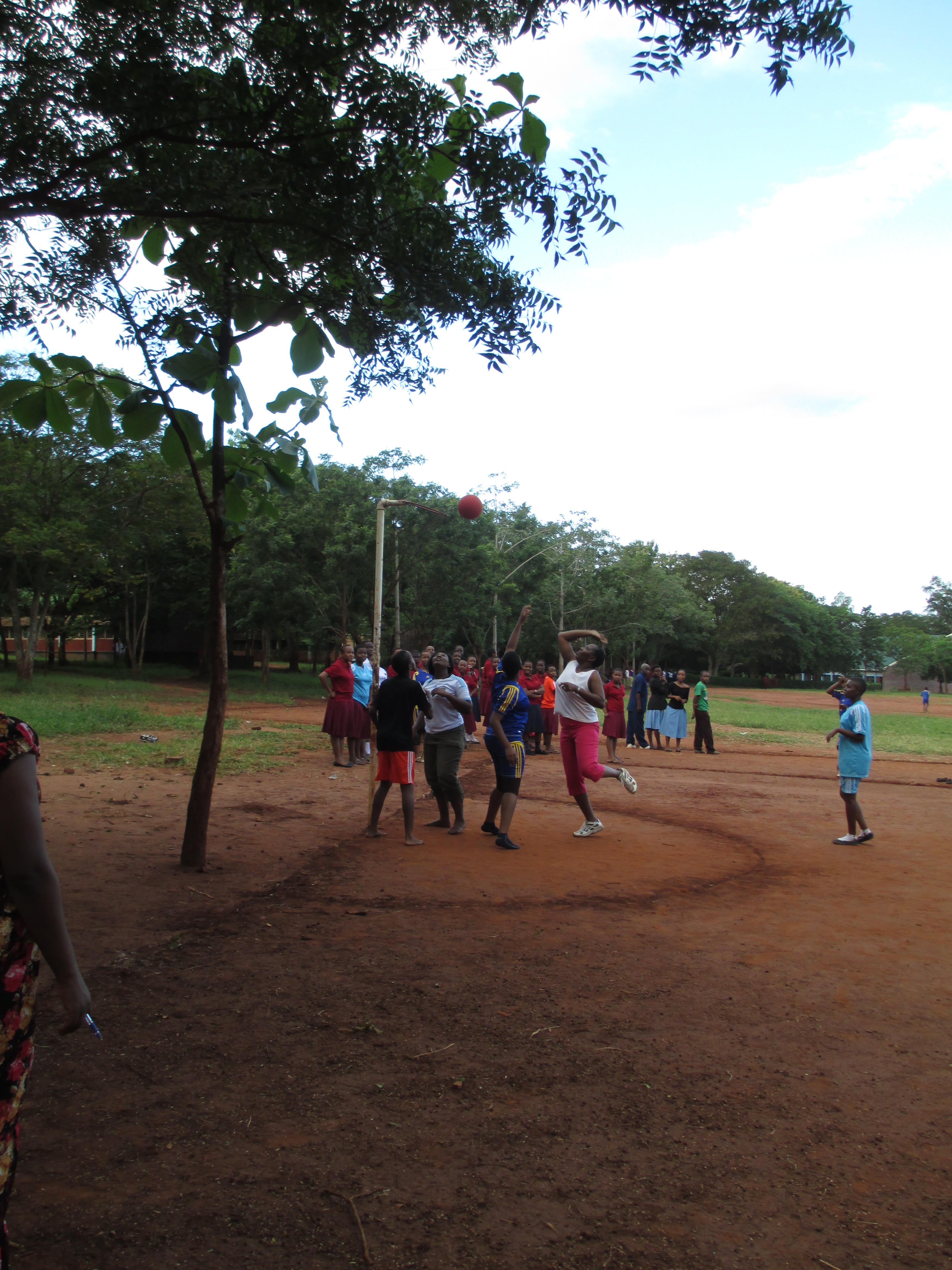
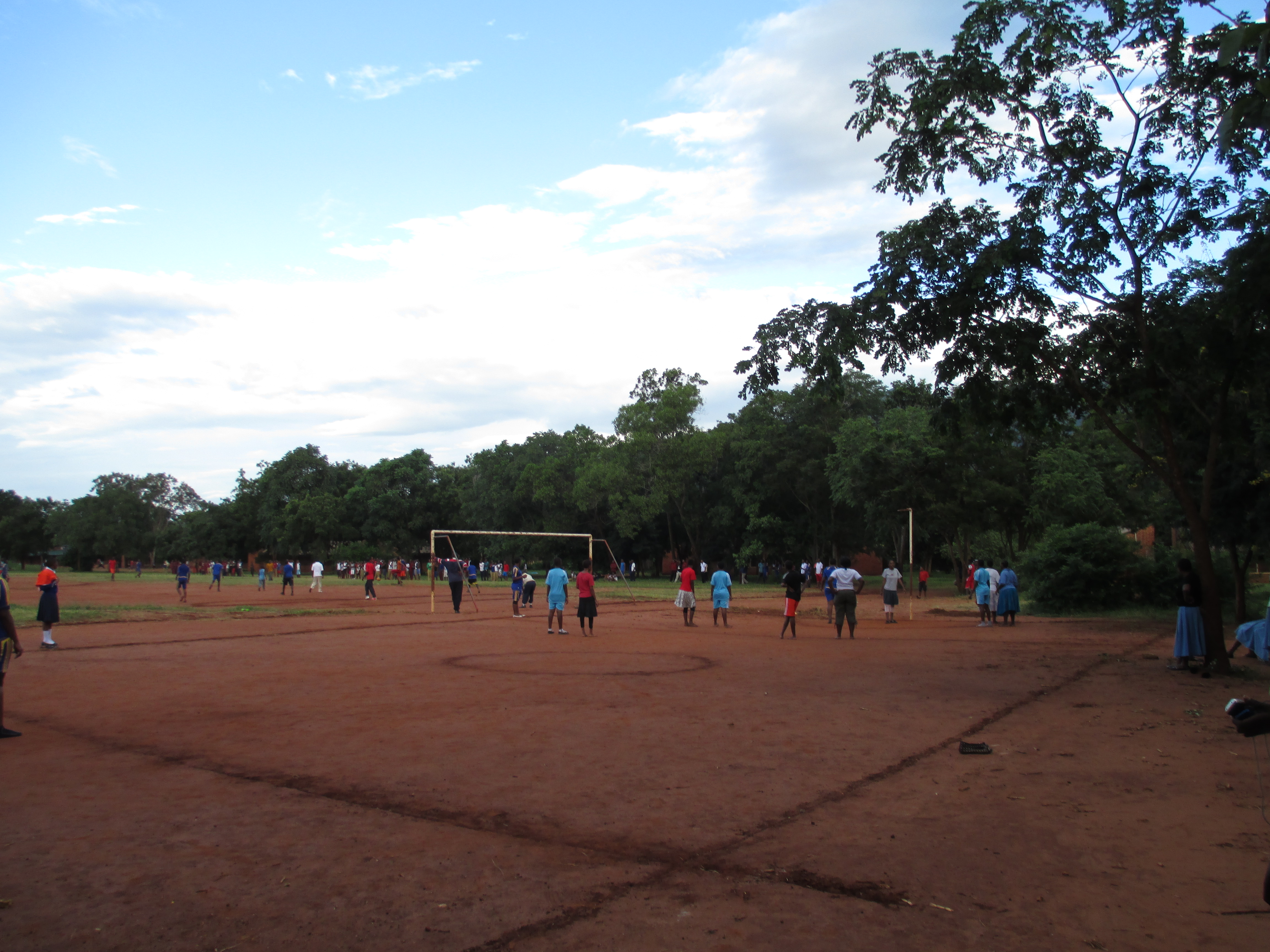
Today’s entry will be short and sweet.  I just returned to Morogoro, so between catching up with friends and sleep, there is not a lot to share.  However, tonight was the night of the student-teacher football match at the secondary school that shares a campus with our language school.  The field was packed with participants and spectators, and we could hear the cheering from the dining hall.  A few of us decided to wander over a take a look but were quickly distracted by the goings-on at our end of the field.  The football match was made up entirely of boys, but on a small, make-shift basketball court on the near end of the clearing, a group of girls and women were engaged in what at first glance looked like a pick-up basketball game.   I love basketball, so naturally my curiosity was peaked and I went over to watch.

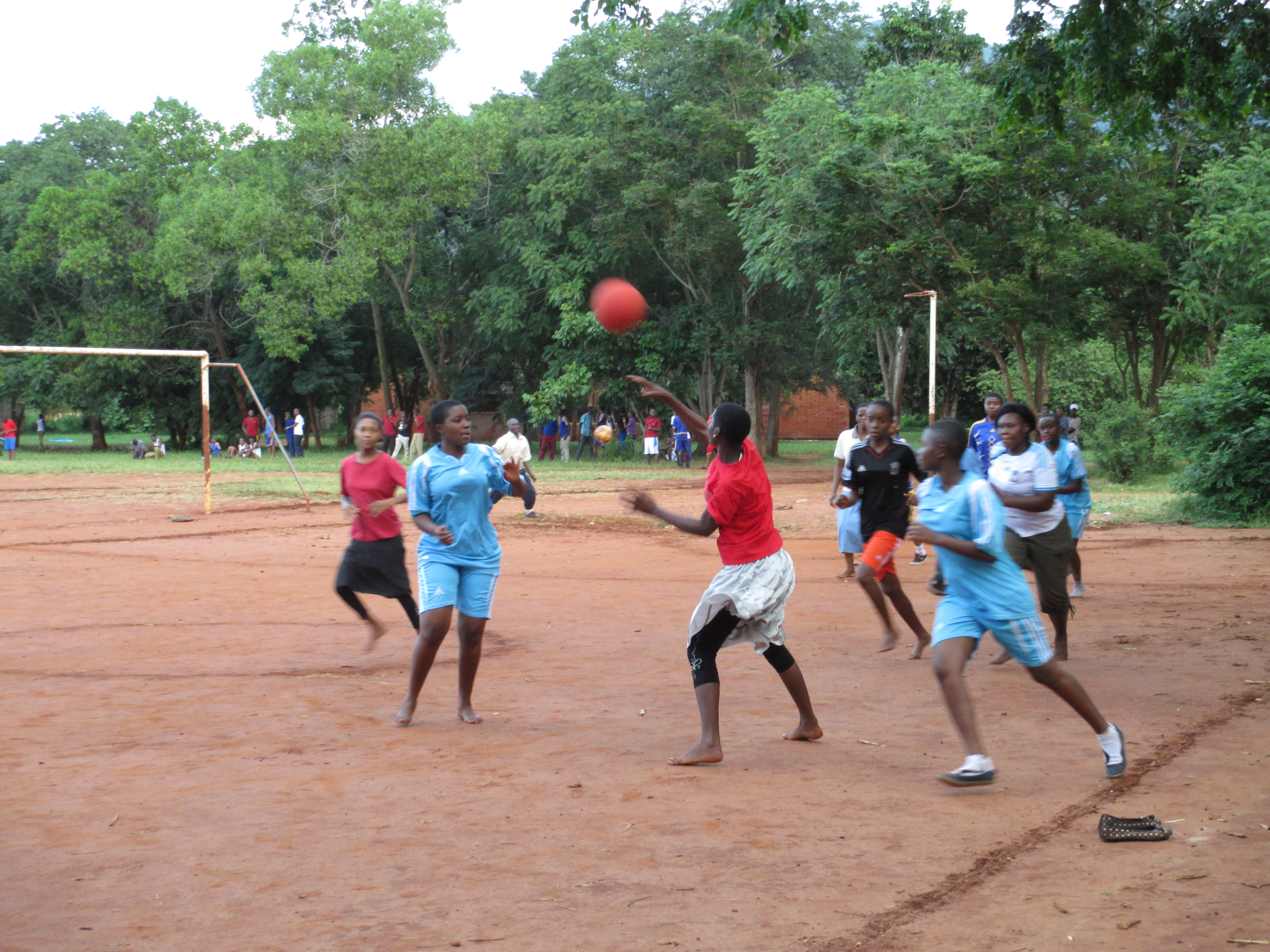
Quickly I saw however that it was unlike any basketball game I had ever played.  There were too many players on the court.  The players didn’t move around the full length of the court, but rather seemed to stick to certain areas.  About half the girls were wearing soccer uniforms, so we determined that they were one team- the students- and that the teachers in street clothes made up the other team.  Many played barefoot.  Instead of dribbling (which would have been difficult on the dirt ground), the players would stop as soon as they received the ball and would not move until they could pass it up the court.  Once the ball made it to the end, the ball was passed to a player inside a small half circle outlined in the ground.  No other player entered the half circle, and the player, without jumping would throw the ball up and try to score through a metal hoop with no net.  At first, I was confused.  Was this basketball with concessions made to the limits of the playing surface and lack of a backboard?

Calling over to one of the students, we asked her what they were playing.  “Netball,” she replied.  I had heard of netball, but since girls in the States have played basketball for several decades now instead, I didn’t realize that it was still popular in other areas of the world.  She laughingly told us we should join in, but since we didn’t know the rules and it was really an event for the students and teachers to bond, we declined and stayed on as spectators.

May 105 May 100May 102  May 098  May 097May 104 May 096 May 094