Kids Love Stickers, and Other Universal Truths

I think I’ve mentioned once or twice the orphanage in town.  I had been hearing about the children there from Shantelle nearly since I first arrived.  It is clearly a place close to her heart.  I had met some of the older boys a couple of weeks ago at the Boone’s house, but that was all.  Although I had wanted to visit for a while now, I hadn’t had a chance until this week.  Shantelle, the Boone family, and their friends Chris and Emily, were planning on spending the afternoon with the kids and I decided to tag along.

The orphanage is run by Catholic nuns.  It is a mid-sized rectangular building set around a central concrete courtyard, with a playground out back.  The children are all pretty young.  If I had to guess, I would say they were all under the age of nine or so.  Truthfully, to our eyes, it looks pretty sparse, but it was clean and all of the children appeared to be pretty well taken care of.  As soon as we pulled up, children were at the door of the orphanage, yelling out greetings.  It was clear my friends were favorite visitors.  We greeted the nuns on our way in and paid our respects, but as soon as we crossed the threshold, we were pulled into a whirlwind of energy.  The kids gathered round, shouting out for their favorite adult, demanding hugs, eager to start games.

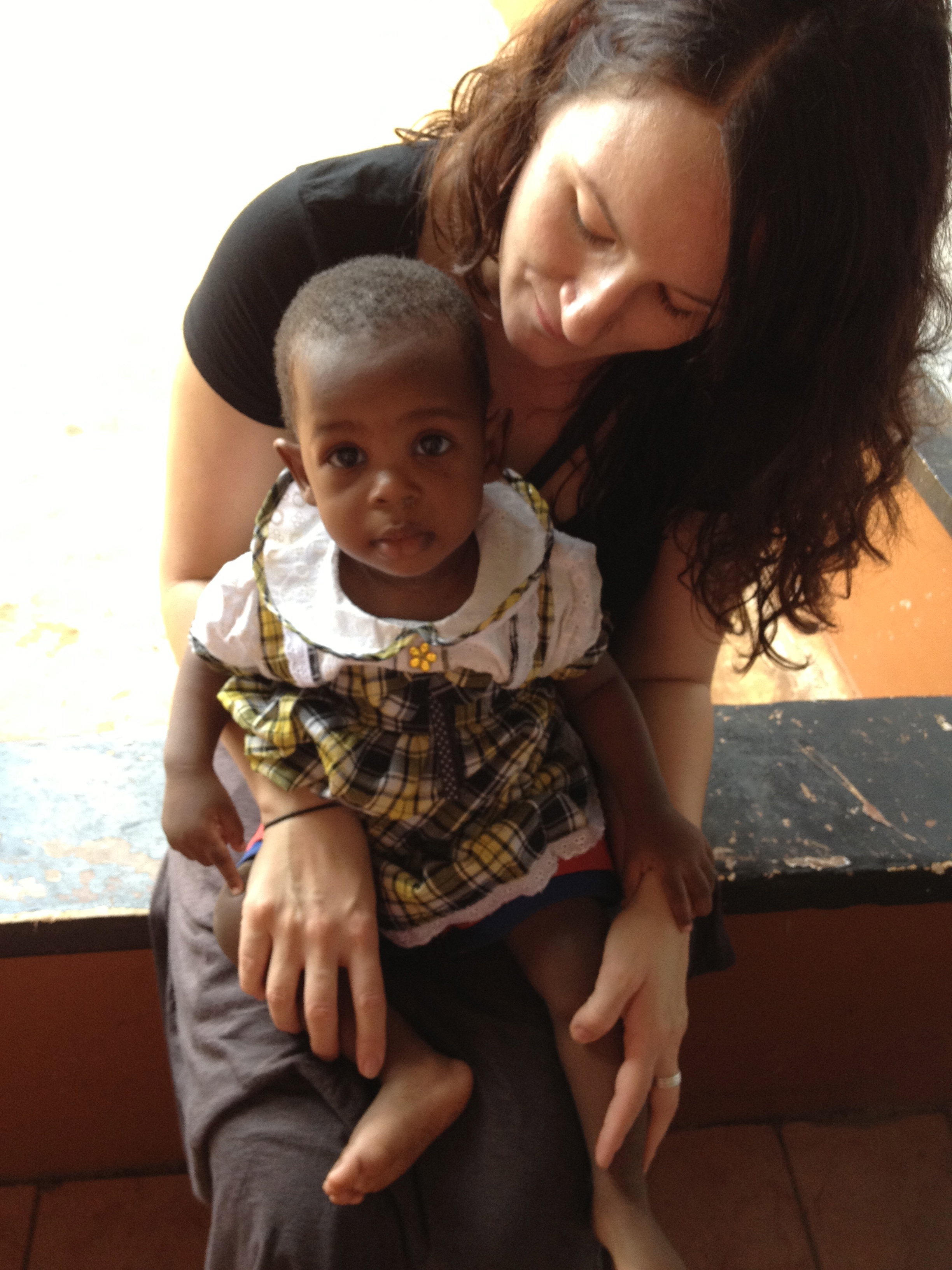
One of the first things we did was to gather some of the babies and toddlers from the nursery.  Given the number of children, this age group often does not get as much affection and attention as it should.  I don’t mean to be critical.  It is a large job and the nuns clearly care about their charges.  But the reality is that the older children are naturally more vocal about their needs and have each other to play with.  The babies and toddlers are often in their cribs most of the time.  So we each gathered up a little one to cuddle and feed while the older kids ate their lunch of rice and beans.  The kids would periodically come over to help with a bottle or stroke a baby’s head.  It was clear that nuns had taught them to be gentle and careful with the younger ones.
IMG_0140IMG_0148

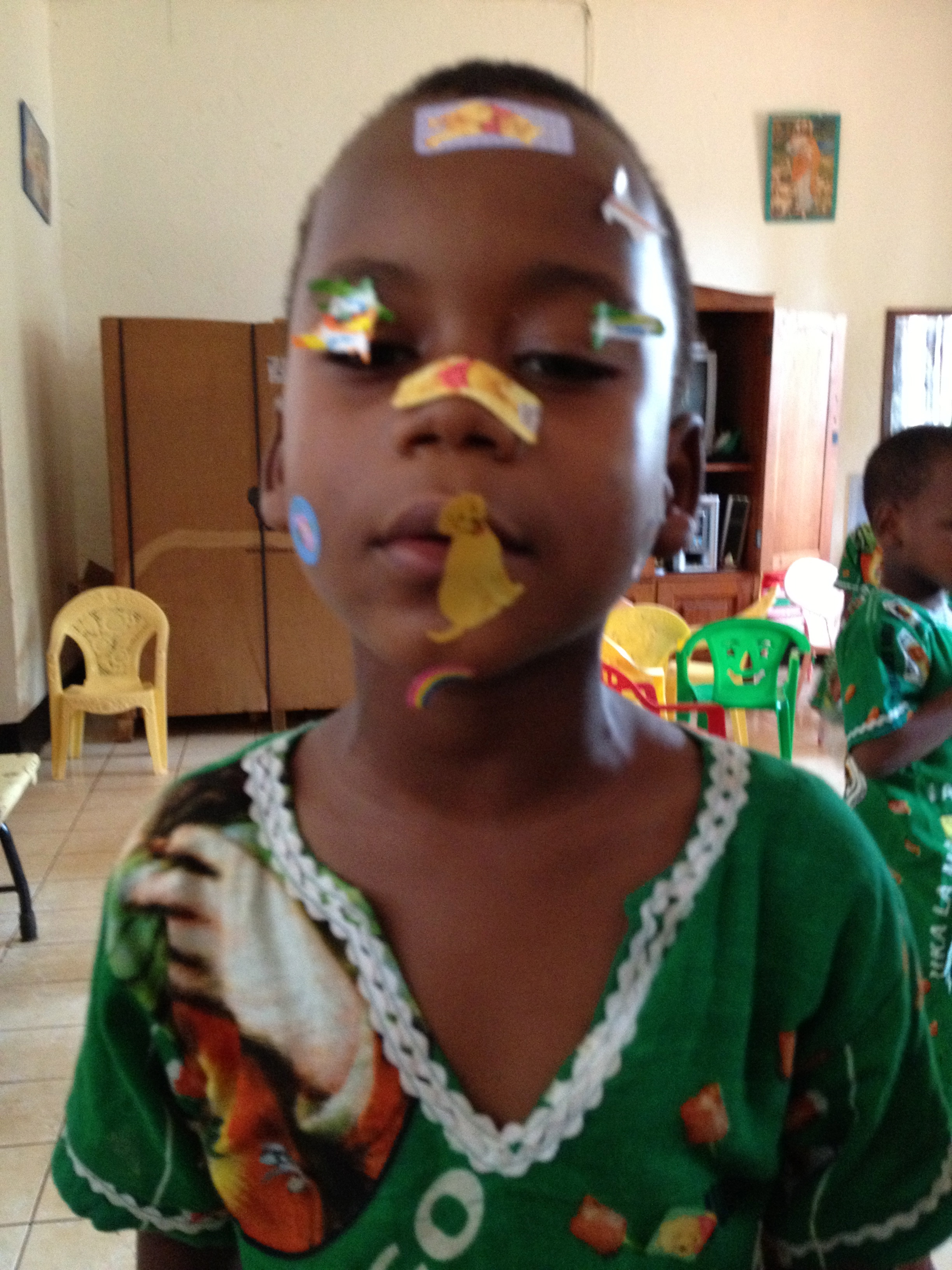
I had brought stickers with me from the States for kids that I met.  In the past when I’ve traveled, I’ve found that having a little something like stickers or coloring books can be a good way to break the ice with kids I meet when we don’t speak the same language.  I had this image in my head where I would take out the stickers and be able to tear off a couple from each sheet for each child in a calm orderly fashion that would ensure everyone got a roughly equal amount.  (Anyone who has children is probably laughing at me right now.  Actually, given the size of my extended family and all of the children I’ve spent time with over the years, I am laughing at myself).  Of course, the minute I pulled the stickers out, they were pulled from my hands  by the biggest of the kids, who rapidly started peeling them off and sticking them to anything (or anyone) standing still, including themselves.  Chris and I managed to re-establish some semblance of order to oversee the distribution, and I will say this, I was so impressed with the older kids.  Although they weren’t going to give up control of the sheets, they did make sure that all of the little ones got stickers too, sometimes going so far as to pull them off their friends and re-stick them on those who had fewer.  It was a feeding frenzy for a bit but you really can’t blame them.  Stickers are awesome and toys are definitely scarce.
IMG_0124 IMG_0120IMG_0122

The fun then moved outside to the playground, where the adults were very quickly worn out and the kids showed off all of their moves on the jungle gym with boundless energy.  The playground is the kind of bare bones metal death trap-looking structure that no American parent nowadays would let their child near…and that I and my friends had an absolute ball on when we were kids.  (I remember when my former elementary school rebuilt their playground after I had moved on to Middle School and all I could think at the time was how boring it looked).  Now, as an adult myself, I tried to focus on the joy in watching the kids, and pushed down the rising panic every time a child almost flew off the merry-go-round.

Eventually, it was time to go and hugs all around were given.  The kids saw us off to the gate, yelling goodbyes.  Just a great, great day.
Part II: Attending a Send-Off

Hey!  Come here.  Let me tell you a secret.  Something I bet you never would have suspected.  Are you ready?  Here it is.  Malaria is…NOT…fun.  I know, right?  Who would have thought?!?

I really shouldn’t complain too much.  I have a mild case.  The pounding headache is really no worse than what I put up with during the usual migraine.  Sure, I feel like every single movement requires Herculean strength and yeah, my entire body aches worse than the time I decided it would be a great idea to do a metric century road bike race despite never having ridden more than 40 miles in one go (and that only once).  But really, as far as health issues run, I’ve had worse.

Except, that is, for the sweating.  And the subsequent chills.  And the sweating.  And the chills.  And the sweating.  And the chills.  On endless repeat all day, over and over again.  I am literally just sitting at my computer, barely moving except from the middle knuckle of each finger on down.  And yet, two minutes ago, I suddenly found myself drenched in sweat for absolutely no reason.  In a bit, I will just as suddenly get goose bumps and start looking around for a scarf.  It.  Is.  Miserable.

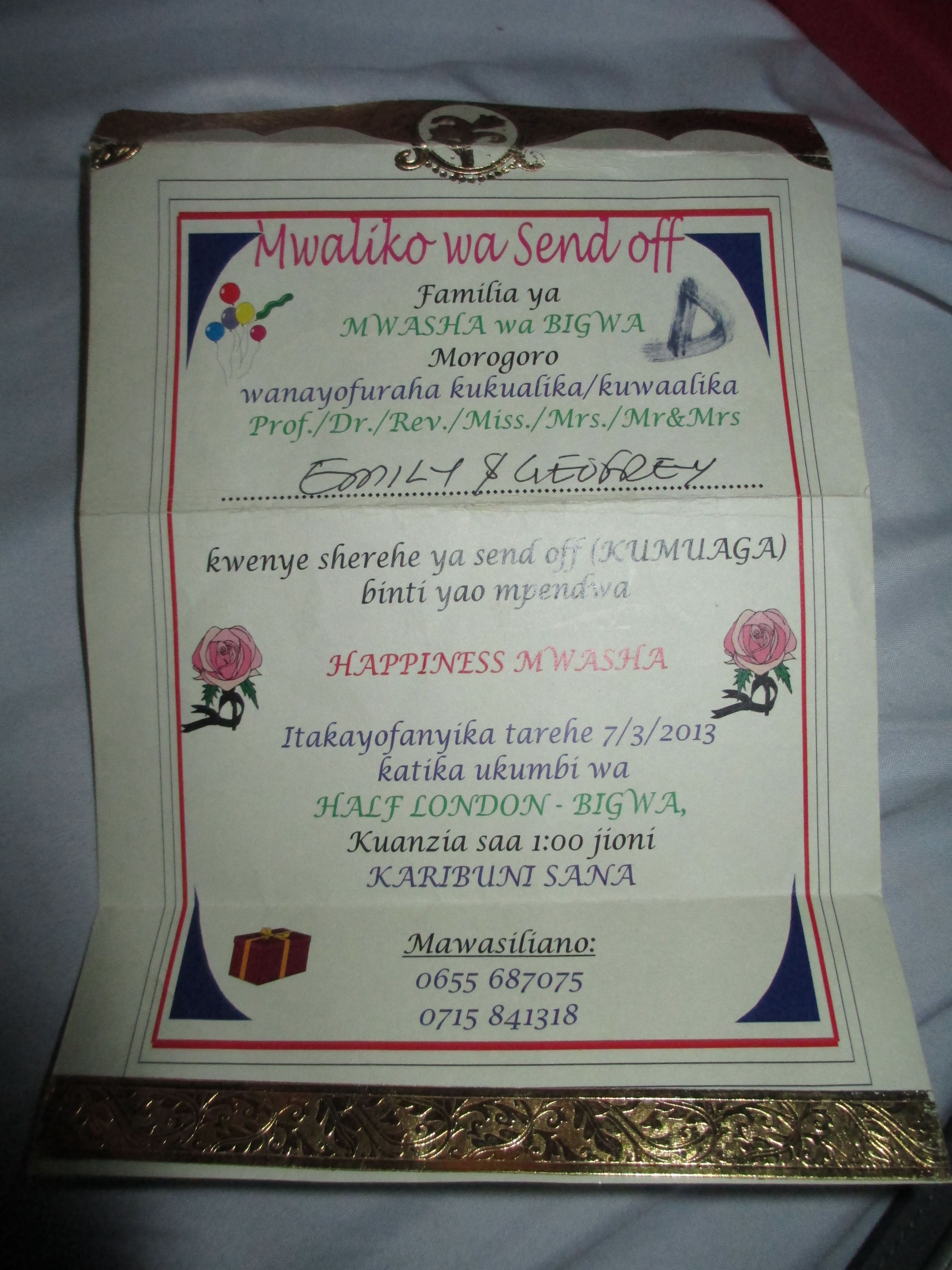
But, I had somewhere to be last night.  I had delayed my whole trip to IfakaraIMG_0553 by a week to attend the Send-Off party of Happiness, one of my teachers.  Happiness is getting married soon, and the Send-Off was described to me as sort of the Tanzanian equivalent of the American bridal shower.  In retrospect, I would actually describe it as more like a giant Sweet Sixteen party or Quinceñera in scope, but it is similar in that the focus is indeed on the bride.  I did not want to miss this.  Furthermore I couldn’t miss it as Geoffrey, another teacher, and I were on the same invitation because we paid together (attendees contribute money towards the cost of the party); I was currently in possession of that invitation which was needed to get in.

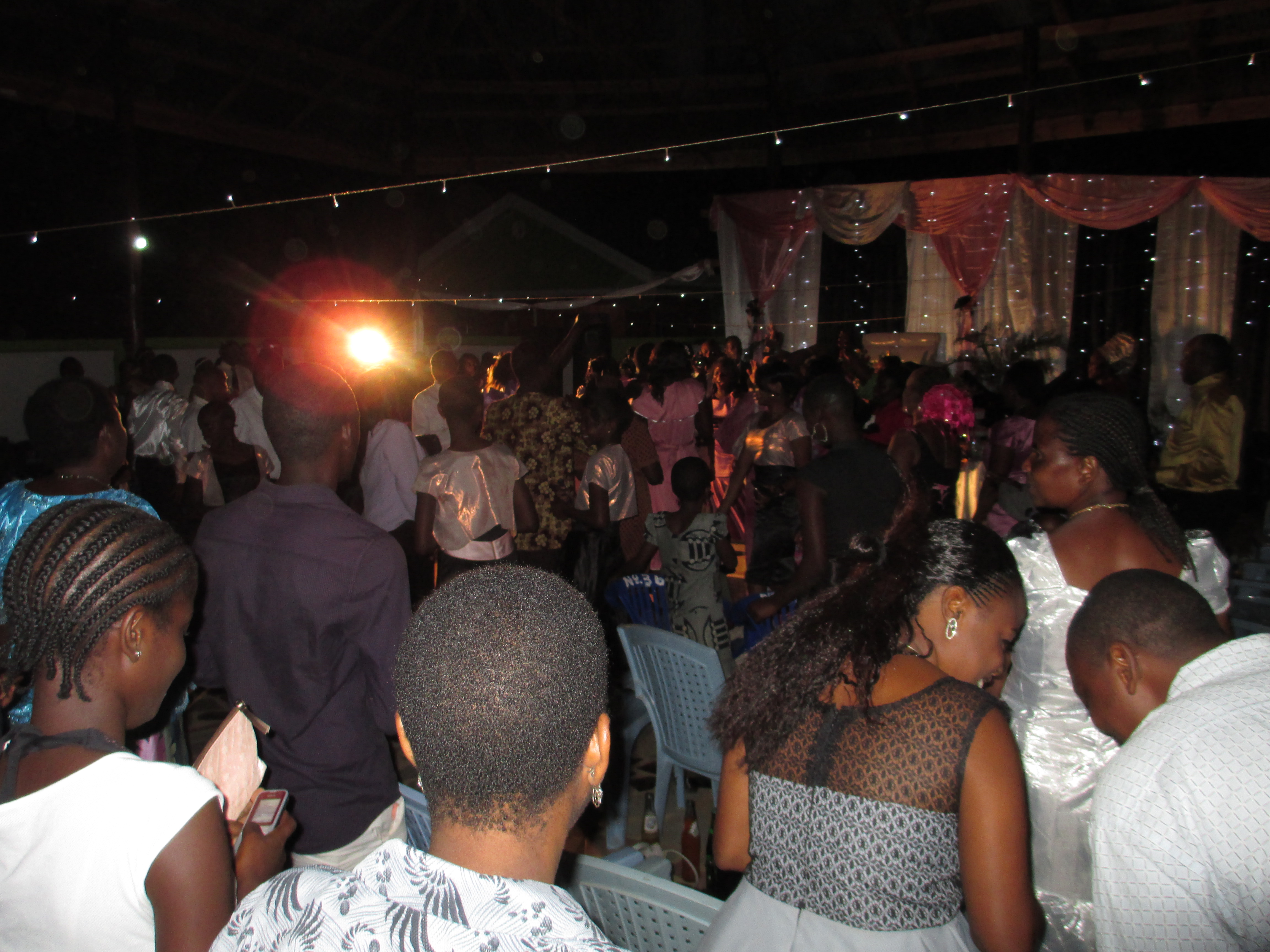
So, with plans to go for an hour or two and take a taxi home early, I got myself prettied up and headed out with Ingrid, Anne, Geoffrey, and a few other folks.  When we arrived, the venue was lit up with strands of lights and music was blaring.  Chairs were set up in rows facing the anterior of the room, with an aisle down the center.  Up front, a dance floor took up most of the space, with three smaller rows of chairs on either side, set at a right angle to the larger rows.  And finally, in the place of honor at the very front, a raised platform supporting a cloth-covered table and two chairs.  The entire stage area was decorated with lights, flowers, and pink bunting.

IMG_0321

A pink theme!

IMG_0323

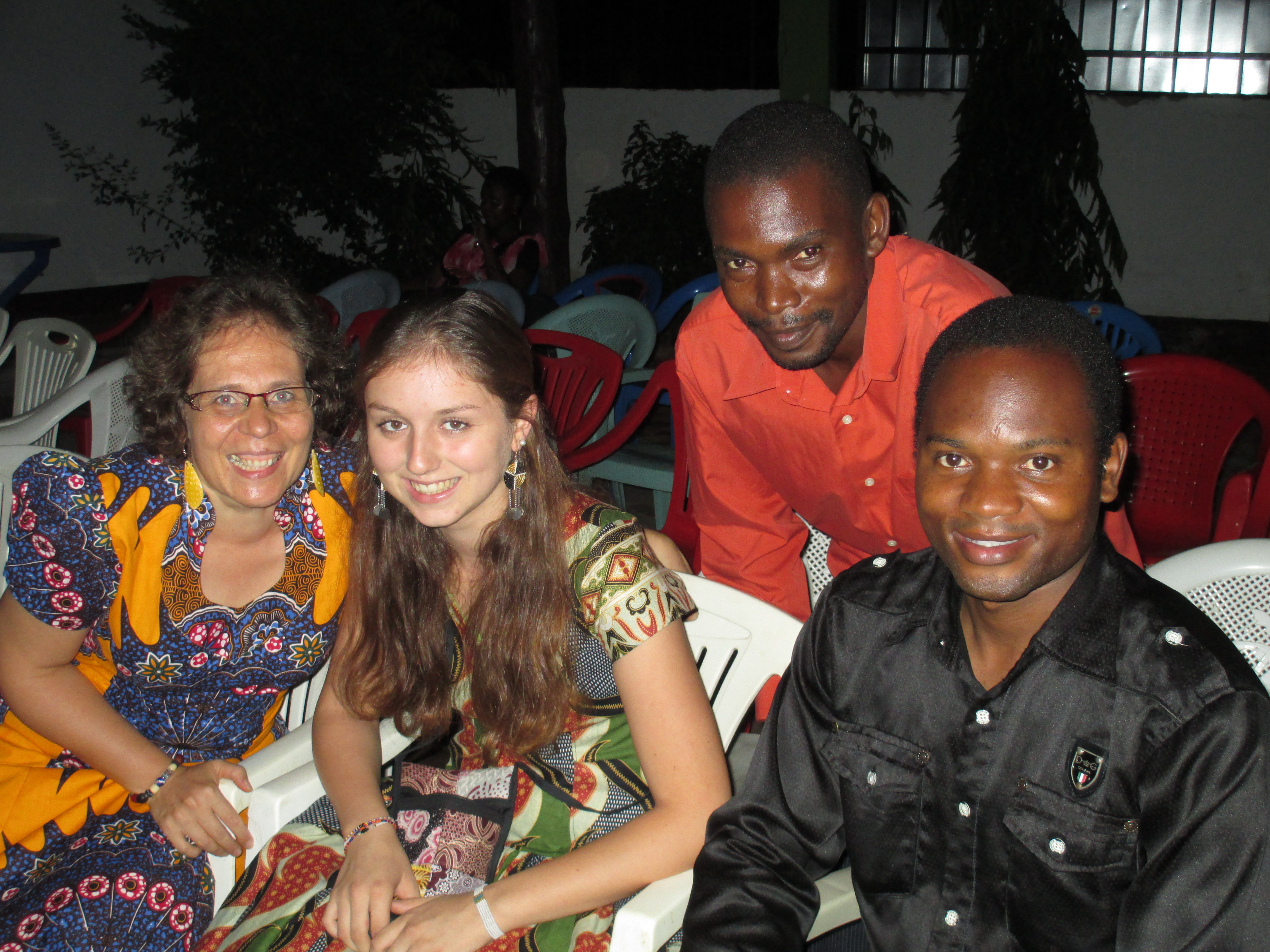
Ingrid, Anne, Abraham, and Geoffrey


As people arrived, we amused ourselves dancing to the DJ.  Given that I had malaria, I was happy that dancing primarily consisted of swaying from side to side and, occasionally, forming a circular conga line.  With one amazing, fantastic exception.

There I was, just minding mIMG_0329y own business, getting my sway on, when suddenly the music segwayed into a new song.  Suddenly, as if on cue. the entire dance floor broke into the Hustle, not missing a beat.  Ann was slightly bemused for a few minutes- perhaps the Hustle hasn’t made it to Germany, but I reassured her, “Don’t even worry about it, just watch me.  I spent the better part of two years attending Bar and Bat Mitzvahs growing up.  I’ve got this.”  Confidently, I merged into the crow, ready to wow with my slightly jazzed up Hustle dance moves… and then ran into two people because apparently the Tanzanian hustle is not the same as ours.  Don’t get me wrong, it is close.  But, three steps where we take four in one place, an extra dip thrown in another; it was just enough to make me look like an idiot.  But!  I am no line-dancing novice.  I stepped out for one sequence and soon enough I was back in there, shaking things up.

Slowly the crowd had built andIMG_0325 so we made our way back to our seats.  A band led off, sporting hot pink ties.  Moving up the aisles, they had everyone moving.  What followed was far more involved than a simple bridal shower and there is far too much detail to go into here but I will give a few highlights.  A large group of girls dressed alike came up the center aisle, something like the equivalent of bridesmaids, followed by the bride herself.  IMG_0330She was accompanied by a young woman who was dressed like her in a shiny pinkish-gold dress made in the Tanzanian style who stayed by her side most of the evening as a Maid of Honor.  For some time after, it was primarily about the bride, who stood up front while various family members and the MC made speeches.  The bride’s family sat on one side of the dance floor, while her husband’s sat on the other, and both were in great spirits.  Finally, at one point, the groom came into the back of the room.  Rather than join his bride up front, however, he hid in the audience.  Tanzanian Send-Off custom, I’m told, calls for the bride to “find” her groom.  Happiness, slowly roamed around the room, feigning ignorance of her groom’s location.  Up and down the room she went until finally, she located him two rows behind us and everyone clapped and whooped.

IMG_0336

The happy couple!

A Night Out

IMG_0552

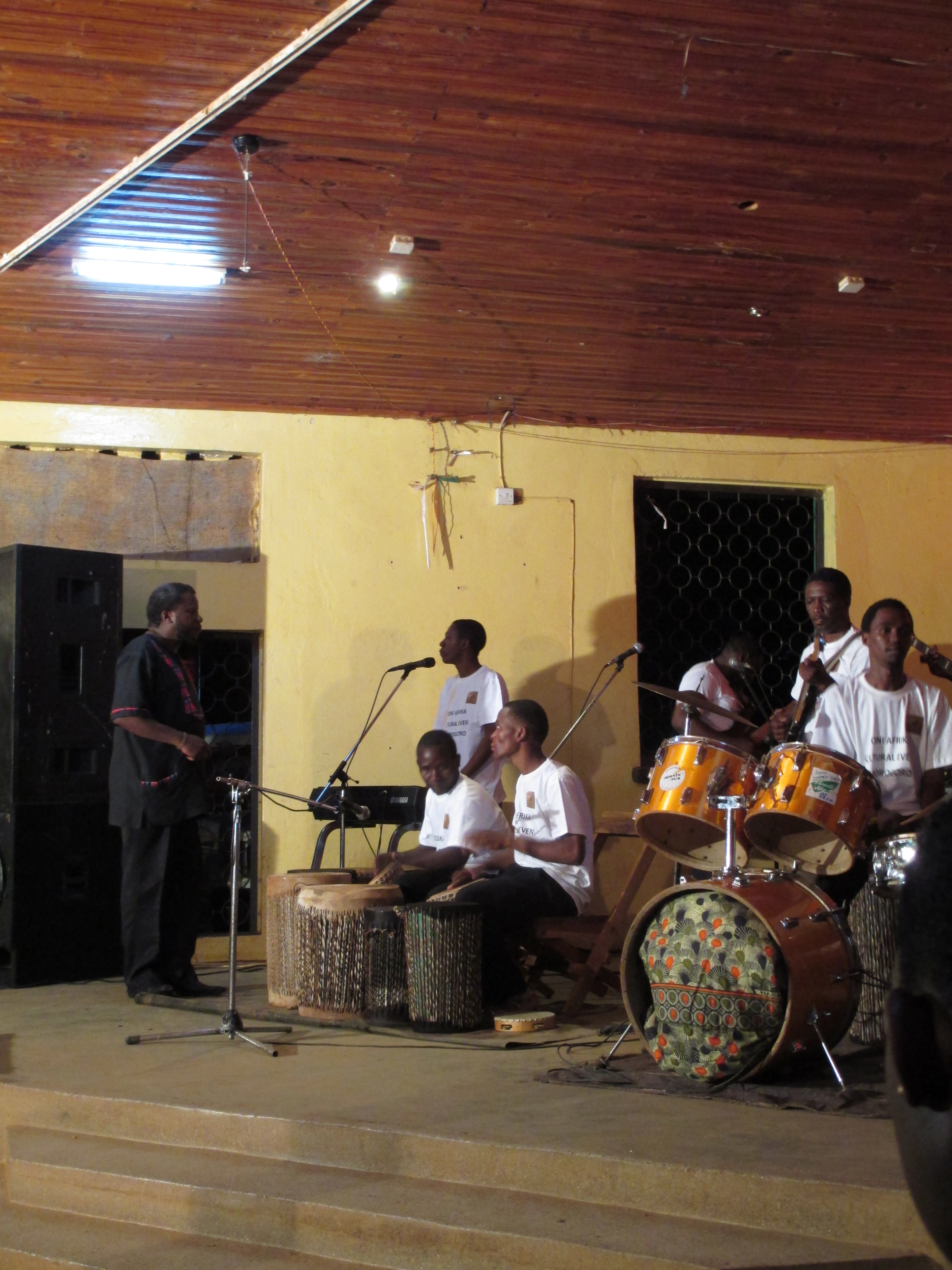
Unfortunately I don’t have much time this week so this will be short, but I wanted to give this organization a plug.  There is a local group here in town, Ngoma Afrika Performing Arts Co. (www.ngomaafrika.blogspot.com), who holds monthly cultural events in town.  A couple of representatives came out to the school the other day to invite us to attend and explain the mission of their organization, part of which is to teach traditional East African music and dance styles to local young people so that the knowledge is not forgotten.  Once a month, they hold a community event that includes not only traditional music and dance but also Afro Jazz and fusion styles.

IMG_0531

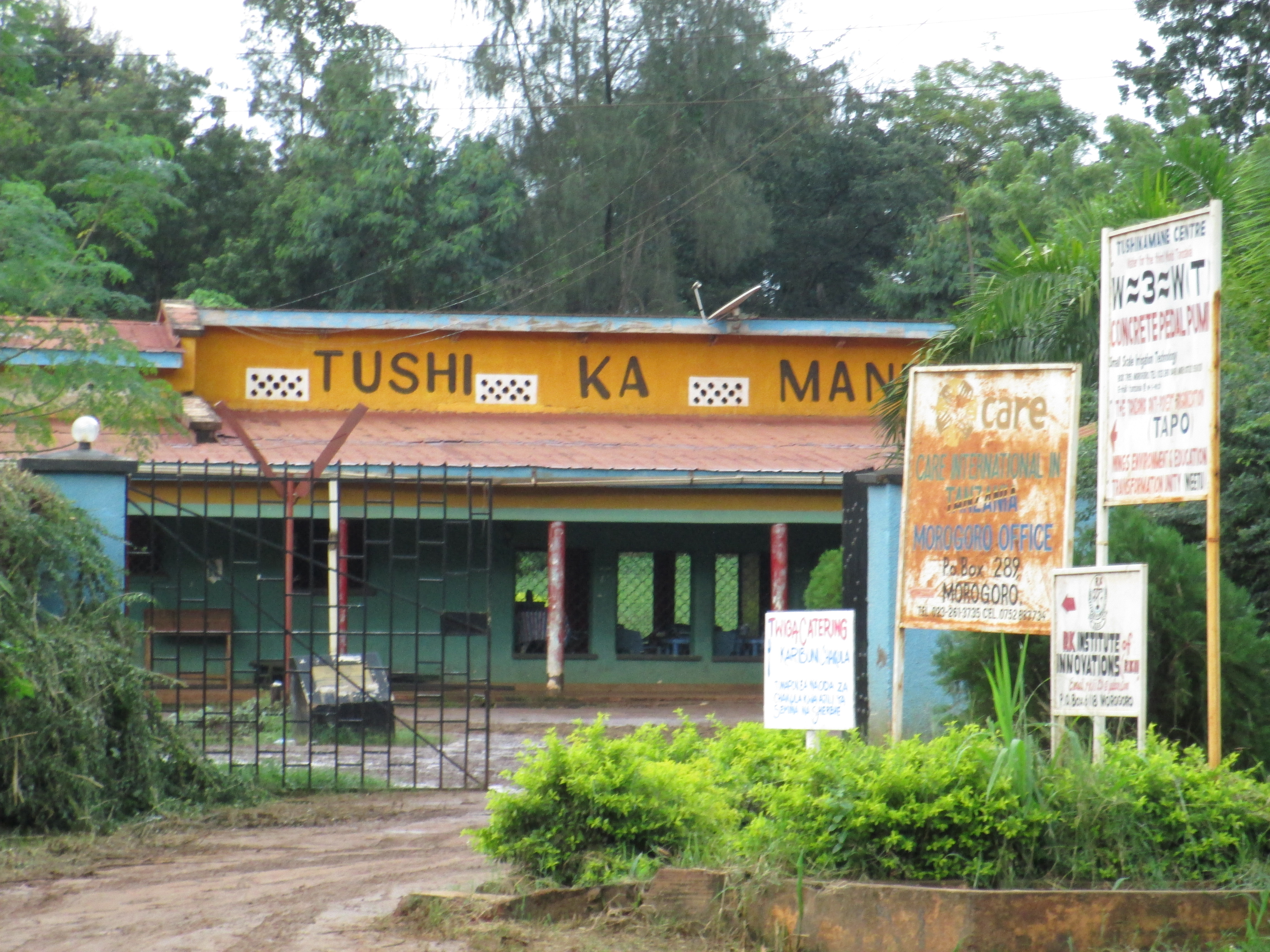
The venue

When we first arrived, I have to admit that my heart sank a little bit.  I’ve traveled enough to have experienced my share of hokey re-enactments of “traditional” activities put on for tourists.  And this venue was empty.  Only the language school students were there, along with a few fIMG_0181ormer students, and as the drummers set up I was afraid that was what we were in for.  But in the end, we had just arrived too early.  As the music got going and more people came in, the atmosphere livened up.  Soon Tanzanians and wazungus alike were up dancing.

IMG_0177

Once the event really got going and people were spilling out onto the lawn, a dance troupe came in to perform a series of traditional dances and delicious smells started to waft in from outside, where a small canteen had been set up.  I wandered out among the food tables and art exhibition that had been set up, enjoying myself immensely.  Most of the teachers from the language school came, and it was the first real chance we’d had to just hang out socially without textbooks looming over our heads.  It was like a block party under the stars.  If you’re ever in Morogoro, I recommend checking this group and their events out!


IMG_0186IMG_0185

Lemongrass Tea and an Artist at His Craft

Today, I was lucky.

Ingrid, a German woman working in Tanzania that I have become friends with, had been telling me off and on about a group of artists she was working with.  We stopped one day at a small hut next to the bus station, to see the work of Hillary, a local woodworker she knew.  Another day she mentioned that the paintings in her house were by the same artist whose work was sold at the language school.  Yet another day, that her bag was made by a local fundi.  So when I asked her earlier this week if she would be going into town this morning and she mentioned needing to meet up with this same painter about a commission, I agreed to go with her.  Actually, I jumped at the chance.  It can get a little confining here at the language school since we are outside of town and I am always eager to go off campus.

We met Deo, the artist, in town and he directed us to his home, a small duplex in a neighborhood I had never been in before.  Showing us inside to the small cozy living room, he invited us to take a seat and then, with obvious pleasure, introduced us to his two children.  The smallest, a boy with a huge smile, was eager to try out a little of his English on us; bouncing up and down on the arm of the easy chair while he did so.  His daughter, a young teen, was a little quieter but after a shy smile welcomed us by quickly bringing out tea.

Deo was clearly proud of his children; their photos, along with a couple of his works, were the main decorations on the walls.  He was also visibly happy to have us there, taking tea with him.  A note about the tea… it was delicious.  Actually, I always enjoy tea here.  Chai is typical, though I usually drink mine straight.  His daughter brought out tea flavored with lemongrass, a first for me and absolutely lovely.

He and Ingrid conversed for quite some time in Swahili about a commission she wanted done- a series of paintings with a religious theme for a primary school.  This might sound boring for me, a Swahili beginner.  But I have noticed a steady trend in the past week with my Swahili comprehension.  If I don’t have to talk, but can just listen to two other people converse, I am actually often able to get quite a bit.  Perhaps not the details, but at least the general flow of conversation.  While frustrated that this doesn’t seem to translate into an improvement in my own speaking ability, it is nonetheless encouraging.   I also have not been invited into Tanzanian residences very often.  Given my research interests, I have spent most of previous trips on hospital or clinic grounds, making my way from one office to another.  But, as an anthropologist, I have a natural curiosity about how people live.  I feel so fortunate when I am traveling and someone invites me into their home.  When I get to share a drink or a meal, meet their family, or just experience a little piece of their world.  So despite sitting silently while the other two spoke, I was enjoying myself immensely.

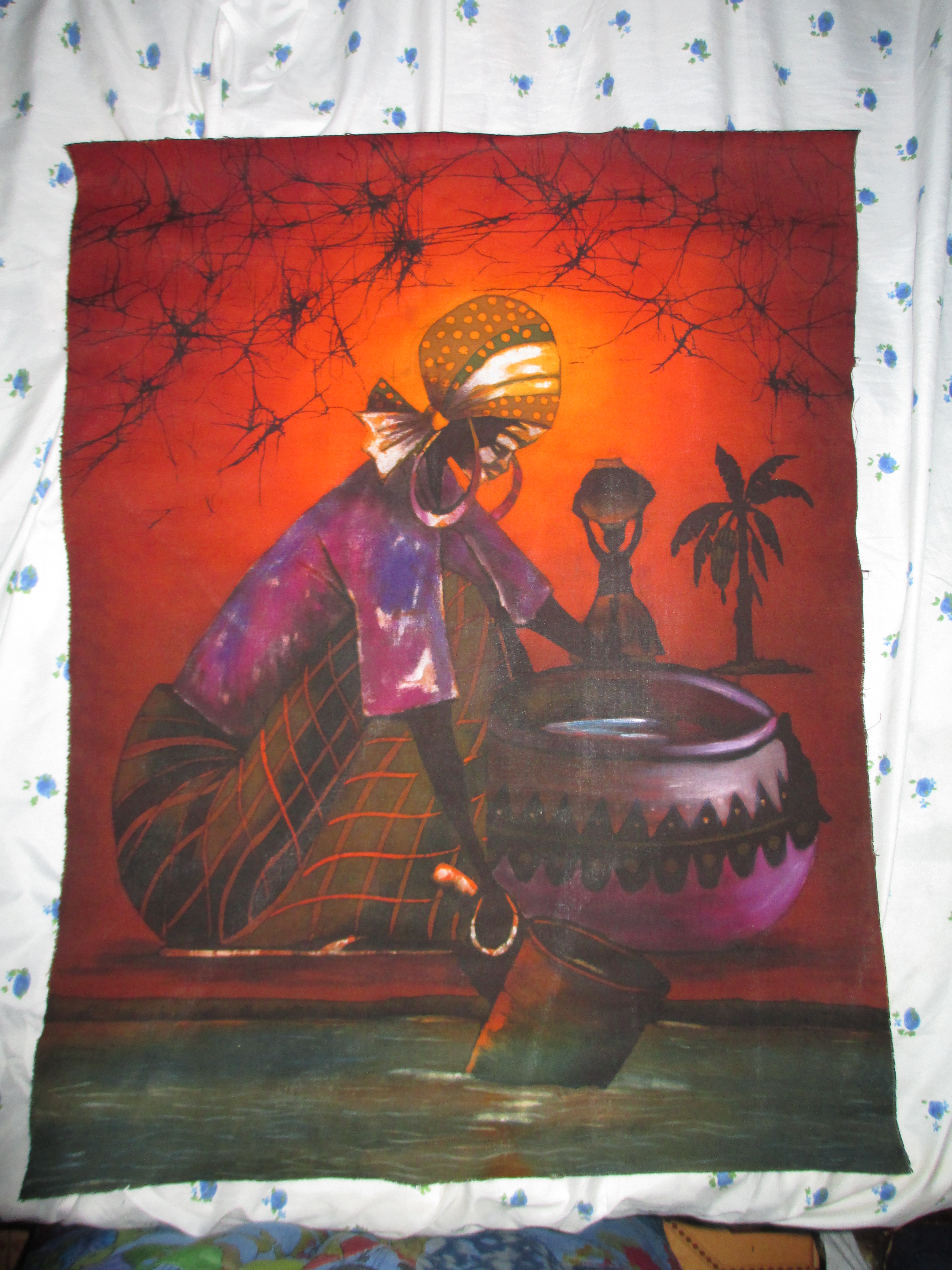
The conversation turned towards specifics and Deo pulled out two albums filled with photos of his work so that Ingrid could look at samples.  He also began hauling out many of the paintings he had in storage, piling them up on the dining room table, a Technicolor mountain of canvas.  Most of his work was wax batik, although he had pictures of murals he had done too.  You see that a lot here; black silhouettes of safari animals against a bright explosion of sunset reds and yellows or moody blues and purples.  They are often marketed to tourists and can sometimes look a little mass-produced.   But Deo was clearly a more gifted painter than many of the more cookie-cutter artists I had seen hawking their wares.  He used a much wider variety of colors, played with light and shadow, and embraced a broader style and subject matter, in addition to the usual scenes.  I wanted to support his work, particularly since he and a group of other artists are trying to get together the money to start a co-op in town where they can share a rented space to sell their goods.  I bought two small paintings of more traditional scenes, but the one I really liked was more abstract and unusual.  He offered to paint me a large work in the abstract style that I could pick up in a couple of weeks …my very first commissioned work!

027

Towards the end of our visit, Deo took us out to his work area on the porch and walked us through the first few steps of creating a wax batik painting.  Each painting, depending on the design of course, requires multiple rounds of laying down wax and paint to create the final scene.  Because each layer has to dry completely before the next round can be applied, we were only able to watch him begin his next work.  Which was probably just was well because his son was quickly becoming bored with all of the grown-up talk and began to repeatedly bounce a ball “accidently” against the bucket I was sitting on.  Clearly this was a not-so-subtle invitation, so while Ingrid and Deo talked a few last details, his son and I kicked the ball back and forth while I dazzled him with the few Swahili sentences I knew and he giggled appreciatively.  Sometimes the little interactions are the best.

On the ride home, Ingrid apologized for the visit being such a long one and said she hoped I wasn’t too bored.  I told her, truthfully, that it was one of the best days I’d ever had in Tanzania029

Making (By Which I Mean Watching Someone Else Make) Ugali

One of my favorite things in the world is to spend a day cooking.  Nothing makes me happier than piling the ingredients for a bunch of recipes on the counter and whiling away the next few hours peeling, chopping, mixing, seasoning, and just generally acting like a mad culinary scientist cackling away in glee.  I’m certainly no gourmet; I probably wouldn’t even qualify as a “foodie.”  But I do love it and typically think of myself as a fairly proficient cook.  So ever since I was first served it, I have wanted to try my hand at cooking ugali.IMG_0116

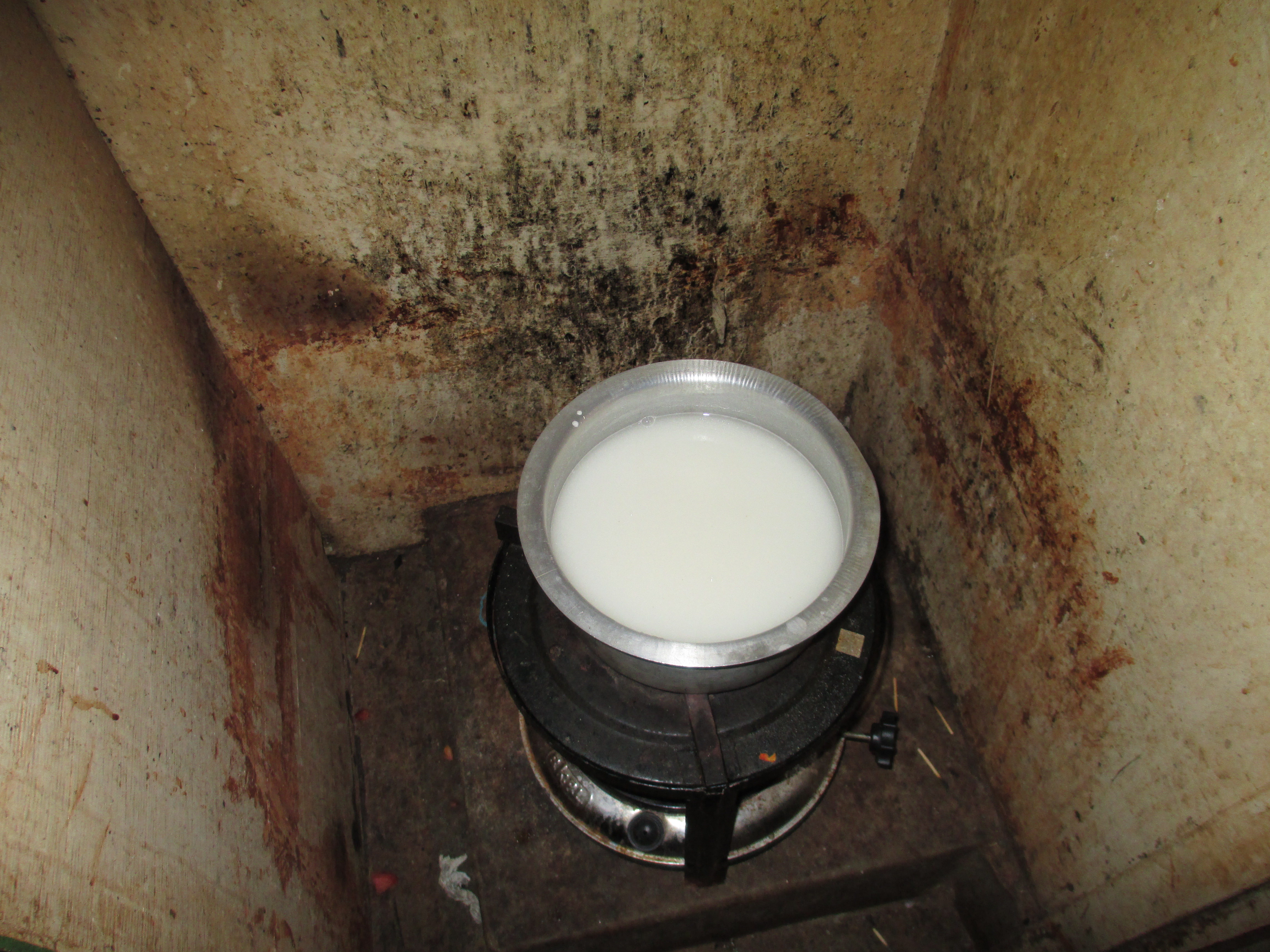
Ugali, for the uninitiated, is a staple of Tanzanian cuisine.  Made of maize flour, the best way I can describe it is that it resembles what you might end up with if polenta had a stickier consistency and was made with finer milled grain.  It doesn’t have much of a taste- it is primarily a vehicle for moving food to your mouth.  When served, it looks like a large white blob of dough; the diner pulls off a piece, rolls it in his or her right hand to form a ball, makes an indention with the thumb, and then uses this to scoop up various other foodstuffs.  Most meals in Tanzania begin with either ugali or rice as a base, served with meat alone or one or more various stew-like sauces (containing some combination of beans, meat, and vegetables).  In fact, the Swahili word for food, chakula, typically actually refers to ugali or rice.  The rest are considered side dishes.

However, despite its ubiquitous nature among Tanzanians, it is rarely served to wazungu.  It is assumed that we won’t like it.  In most cases, unless you specifically ask for it, the default for dishes served to foreigners will be rice or French fries.  The first time I had it was two years ago, when I made a special request to Seki, the housekeeper at the guest house where I was staying.  She asked me several times if I was sure I wanted it, with an incredulous look on her face.  When I reassured her that I was in earnest, she complied, and then sat down at the table to watch me eat it.  Given its mild but pleasant flavor, I can only assume that it is the clumsy, fumbling spectacle of a first-time eater trying to time the rolling of the ugali for just the right moment between “perfect consistency for scooping food” and “crumbling mess disintegrating into the side dish” that makes Tanzanians think foreigners don’t enjoy eating it.

IMG_0110

Anne and Eliudi, waiting for water to boil

Since that first time, I’ve had the opportunity to eat ugali a few times and it has grown on me (not least because I’ve gotten slightly more coordinated with it).  So just as with all foods I like, a small itch has been growing to try making it myself.  Unfortunately, all of our meals are made for us by the kitchen staff here at the language school and they haven’t made ugali yet, so there has been no time to ask for instruction.  But this week, I finally had my chance.  Anne was going over to the house of one of the language school staff members, Eliudi, for dinner and asked if I wanted to join.  Of course I said yes.

On the menu was salted fish served with a tomato sauce and ugali.  I was psyched.  I figured the process of making ugali couldn’t be that different from rice, oatmeal, couscous, quinoa, or any other grain + water concoction.  Turns out it’s not, but it does takes some serious muscle!  We cooked using a small charcoal stove in the corner of the kitchen.  Water boiling, Eliudi poured the flour into the pot.  At this point, I tried to figure out what the proportions of water to flour should be.  The conversation went something like this:

“How much flour do you add?”IMG_0105

“It depends on how many people you are cooking for.”

“So for the three of us, how much did you add?”

“Enough for how much water is in the pot.”

“How much water is in the pot?
“I didn’t measure.  I just poured it in.”

“So how do you know how much flour to add?”

“You just add what you need for the water.”IMG_0108

“So how do you know how much you need?”

“Just watch it.  If you need more, then you add more.”

Needless to say, I never did really figure out the flour to water ratio.  I understand this.  I don’t measure everything when I am cooking either, especially when I am cooking dishes I’ve made hundreds of times before.  But despite watching that pot closely, I couldn’t tell you what signals the pot was giving off to indicate another handful of grain was needed or when.

IMG_0107

Fish stew

IMG_0112

The cooks in action

Next came the stirring.  Oh man, the stirring.  Forget kettlebells, this will be the next hot workout in trendy gyms nationwide.  With a large wooden spoon, more like a paddle really, you have to almost whip the ugali into shape.  Eliudi let Anne and I each take a stab at it before laughing and stepping in.  It’s a little galling to fall short of making what is essentially thick polenta.   So Anne and I primarily played the role of spectator, chopping tomatoes and stirring the fish stew, while Eliudi handled the ugali.

It was all worth it in the end though.  We had a lovely dinner, together with my first taste of Tanzanian wine- a red from Dodoma, said to pair nicely with “game meat.”  After a little more trial and error, I know I will be able to create my very own fusion cuisine.  I’m thinking ugali would go well with a nice thick Guinness-infused meat and potato stew.  Now where to get the Guinness…

IMG_0117

Tah-Dah!

IMG_0122

Demonstrating the ugali-rolling technique